What’s Inside
- Ditch Stark White for Warm Sage Green
- Hide Clunky Appliances Behind Custom Panels
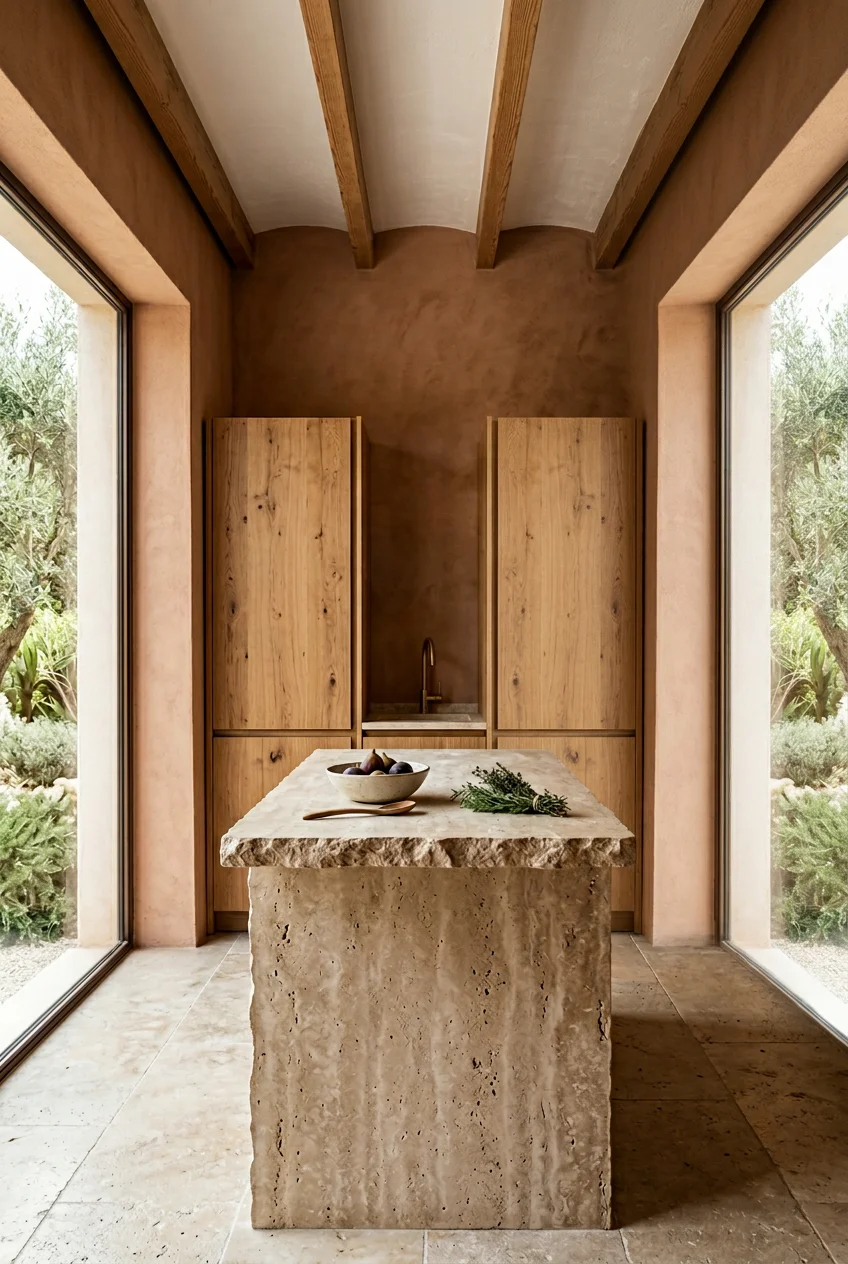
- Anchor the Room with Real Stone Countertops
- Swap Knobs for Flat Panel Cabinets
- Decant Dry Goods into Glass and Matte Tins
- Adopt the Rule of One for Pantry Staples
- Build Micro-Stations for Daily Tasks
- Free Up Counters with Floating Wood Shelves
- Ditch the Knife Block for Magnetic Strips
- Hang Organic Rattan Pendants Over the Island
- Mix Reclaimed Wood with Polished Stone
- Add One Piece of Real Art
- Pick Sustainable Recycled Glass Surfaces
- Stop Buying Single-Use Gadgets
- Switch to Linen Kitchen Towels
- Soften Edges with Curved Islands
- Use Matte Ceramic Bowls for Fruit Storage
- Keep Cleaning Supplies in Amber Glass
- Bring in Fresh Herbs in Terracotta Pots
- Maintain Clear Sightlines
Last November, I stood in my kitchen holding a $40 can of bright white paint, crying because my attempt at an earthy minimalist kitchen looked exactly like a sterile doctor’s office. Let’s be honest, you can’t just paint everything white and hope for the best. I learned that the hard way after wasting three weekends trying to make cool-toned gray cabinets feel cozy. They didn’t. They just made my morning coffee routine feel like a hospital visit. You need warmth. You need texture. You need materials that actually feel good when you touch them at 6 AM. No exaggeration. Here’s exactly how I fixed my space, using specific materials and setups that actually work for daily life. I’ve spent the last year refining this system.
1. Ditch Stark White for Warm Sage Green

I tried the all-white kitchen trend for four months before I couldn’t take the constant scrubbing. Spilled coffee at 7 AM meant frantic cleanup. For a true earthy minimalist kitchen base, you need color that forgives everyday life. I painted my upper cabinets using Farrow & Ball’s Vert de Terre. It costs $120 a gallon, which stung, but the sage green completely altered the room’s temperature. I paired this with raw walnut lower cabinets. The contrast hides scuffs from my dog’s paws. Cool grays and pure whites reflect harsh light, but warm greens absorb it. They make the room feel like a place you actually want to sit and chop onions. Skip high-gloss finishes. Matte paint hides smudges better.
2. Hide Clunky Appliances Behind Custom Panels

My old stainless steel dishwasher was an eyesore that broke up the visual flow of my lower cabinets. I finally bit the bullet and switched to integrated appliances. This means the refrigerator and dishwasher sit behind custom wood panels matching your cabinetry. I paid an extra $300 for the custom dishwasher panel, but the visual quiet is worth it. You don’t see a wall of metal machines. You just see warm, continuous wood grain. This uninterrupted flow prevents visual clutter and stops your eye from bouncing around. I tried using magnetic covers on my old fridge first to save money. Don’t do this. They peel at the corners and look incredibly cheap within a week. Save up for real paneling.
3. Anchor the Room with Real Stone Countertops

Laminate countertops peel. I know because my old rental had a faux-marble laminate that bubbled right next to the sink. For a grounded feel, you need natural stone. I chose a honed quartzite with delicate, pale green veining. Expect to pay between $60 and $100 per square foot. It’s a heavy investment, but natural stone stays cool and handles the hot cast iron pan better than synthetic resins. The matte, honed finish is vital. Polished granite reflects overhead lights directly into your eyes. Honed stone absorbs the light and feels like a river rock under your hands. It requires a $15 bottle of sealant twice a year from Walmart, but the tactile experience pays off daily. Clean surfaces keep the space calm.

Wagensteiger Stainless Steel Curved Garlic Presser or
Wagensteiger Stainless Steel Curved Garlic Presser or Cheese Grater has been one of the most consistently praised picks in this category. 13 reviewers averaged 4.5/5.
4. Swap Knobs for Flat Panel Cabinets

Visual clutter isn’t just about appliances on the counter. It’s also about fifty metal knobs sticking out of your cabinets. I used to catch my sweater pockets on my lower drawer pulls constantly. I ripped them all out and installed flat-panel cabinet fronts with push-to-open mechanisms. You literally just press your knee against the trash pull-out, and it pops open. This helps immensely when your hands are covered in raw chicken. The flat panels create clean architecture. No tiny crevices where flour and dust settle. I initially bought cheap push-latches from Amazon for $10 a pack. They broke within a month. I replaced them with heavy-duty Blum hardware, which costs $4 per latch. The smooth, handleless wood turns storage into a clean, solid wall.
5. Decant Dry Goods into Glass and Matte Tins

Staring at neon orange cereal boxes creates instant visual stress. I spent a Saturday at The Container Store and overhauled my pantry. I moved all dry goods into uniform containers. For coffee, I use the Fellow Atmos vacuum canister. It costs $35, but the vacuum seal keeps beans fresh twice as long. For rice, I use 32-ounce glass jars with bamboo lids. I also bought three woven water hyacinth baskets for $15 each to hide backup ketchup bottles and chip bags. Don’t decant everything. I tried decanting baking soda and salt into identical jars and ruined a batch of cookies because I mixed them up. Keep the obscure stuff in its original packaging inside a woven basket. Just decant daily staples.
6. Adopt the Rule of One for Pantry Staples

This single habit fixed my grocery budget. I used to keep six open boxes of pasta in my cabinet, all with a handful of noodles left. Now, I follow the rule of one. I keep exactly one type of short-grain pasta, one type of 20-minute brown rice, and one bag of tortilla chips from Trader Joe’s. When the jar is empty, I buy more. Not before. This eliminates decision fatigue at 6 PM when you’re staring into the pantry. It also stops food from going stale. You don’t need three varieties of lentils. Pick the green ones, put them in a glass jar, and use them up. I tried keeping a massive stockpile of canned goods, and they just expired. Keep a lean pantry. You might also like: 19 Travel Capsule Wardrobe Summer That Actually Work

Mfacoy Spoon Rest for Stove Top
Mfacoy Spoon Rest for Stove Top punches above its price — 796 buyers rated it 4.5 stars. I would buy it again.
7. Build Micro-Stations for Daily Tasks

I used to leave my dish soap, hand lotion, and sponge scattered around the sink perimeter. It looked messy and trapped dirty water underneath. Now, I use a round marble tray from West Elm that cost $45. I place the soap dispenser, a small scrub brush, and a tiny succulent on this tray. This creates a micro-station. When I need to wipe down counters, I lift the entire tray with one hand instead of moving four separate bottles. I did the same thing next to the stove. A small wooden board holds my salt cellar, pepper grinder, and a ceramic utensil crock. Grouping things together gives them boundaries. Just make sure the tray material contrasts with your counter for visual interest.
8. Free Up Counters with Floating Wood Shelves

Upper cabinets can make a small kitchen feel like a dark cave. I ripped down the two cabinets framing my kitchen window and replaced them with thick, floating wooden shelves from IKEA. They cost $25 each. This opened up the entire wall and let natural light reach my prep space. I use these shelves to store everyday plates and a few handmade ceramic mugs. You must be ruthless about what goes on these shelves. If you stack mismatched plastic cups up there, it looks like a dorm room. Dusting is the obvious negative here. I wipe the top shelf down every two weeks because grease and dust mix into a sticky film. But the trade-off is a kitchen that feels twice as large. You might also like: 15 Creative Aesthetic Minimalist Apartment That Changed Everything
9. Ditch the Knife Block for Magnetic Strips

Wooden knife blocks are massive space hogs. They sit on your counter collecting breadcrumbs in their tiny slots, and you can’t even see which knife you’re pulling out. I threw mine away and installed a sleek walnut magnetic knife strip from Wüsthof. It cost $60 and took ten minutes to mount on the wall right above my cutting board area. Now, my knives are completely off the counter. The magnetic strip holds them securely, and I can grab exactly the blade I need. I tried a cheap metal strip first, but the harsh clacking sound of steel against steel set my teeth on edge and scratched my favorite paring knife. The wood-covered magnetic strip softens the impact and frees up prime countertop real estate. You might also like: 20 Charming Minimalist Simple Living Lifestyle Tips Worth Trying This Year

Kitchen Utensils Set – 34 PCS Non-Stick Silicone Cooking
Kitchen Utensils Set – 34 PCS Non-Stick Silicone Cooking Utensils Set has been one of the most consistently praised picks in this category. 202 reviewers averaged 4.5/5.
10. Hang Organic Rattan Pendants Over the Island

Lighting dictates the entire mood of a room. I originally installed trendy industrial Edison bulb fixtures, and they cast harsh, glaring shadows over my kitchen island. They felt cold and aggressive. I swapped them out for large, woven rattan pendants that cost about $150 each from a local boutique. The difference was immediate. The natural woven fibers filter the light, casting soft, warm patterns across the ceiling. It brings a heavy dose of texture right into the center of the room. When you’re dealing with flat cabinets and smooth stone countertops, you desperately need organic materials at eye level. Just don’t hang them too low. I initially hung mine 30 inches above the counter, and my tall friends kept smacking their heads.
11. Mix Reclaimed Wood with Polished Stone

A common pitfall in minimalism is creating a space that feels like an operating room. If everything is smooth, shiny, and perfect, the room feels dead. You need tension. I created this by mixing a highly polished brass faucet with a chunky, reclaimed wood floating shelf. The rough grain of the old wood contrasts sharply with the sleek metal. You can also do this by pairing a smooth quartz countertop with a heavily textured, handmade zellige tile backsplash. I bought a cheap, perfectly smooth subway tile for my first backsplash attempt, and it looked incredibly flat and boring. I ripped it out and spent $18 a square foot on uneven, earthy Moroccan tiles. The subtle imperfections catch the morning light beautifully.
12. Add One Piece of Real Art

Minimalism doesn’t mean living in a blank box. I used to think I couldn’t have any decor on my kitchen walls, so I left them completely bare. It felt incredibly lonely. Now, I own one large, framed canvas print of a moody, muted landscape resting on my open shelf. It adds soul without adding physical clutter. Don’t buy generic coffee shop word art. Skip the signs that say “Eat” or “Gather.” Go to a local thrift store or browse Etsy for an actual painting that features deep greens, ochres, or rust tones. I spent $45 on a vintage oil painting of a pear, bringing warmth to the corner near my stove. One large, impactful piece looks deliberate and grounded.

Kitchen Gadgets Set 5 Pieces
If you want something that just works, Kitchen Gadgets Set 5 Pieces is a safe bet (49 reviews, 4.5 stars).
13. Pick Sustainable Recycled Glass Surfaces

If you’re building an earthy minimalist kitchen, the materials should ideally respect the earth. I researched countertop alternatives and discovered recycled glass slabs. They use crushed glass suspended in a cement or resin binder. It looks like terrazzo but feels much more organic. I helped a client source a slab for her island, and it’s stunning. The subtle flecks of green and amber glass reflect light beautifully without being overly shiny. It costs around $70 to $120 per square foot. Make sure you ask for a low-VOC binder. We almost accidentally ordered a cheap resin version that off-gasses toxic fumes for months. Always check the manufacturing specs. Using recycled materials adds a layer of quiet purpose to your design.
14. Stop Buying Single-Use Gadgets

My kitchen drawers used to jam because they were stuffed with avocado slicers, strawberry hullers, and garlic presses. I threw them all in a donation box. You don’t need a plastic tool designed for one specific fruit. A high-quality, 8-inch chef’s knife can do 95 percent of the jobs in your kitchen. I bought a Wüsthof Classic for $170, and it replaced at least ten useless gadgets. When you remove the junk, your drawers finally close smoothly. The minimalist philosophy applies heavily to your tools. Keep a chef’s knife, a serrated bread knife, and a small paring knife. I used to spend ten minutes digging through a tangled mess of plastic handles. Now, I grab my wooden-handled peeler and get to work.
15. Switch to Linen Kitchen Towels

Terry cloth towels get musty fast. I used to buy those thick, fluffy cotton towels from Target, but they took forever to dry in my humid kitchen. I finally ordered a set of 100% linen kitchen towels from an Etsy shop called not PERFECT LINEN. They cost about $25 each, which felt steep for a dish towel, but the 20-inch by 27-inch size is perfect. I’m completely converted. Linen is highly absorbent, dries in a fraction of the time, and gets softer the more you wash it. The muted oatmeal colors drape beautifully over the oven handle. I tried a cheap linen-cotton blend from Amazon first, and it shrunk into a warped square after one wash. Buy pure European linen for that vital, earthy texture.
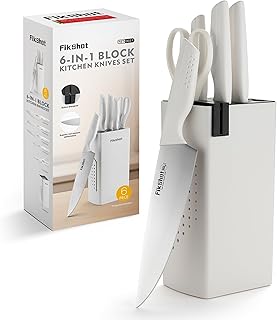
Knife Set, FIKSHOT 6-Piece Kitchen Knife Block Set with &
If you want something that just works, Knife Set is a safe bet (116 reviews, 4.5 stars).
16. Soften Edges with Curved Islands

Everything in a standard kitchen is a harsh right angle. Square cabinets, square islands, square tiles. I walked into a kitchen showroom last month and noticed they were rounding the corners of their marble islands. It completely changes the energy of the room. If you’re renovating, consider a curved overhang on your island or subtly rounded cabinet ends. It improves traffic flow dramatically. I can’t count how many times I’ve bruised my hip on the sharp corner of my granite counter while rushing to check the oven. A soft, curved edge prevents this and makes the space feel more fluid. If you can’t afford to replace countertops, bring in curves through accessories. Use a large, round wooden cutting board leaned against the backsplash.
17. Use Matte Ceramic Bowls for Fruit Storage

Wire fruit baskets leave weird grid indents on ripe peaches and let onion skins flake all over the counter. I swapped my wire basket for a massive, shallow matte ceramic bowl from Target’s Threshold line. It cost $25. Now, my lemons and avocados sit in a solid, earthy vessel. The matte finish doesn’t reflect light, keeping visual noise low. A wide, shallow bowl also lets you see exactly what produce you have, so things don’t rot at the bottom. I once left a bag of potatoes in a deep wicker basket for a month, and the smell of the resulting rot took days to clear out. Keep fresh produce visible but contained in a beautiful, solid bowl. It doubles as a centerpiece.
18. Keep Cleaning Supplies in Amber Glass

Nothing ruins the vibe of a carefully curated kitchen faster than a neon green bottle of dish soap sitting on the counter. I buy my dish soap in bulk from Sprouts and refill a heavy amber glass pump bottle. The bottle cost $12 on Amazon. The dark glass hides the color of the liquid inside, and the amber tone perfectly complements wooden cutting boards and brass hardware. I do the same thing for my all-purpose counter spray. I use a 16-ounce glass spray bottle with a silicone sleeve on the bottom so it doesn’t clank against stone counters. I tried using clear glass bottles initially, but the blue tint of the soap ruined the neutral color palette I was trying to build.
19. Bring in Fresh Herbs in Terracotta Pots

Fake plants collect dust and look plastic. To make a minimalist space feel alive, you need actual living things. I buy $4 basil and rosemary plants from Kroger and drop them into aged terracotta pots on my windowsill. The porous clay breathes, which keeps the roots healthy, and the rusty orange color adds a fantastic pop of earthy warmth. These aren’t just decorative. I used to kill herbs constantly because I kept them in the plastic nursery sleeves, which trapped water and rotted the roots. Terracotta solves this. Having fresh basil within arm’s reach while you’re cooking pasta is incredibly satisfying. The caramel-butter smell alone alters the kitchen from a sterile prep zone into a working, breathing space. Put a small ceramic saucer under the pots.
20. Maintain Clear Sightlines

The most expensive materials won’t save a cluttered layout. When I first organized my kitchen, I put my massive stand mixer right in the middle of the main counter. It blocked the view from the dining room and made the space feel cramped. I cleared that central counter completely and moved the heavy appliances to a corner tucked out of the direct line of sight. When you walk into the room, your eyes should travel smoothly from the doorway to the window without hitting a roadblock of blenders. Keep the areas flanking your sink and stove completely bare except for curated micro-stations. I know it’s annoying to pull the blender out of a lower cabinet. But the mental clarity is completely worth it.
Creating a space that feels calm and grounded doesn’t happen by accident. It takes ruthless editing and a commitment to tactile, natural materials. I spent years fighting my kitchen before I finally stripped it back to the essentials and focused on warmth over perfection. If you’re overwhelmed, I’d recommend starting by clearing your counters and swapping your harsh lighting for something woven and soft. Save this list to your home design Pinterest board for when you’re ready to tackle your next weekend project. You’ll be amazed at how a few intentional changes can completely shift how you feel in your home.
Frequently Asked Questions
What colors work best for an earthy minimalist kitchen?
Warm neutrals are essential. Skip stark whites and cool grays. Instead, opt for sage green, terracotta, warm greige, mushroom, and muted olive tones. These colors absorb light beautifully and create a cozy, grounded atmosphere.
How do I hide appliances in a minimalist kitchen?
The most effective method is using integrated appliances. This involves installing custom cabinetry panels over your refrigerator and dishwasher so they blend perfectly with your wood cabinets, completely removing visual clutter.
What are the best countertops for an earthy aesthetic?
Natural stone surfaces like honed quartzite, soapstone, or matte marble work best. Avoid highly polished surfaces or synthetic resins. A honed, matte finish provides a tactile, organic feel that grounds the entire room.
How can I make a minimalist kitchen feel warm instead of sterile?
Mix contrasting natural textures. Pair smooth stone countertops with reclaimed wood shelves, swap metal hardware for handleless flat-panel cabinets, and introduce organic materials like rattan pendant lights and pure linen kitchen towels.
