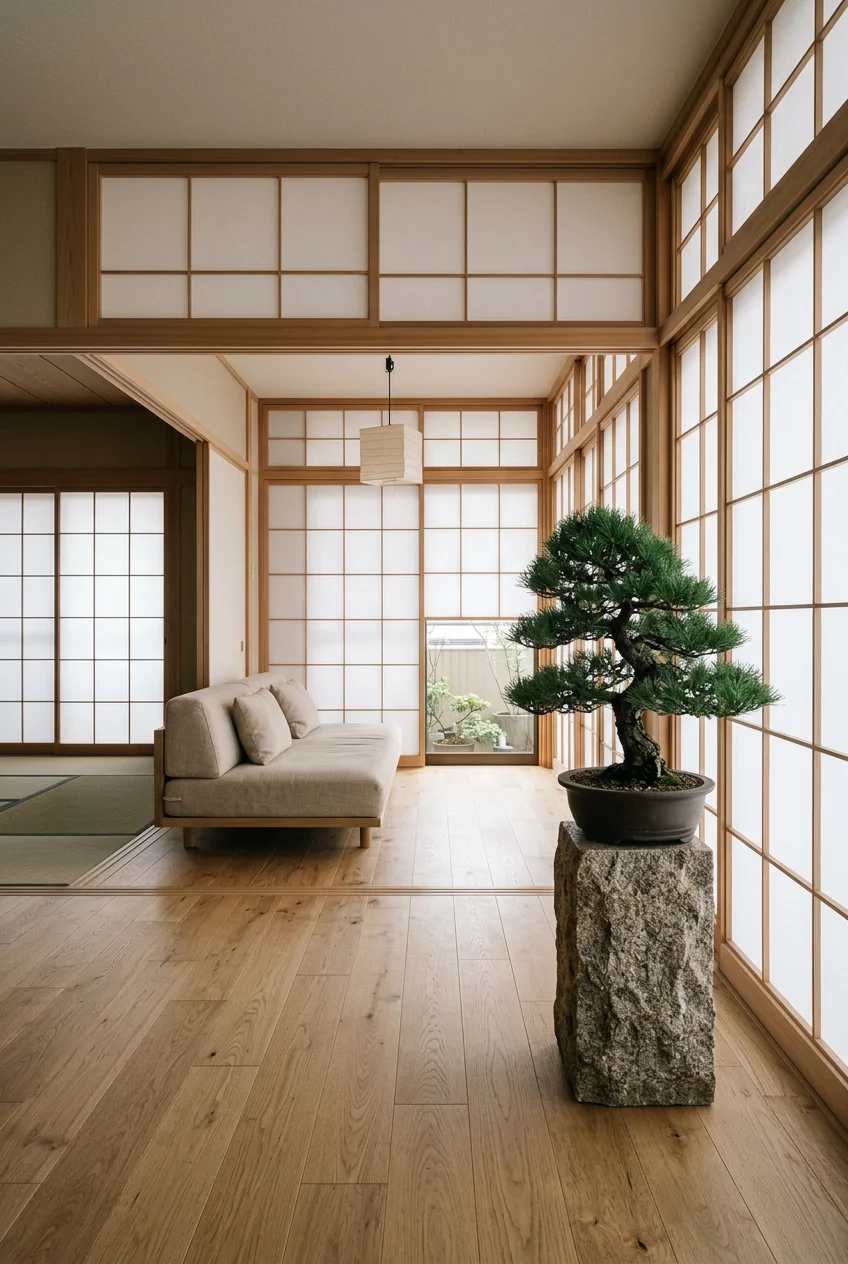
What’s Inside
- Embrace the “Ma” Principle of Intentional Empty Space
- Invest in Multi-Functional and Foldable Furniture
- Prioritize Vertical Storage Like a Pro
- Utilize Hidden Storage Solutions in Your Japanese Minimalist Apartment
- Adopt a Natural Material Palette
- Master the Art of Shoji Screens for a Japanese Minimalist Apartment
- Consider Tatami Mats for Versatility and Comfort
- Implement the “One In, One Out” Rule
- Practice Daily “Soji” Tidying Resets
- Curate Your Color and Wood Tones Carefully
- Choose Intentional Lighting
- Don’t Forget the Entryway (Genkan)
- Apply the 60-30-10 Rule for Open Shelving
- Select the Right Rug Size
- Embrace the Japandi Aesthetic for 2026
- Hide Wires and Tech Clutter
- Use Floor Seating with Zaisu Chairs
- Bring in Subtle Greenery (Bonsai or Kokedama)
- Switch to Low-Profile Platform Beds
- Use Linen and Cotton Textiles
Last Tuesday, I stood in my living room staring at four plastic storage bins from Target, realizing I’d completely ruined the vibe. Trying to force a Japanese minimalist apartment aesthetic by buying more plastic organization tools is a rookie mistake. I spent three years doing exactly that before I understood how these spaces actually work. It isn’t about owning nothing. It’s about owning things that work hard and stay quiet. I threw out my bulky velvet sofa, stopped buying cheap decor, and started over. Learned that the hard way. Here’s how I fixed my space, and how you can do it too.
1. Embrace the “Ma” Principle of Intentional Empty Space

I used to shove a side table or a plant into every empty corner. I honestly thought empty space meant I couldn’t afford enough furniture. The Japanese concept of “Ma” emphasizes the power of intentional empty space. This principle suggests that leaving gaps makes a room feel larger and much more purposeful. Aim to leave exactly 30% of your space visually empty. I started doing this last October. I removed a bulky bookshelf from my bedroom and replaced it with literally nothing. It felt weird for a week. Now, the room breathes. When you don’t cram every inch with stuff, your brain actually rests. I use a simple Muji acrylic stand ($8.90) on my desk and leave the rest of the 48-inch wood surface completely bare. It forces me to put away my laptop and pens at the end of the day. Empty space isn’t wasted space.
2. Invest in Multi-Functional and Foldable Furniture

You can’t achieve a minimalist look if your floor is covered in bulky, single-use furniture. I learned this the hard way when I bought a massive dining table for a 600-square-foot apartment. No exaggeration. Now, I prioritize pieces that fold or serve two purposes. When you live in a tight space, every item needs to justify its footprint. Brands like Hanamori make foldable, posture-friendly furniture that you can easily tuck in a closet. Japanese brand Hirashima also builds incredible small-space solutions, like sofas that extend into dining tables. I currently use the Ikea Nordviken drop-leaf table ($199). It sits folded at 29 inches wide against the wall for my morning coffee, and extends to 41 inches when I have company. I also bought a Zinus 14-inch platform bed frame ($105) with 12 inches of clearance underneath. I slide four fabric bins of off-season clothes under there, completely out of sight.
3. Prioritize Vertical Storage Like a Pro

When floor space is limited, you have to look upwards. Blank walls are a massive missed opportunity. Building upward can increase usable space by up to 30%, according to Tokyo Interior Research. I completely ignored my walls for years, leaving them blank while my floors became a clutter disaster. Now, I use wall-mounted shelves and pegboards to keep items off the ground. I went to Daiso last month and bought their plastic pegboard panels for ¥100 (about $1.50) each. I mounted four in my kitchen to hold my measuring cups and a 6 oz bottle of avocado oil. It cleared up my entire counter. I also installed two 24-inch floating oak shelves from Home Depot ($24.98 each) in my bathroom. Storing my towels vertically instantly made the tiny room feel taller and much less chaotic.

Desk Organizer Tray for Men with Ceramic Pen Holder
A dependable everyday pick — Desk Organizer Tray for Men with Ceramic Pen Holder pulls in 12 ratings at 4.5 stars. Not flashy, just solid.
4. Utilize Hidden Storage Solutions in Your Japanese Minimalist Apartment

Japanese design excels at discreet storage. Traditional Japanese homes incorporate storage beneath floorboards or tatami mats for rarely-used items. We can’t all rip up our floorboards, but we can buy smarter furniture. I used to keep all my mail and magazines in a wire basket on my coffee table. It looked messy and stressed me out. I switched to the West Elm Industrial Storage Pop-Up Coffee Table ($599). The top lifts up, revealing a 36-inch wide hidden compartment. I toss my laptop, a 12 oz bottle of screen cleaner, and all my ugly charging cables inside. When the lid is closed, the room looks completely serene. If you’re designing a Japanese minimalist apartment, you need furniture that hides your daily mess. Open baskets just collect dust and visual noise.
5. Adopt a Natural Material Palette

Plastic bins and shiny metal racks ruin the calm vibe you’re trying to build. Stick to natural materials like oak, walnut, hinoki wood, bamboo, washi paper, linen, and cotton. These materials add texture without creating visual clutter. I used to buy bright acrylic organizers for my pantry. They looked cheap and showed every single fingerprint. I swapped them for Threshold bamboo baskets from Target ($14.99 each). The warm wood tone completely changed the feel of the shelves. I also keep a 16 oz glass jar of oatmeal on the counter instead of the ugly cardboard box. When everything in your sightline comes from nature, your apartment feels grounded. Skip the glossy finishes entirely. Matte wood and soft linen absorb light instead of reflecting it, which is crucial for a calm environment.
6. Master the Art of Shoji Screens for a Japanese Minimalist Apartment

Shoji screens are traditional Japanese sliding panels made from translucent washi paper and wooden frames. They diffuse natural light while ensuring privacy. They’re perfect for dividing an open-plan living area or creating a private bedroom zone in a studio apartment. I rent my current place, so I can’t install sliding tracks. Instead, I bought a freestanding 4-panel pine wood room divider from Wayfair ($115). It mimics the shoji look using a durable, tear-resistant spun fabric instead of fragile paper. I place it in front of my desk at 5 PM every day. Hiding my workspace behind the screen signals to my brain that the workday is over. The light still filters through the white panels, so the room doesn’t feel dark or closed off. It’s an easy architectural fix for open spaces.

Drimiler Retro Black And White Newspaper Poster What If It
Drimiler Retro Black And White Newspaper Poster What If It All Works O has been one of the most consistently praised picks in this category. 292 reviewers averaged 4.5/5.
7. Consider Tatami Mats for Versatility and Comfort

Tatami mats are made from woven rush grass. They offer a springy yet firm surface that shifts a room’s function instantly. They’re excellent for humidity control because they absorb moisture in humid summers and release it in dry winters. Standard tatami mats are typically 30mm or 50mm thick. I bought a folding Igusa tatami mattress from Ikehiko ($85) on Amazon last year. I unroll it in my living room for my morning stretches. The natural grass scent is incredibly grounding. It smells exactly like dried tea leaves. When I’m done, it folds into a 35-inch block that slides right into my closet. It’s a brilliant way to add comfortable floor seating without committing to a permanent rug that you have to vacuum constantly.
8. Implement the “One In, One Out” Rule

This is a core tenet of minimalism. When a new item enters your home, an old one must leave. This prevents accumulation and ensures everything you own is intentional. I used to treat trips to Costco like a competitive sport. I’d bring home a 3-pack of generic throw pillows just because they were cheap. My apartment looked like a storage unit. Now, if I buy a new ceramic mug, an old chipped one goes straight into the donation box. I enforce this strictly with my wardrobe too. I bought a heavy wool coat from Zara ($129) last winter. Before I even cut the tags off, I drove to Goodwill and donated my worn-out puffer jacket. If you don’t control the inflow of objects, your minimalist aesthetic will disappear in a month.
9. Practice Daily “Soji” Tidying Resets

Embrace the Japanese practice of “Soji.” This is a daily cleaning ritual where you spend 5 to 10 focused minutes returning items to their proper place. This prevents large messes from accumulating. I used to let my mail, keys, and coffee cups pile up until Saturday morning. Then I’d spend three miserable hours deep cleaning. Now, I do a 10-minute reset every night at 8 PM. I grab my 28 oz bottle of Method Wood Cleaner ($6.49) and wipe down the dining table. I put the remote in its drawer. I fold the throw blanket. Waking up to a perfectly reset apartment changes your entire morning mood. You aren’t frantically searching for your keys. You just make your coffee in peace and start your day without visual stress. You might also like: 15 Capsule Wardrobe Outfits Worth Trying

Wagensteiger Stainless Steel Curved Garlic Presser or
Wagensteiger Stainless Steel Curved Garlic Presser or Cheese Grater has been one of the most consistently praised picks in this category. 13 reviewers averaged 4.5/5.
10. Curate Your Color and Wood Tones Carefully

A common mistake is mixing more than three wood tones in one room. It makes the space feel chaotic and unplanned. I did this in my first apartment. I had a cherry wood desk, an oak bed frame, and walnut nightstands. It looked terrible. Now, I strictly limit my palette. I use white oak for large furniture and matte black for hardware. Steer clear of all-cool color palettes that feel clinical. Opt for warm neutrals instead. I painted my living room walls with Sherwin-Williams Snowbound ($32 per gallon). It’s a white with a tiny drop of warm grey. Limit your overall color palette to three or four main colors. My apartment is strictly cream, white oak, charcoal, and muted olive green. That restraint is what makes the space feel expensive. You might also like: 18 True Summer Capsule Wardrobe You Need to See
11. Choose Intentional Lighting

Harsh, cool lighting completely destroys the mood of a minimalist space. I used to buy whatever cheap LED bulbs were on sale at Walmart. My living room looked like a hospital waiting area. I swapped every single bulb in my apartment for warm white bulbs around 2700K. I use the Philips Hue White A19 smart bulbs ($24 for a 2-pack). They emit a soft, amber glow that makes the wood furniture look incredibly rich. I also stopped using the overhead ceiling fixtures entirely. Overhead lighting casts harsh shadows. Instead, I rely on two floor lamps and a small paper table lamp from Noguchi ($175). Using sheer linen curtains to diffuse the natural daylight during the afternoon also helps create that soft, ambient glow you see in high-end design magazines. You might also like: 15 Minimalist Goth Home for Every Budget
12. Don’t Forget the Entryway (Genkan)

The entryway sets the tone for your entire home. In Japan, the “genkan” is a dedicated drop zone where shoes are removed to keep the main living area clean. My old entryway was a disaster zone of muddy sneakers and junk mail. I fixed it by creating a tidy landing strip. I bought a Yamazaki Home Tower shoe rack ($45). It holds exactly four pairs of shoes and has a tiny wooden top shelf for a key tray. I also stuck two heavy-duty magnetic hooks ($8.99 on Amazon) directly onto the back of my metal front door to hold my umbrella and a canvas tote bag. Containing the outdoor mess to a 3-foot radius by the door keeps the rest of the apartment feeling clean and intentional.

Welaxy Desk Drawer Organizer Tray
Welaxy Desk Drawer Organizer Tray has been one of the most consistently praised picks in this category. 599 reviewers averaged 4.5/5.
13. Apply the 60-30-10 Rule for Open Shelving

Open shelves are a huge trend for 2026, but most people do them wrong. They cram them full of books and knick-knacks until they look like a thrift store display. Follow the 60-30-10 rule instead. Leave 60% of the shelf empty. Use 30% for functional items, like a stack of three hardback books. Dedicate the last 10% to one special object. I use a single matte black ceramic bowl from Crate & Barrel ($29) on my top shelf. I used to pack my shelves tight to maximize storage, but it just created a wall of visual noise. When you leave negative space around an object, the shelf itself becomes part of the art. Your eyes need places to rest, especially in a smaller living space.
14. Select the Right Rug Size

A tiny rug makes your furniture look like it’s floating aimlessly in the room. I bought a cheap 4×6 ft rug for my living room three years ago. It barely covered the space under the coffee table, and it made the entire room feel cramped. For a standard living room, a 6×9 ft rug usually works best. You want at least the front legs of your sofa and chairs to rest on the fabric. For a dining area, the rug should extend at least 2 feet beyond the table on all sides so chairs don’t catch the edge. I upgraded to a chunky jute rug from Rugs USA ($120). Choose natural fibers like jute, sisal, or wool in undyed or low-contrast patterns. Bold geometric rugs distract from the minimalist architecture.
15. Embrace the Japandi Aesthetic for 2026

Japandi blends Japanese minimalism with Scandinavian warmth. It focuses on intentional design, natural materials, and efficient use of space. Pure minimalism can sometimes feel stark or cold. Japandi fixes that by introducing cozy textures and warmer tones. I transitioned to this style by keeping my low-profile furniture but adding softer textiles. I bought the Sven sofa in Birch Ivory from Article ($1299). It has clean, straight lines but the fabric is incredibly soft and inviting. I paired it with a raw wood coffee table. It’s about creating a serene yet cozy environment. You don’t have to live in an empty white box to be a minimalist. You just need to choose pieces that offer both function and tactile comfort.

OAKOA Aesthetic Desk Organizer
OAKOA Aesthetic Desk Organizer – Aesthetic Office Desk Accessories – B punches above its price — 94 buyers rated it 4.5 stars. I would buy it again.
16. Hide Wires and Tech Clutter

Nothing ruins a clean aesthetic faster than a tangled black mess of cords under your TV. I spent months curating my living room only to stare at a glowing power strip and six different charging cables. I finally bought the Yamazaki Home Web Cable Box ($35). It’s a sleek, matte resin box that hides the entire power strip and all the excess wire length inside. I also use 3M Command cord clips ($5.49 for a pack of 16) to route the TV power cable directly down the back of the media console leg. It takes 20 minutes to do this, but the visual relief is instant. Tech clutter is the enemy of a calm space. Hide the routers, tuck away the chargers, and keep your surfaces clear.
17. Use Floor Seating with Zaisu Chairs

Traditional Japanese rooms often skip tall chairs entirely in favor of floor seating. This lowers the visual weight of the room and makes your ceilings look much higher. I bought a Zaisu chair, which is a traditional Japanese legless chair with a backrest. I picked up a simple wooden one from Nitori for about $40. I keep it on a flat 20-inch square floor cushion. I sit there with my laptop to answer emails in the morning. It forces me to sit with better posture instead of slouching on the sofa. Plus, when I have guests over, it provides an extra seat that doesn’t block the sightlines across the room. It’s a tiny detail that completely shifts how you interact with your floor space.
18. Bring in Subtle Greenery (Bonsai or Kokedama)

Plants are essential, but a minimalist space shouldn’t look like a chaotic jungle. I used to buy huge, sprawling pothos plants that took over my bookshelves and dropped dead leaves everywhere. Now, I stick to structured, low-maintenance greenery like a bonsai tree or a kokedama moss ball. I bought a small 6-inch ficus bonsai from Sprouts last week for $12.99. I keep it in a simple unglazed clay pot on my kitchen counter. I mist it twice a week with a tiny 4 oz glass spray bottle. It provides exactly the right amount of organic life without overwhelming the space. One carefully pruned plant on an empty table makes a much stronger statement than ten messy pots crammed onto a windowsill.
19. Switch to Low-Profile Platform Beds

A massive headboard and a tall box spring will instantly make a small bedroom feel claustrophobic. I slept on a 24-inch high traditional mattress setup for years. When I finally switched to a low-profile bed, my bedroom doubled in visual size. I invested in The Bed by Thuma ($1095). It sits just 13 inches off the ground and uses Japanese joinery instead of metal screws. The low height draws your eye downward and leaves more empty wall space above, making the 8-foot ceilings in my apartment look like 10-foot ceilings. Skip the bulky duvet covers too. I use a simple, flat quilt tucked tightly around the mattress edges to maintain the sharp, clean lines of the wooden frame.
20. Use Linen and Cotton Textiles

Minimalism relies heavily on texture because you aren’t using loud colors or busy patterns to create interest. I made the mistake of buying cheap polyester blend sheets because they were wrinkle-free. They felt awful and looked completely flat. I switched to a 100% European flax linen sheet set from Parachute ($209). Linen has a natural, slightly rumpled texture that looks incredibly inviting. It adds depth to a plain white bed without looking messy. I also swapped my shiny velvet throw pillows for heavy cotton canvas covers from H&M Home ($9.99 each). Stick to natural fibers that have a matte finish. They absorb the warm lighting in your apartment and make the space feel deeply comfortable and grounded. Trust me on this.
Building a calm space takes time. I tried to rush it and ended up wasting money on things that didn’t fit the aesthetic. Start with the daily 10-minute tidying reset and work your way up to the bigger furniture swaps. Pin this article to your home decor board so you have the exact measurements and rules handy when you’re ready to tackle your own space. I’m excited for you to see how much better your apartment feels when you let it breathe.
Frequently Asked Questions
What is the 60-30-10 rule for minimalist shelving?
It dictates leaving 60% of the shelf empty, using 30% for functional items like books, and dedicating 10% to one special object. This prevents visual clutter and lets the shelf breathe.
How do you add warmth to a minimalist Japanese apartment?
Use warm lighting around 2700K and incorporate natural materials like oak, bamboo, and linen. The Japandi style specifically blends Japanese minimalism with Scandinavian coziness to avoid a clinical look.
What is the “Ma” principle in Japanese design?
“Ma” refers to the intentional use of empty space. Instead of filling every corner, you leave about 30% of your room visually empty to create a sense of calm and purpose.
Are tatami mats good for small apartments?
Yes, tatami mats are excellent for small spaces. They provide comfortable floor seating, can be folded away when not in use, and naturally regulate humidity by absorbing and releasing moisture.
