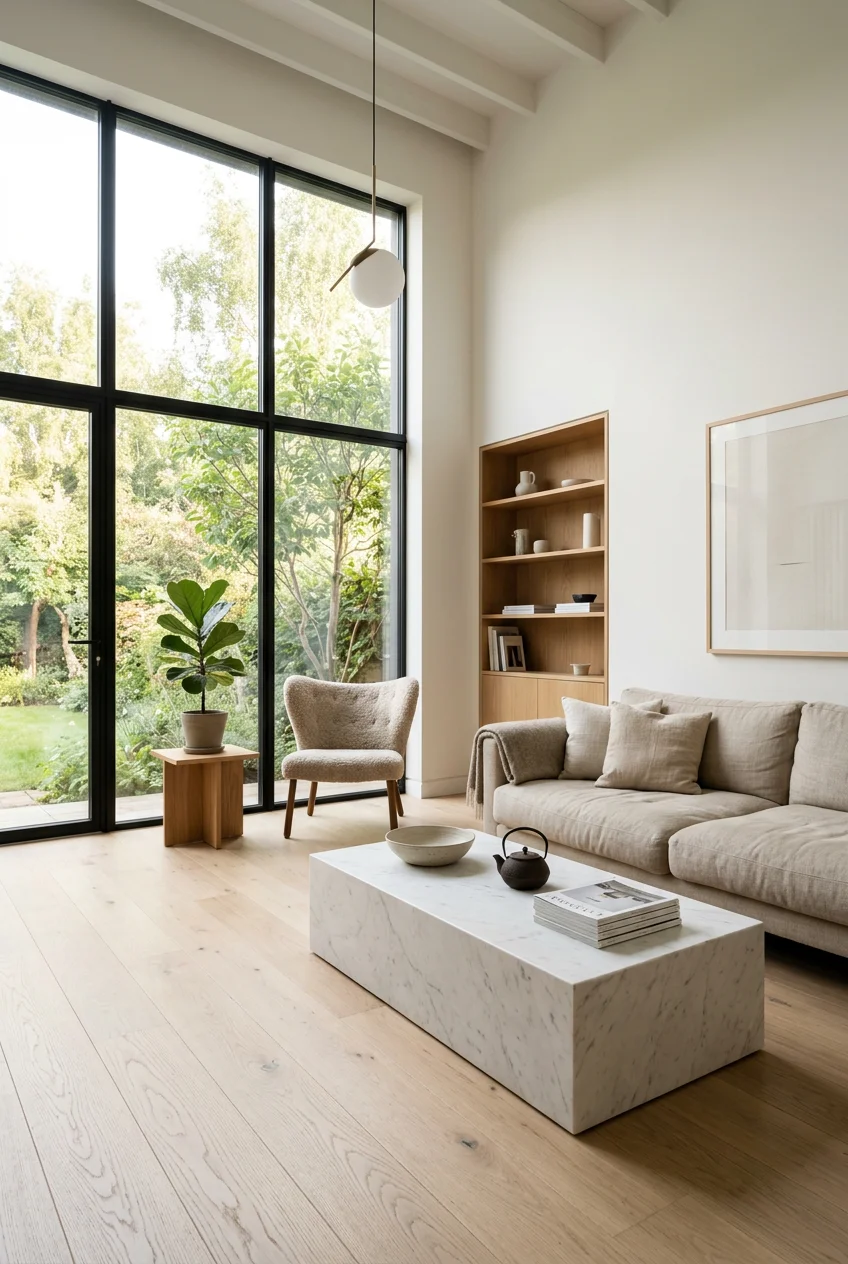
What’s Inside
- Embrace a Neutral Base Palette with Warm Undertones
- Prioritize Natural Light and Minimal Window Treatments
- Invest in Quality, Functional Furniture with Clean Lines
- Incorporate Natural Materials Extensively
- Layer Textures for Depth and Coziness
- Declutter Ruthlessly and Utilize Smart Storage
- Embrace “Lagom” – The Concept of “Just Right”
- Strategic and Layered Lighting is Crucial
- Introduce Greenery for a Fresh Touch
- Add Personal Touches Thoughtfully
- Avoid Overloading with Furniture
- Consider a Sculptural Statement Piece
- Surprising Tip: Embrace Beeswax Candles
- Lesser-Known Tip: Remove Unnecessary Doors
- Expert Insight: Quality Over Quantity
Last Tuesday at IKEA, I watched a couple nearly end their relationship over a mustard yellow velvet sofa. They were trying to build a Scandinavian minimalist living room, but they kept picking pieces that clashed with the whole vibe. I didn’t say anything, but I winced. I knew exactly what they were doing because I did the same thing five years ago. I bought a stark white shag rug from Target for $80, thinking it’d look chic. Within two weeks, it looked like dirty snow and trapped every crumb my toddler dropped. It was a disaster. Creating a space that feels Nordic and cozy requires specific rules. It isn’t just about tossing your stuff and painting walls blinding white. It requires a balance of texture, light, and very intentional purchases. I’m going to show you how to get this right without making the expensive mistakes I made. Let’s break down the actual steps to get that calm, collected space.
1. Embrace a Neutral Base Palette with Warm Undertones

A true Scandinavian minimalist living room shouldn’t look like a sterile hospital wing. That was my first major mistake when I moved into my old apartment. I painted everything in a harsh, cool-toned white from Home Depot that cost $25 a gallon. When the winter light hit it, the room felt like a freezer. It was miserable. Instead, you need warm undertones to reflect light while keeping things soft. I highly recommend Farrow & Ball’s “Skimming Stone.” It costs about $145 per gallon, which is pricey, but the pigment quality is completely different from budget brands. It provides a gentle, warm off-white glow that shifts as the sun moves. If that’s out of budget, Sherwin Williams “Alabaster” at $65 a gallon is a solid alternative. The goal is a soft beige or light gray base that makes your furniture pop without hurting your eyes. Skip the stark whites. They make every scuff mark and fingerprint painfully obvious. You’ll spend half your life wiping down the walls with a Magic Eraser. Trust me on this.
2. Prioritize Natural Light and Minimal Window Treatments

Nordic countries deal with long, dark winters, so maximizing daylight is a survival tactic. Heavy, dark drapes just kill the vibe. I used to have thick, navy blackout curtains, and the room felt like a cave. Taking them down changed the energy immediately. Keep your windows as clear as possible. If you don’t need privacy, leave them bare. The glass acts as a clean architectural element. If you live ten feet from your neighbor like I do, you need something. I bought Threshold sheer linen-blend panels from Target for $35 each. They let light filter through while blurring out the house next door. The linen texture adds visual interest without bulk. Hang the curtain rod about four inches below the ceiling, not on the window frame. This draws the eye up and makes your eight-foot ceilings feel taller. Just make sure the curtains barely kiss the floor. Puddling fabric looks messy and collects dust bunnies like crazy.
3. Invest in Quality, Functional Furniture with Clean Lines

This is where people usually trip up. They buy ornate pieces that clutter the visual field. Scandinavian design demands streamlined silhouettes. A perfect example is the Fritz Hansen Series 7 Chair by Arne Jacobsen. It’s an iconic 1955 design, known for its ergonomic shape and the fact that it stacks easily. The basic model will run you about $669, while upholstered versions cross the $2,000 mark. It’s a massive investment. I saved up for eight months to buy a single black ash one for my desk. The curve of the wood supports your lower back in a way cheap replicas don’t. When you’re picking a sofa, avoid overstuffed arms and skirted bottoms. You want to see the legs. Being able to see the floor underneath a couch creates an illusion of more space. I bought a low-profile gray sofa from West Elm for $1,299 two years ago, and the exposed wooden legs make the room feel airy. If you buy bulky furniture, the room will feel heavy, no matter how much you declutter.

2 Pcs Natural Wood Arch Decor
A dependable everyday pick — 2 Pcs Natural Wood Arch Decor pulls in 49 ratings at 4.5 stars. Not flashy, just solid.
4. Incorporate Natural Materials Extensively

You can’t have a cozy space if everything is plastic and chrome. You need wood, wool, cotton, linen, leather, and jute to ground the room. When I first tried this, I bought a cheap acrylic coffee table. It scratched within three days and looked like a giant smudge magnet. I ended up giving it away on Craigslist. Learned that the hard way. Now, I focus on natural textures. Light wood flooring, specifically white oak, is the ultimate foundation. If you rent and can’t change the floors, layer a massive jute rug over whatever ugly carpet you have. I bought an 8×10 jute rug from Rugs USA for $180, and it completely neutralized the awful beige apartment carpet. To soften the scratchy jute, I keep a chunky knit wool throw draped over my reading chair. The wool throw I got from a local boutique for $120 smells faintly of lanolin and provides incredible warmth when the heater struggles in January. The contrast between the rough jute, smooth oak, and soft wool makes the room interesting.
5. Layer Textures for Depth and Coziness

Minimalism doesn’t mean empty and flat. A flat room is a boring room. To prevent the space from feeling cold, you have to layer textures. It’s a classic design principle. I combine smooth, cold materials with plush ones. Last month, I bought a genuine sheepskin rug from Costco for $39.99. I don’t use it on the floor. Instead, I drape it over the back of a rigid wooden lounge chair. The visual contrast between the hard, structured wood and the fluffy sheepskin makes the corner look inviting. I also mix up my throw pillows. Don’t buy a matching set of four identical cotton pillows. It looks like a cheap hotel lobby. I have one smooth leather lumbar pillow sitting next to a nubby, oversized linen cushion. I bought the leather one for $65 from CB2. When you run your hand across the sofa, you should feel three or four distinct tactile sensations. This layering tricks the brain into feeling cozy, even when there are very few objects in the room. You might also like: 20 Charming Minimalist Counter Decor Kitchen Ideas That Are Totally Worth It
6. Declutter Ruthlessly and Utilize Smart Storage

You can’t achieve this look if you have mail, dog toys, and half-empty coffee mugs covering every surface. Scandinavian minimalism requires uncluttered spaces. But let’s be realistic, you still own stuff. The trick is closed storage. I used to keep magazines and charging cables in a wire basket. It looked like a cage full of garbage. You could see every messy detail. I switched to the Muuto Restore Basket. It’s made from recycled plastic bottles, giving it a cool, stiff felt texture. It measures 48cm long by 35cm wide and 23cm high. It costs around $173 to $219 CAD. Yes, spending nearly $200 on a basket hurts. But it hides the visual chaos. I use one for my dog’s toys and another for my collection of ugly electronics cords. When everything has a specific, hidden home, the room breathes. Don’t buy glass-front cabinets unless you’re meticulously tidy. Solid wood or painted MDF doors are your best friend here. You might also like: 17 Minimalist Home Decor Worth Trying

UTTCMK Bookshelf Decor Thinker Statue
If you want something that just works, UTTCMK Bookshelf Decor Thinker Statue – Abstract Art Reading Thinker S is a safe bet (809 reviews, 4.5 stars).
7. Embrace “Lagom” – The Concept of “Just Right”

There is a Swedish principle called “Lagom” which basically translates to “not too much, not too little, just the right amount.” Interior designer Deborah Bass says, “Using a neutral tone while avoiding a minimal or stark atmosphere is a delicate balancing act.” She’s right. It’s easy to swing too far into minimalism and end up with a room that feels hostile. I did this. I got into a weird decluttering frenzy three years ago and threw away my curtains, my rug, and all my wall art. My living room echoed when I talked. It felt like an interrogation room. My friends stopped coming over because it was so uncomfortable. I had to slowly add things back in until the room felt human again. Lagom means keeping the comfortable armchair even if it’s a bit bulky, because you actually sit in it every night. It means having enough throw blankets for the people who live there, not just one for aesthetics. Find the balance between a magazine cover and a functional home. You might also like: 15 Minimalist Goth Home for Every Budget
8. Strategic and Layered Lighting is Crucial

Overhead lighting is the enemy of coziness. If you only use the flush-mount ceiling light your landlord installed, your room will look like a DMV waiting area. Because natural light is scarce in Nordic winters, they rely on layered lighting. You need multiple light sources at different heights. The dream piece for this is the Artek A331 Beehive lamp designed by Alvar Aalto. It’s a stunning central pendant light that costs roughly €1,287.00. It measures 33cm in diameter and 30cm in height, and the tiered design filters the light so it never glares. Since dropping over a thousand euros on a lamp isn’t feasible for everyone, you can mimic the effect. I use a paper lantern pendant from IKEA for $9.99 that diffuses light beautifully. The real secret is the bulbs. I buy Great Value dimmable LED bulbs from Walmart in the “Soft White” 2700K temperature. They cost $12.48 for a 4-pack. Never buy “Daylight” bulbs for a living room. They cast a harsh, blue tint that makes everything look cheap.
9. Introduce Greenery for a Fresh Touch

Plants are non-negotiable in this design style. They bring life and a connection to nature into the room. But you have to be careful. A massive, chaotic fern hanging from the ceiling can look messy, which fights the clean lines you’re trying to establish. I stick to simple, architectural plants. Last month, I picked up a medium-sized Monstera from Trader Joe’s for $19.99. Its large leaves act like a living sculpture in the corner. I put it in a matte white ceramic cylinder pot from Target that cost $25. Avoid pots with crazy patterns or bright colors. The focus should be on the vibrant green of the plant. I also keep a small Snake Plant on my media console. They require almost zero water, which is great because I notoriously forget to water things. I killed three fiddle leaf figs before I finally admitted defeat and switched to low-maintenance options. Keep the greenery intentional. Three well-placed, healthy plants look significantly better than fifteen dying ones crammed on a windowsill.

Gold Leaf Home Decor Set – Metal Leaves Statues
Gold Leaf Home Decor Set – Metal Leaves Statues has been one of the most consistently praised picks in this category. 55 reviewers averaged 4.5/5.
10. Add Personal Touches Thoughtfully

A common trap is making the room look like a furniture showroom. It looks pretty in photos, but it feels devoid of personality. You have to add personal elements, but with restraint. A gallery wall with thirty tiny, mismatched frames usually looks cluttered. Instead, the trend leans toward oversized art prints in neutral or monochrome palettes. I took a black and white photograph of a rocky beach during a trip to Oregon, and I had it blown up and framed by Framebridge for about $150. It’s a massive 24×36 inch piece that sits alone on the wall above my sofa. It commands attention without being visually noisy. I also keep a small, hand-thrown ceramic bowl my sister made me on the coffee table. It holds our remote controls. These small, meaningful items prevent the space from feeling anonymous. Remember the one-in, one-out rule. If you buy a new decorative object, an old one needs to get donated or put away.
11. Avoid Overloading with Furniture

Negative space is just as important as the furniture you actually buy. A few years ago, I lived in a tiny 10×12 foot living room. I desperately wanted a sectional, so I bought a massive gray one from Ashley Furniture. It took up 70 percent of the floor space. I had to shimmy sideways just to get to the balcony door. It was a terrible decision that made the room feel claustrophobic. Scandinavian design prioritizes open space and easy movement. You should be able to walk through your living room without bumping your shins on a coffee table. If your room is small, skip the sectional and buy a standard three-seater sofa and one slim accent chair. Leave at least 18 inches of space between the coffee table and the sofa. Leave the corners empty if you don’t need anything there. Empty space gives your eyes a place to rest. It makes the furniture you do have look much more important and expensive. Don’t fill a corner just because it’s empty.
12. Consider a Sculptural Statement Piece

While most of your furniture should be simple and functional, adding one highly sculptural piece anchors the entire room. We’re seeing a lot of single sculptural chairs in black leather or architectural coffee tables. I really appreciate the HAY Loop Stand Table designed by Leif Jørgensen. It has a stark white top with these intense, angled black steel legs. A 160cm version costs around €819.00. It’s technically a dining table, but I’ve seen the smaller versions used brilliantly in open-concept living spaces as a massive work desk behind a low sofa. The stark contrast of the black steel against a light oak floor is striking. If a table that expensive isn’t happening, look for a side chair with a unique wooden frame. I found a vintage chair with sweeping, curved teak armrests at a flea market for $85. I spent another $100 having the seat reupholstered in plain black canvas. That single chair gets more compliments than anything else in my house.

CEMABT Modern Nordic Boho Vase Set
A dependable everyday pick — CEMABT Modern Nordic Boho Vase Set – Elegant Beige Matte Ceramic Home pulls in 984 ratings at 4.5 stars. Not flashy, just solid.
13. Surprising Tip: Embrace Beeswax Candles

When most people think of Nordic coziness, or “hygge,” they buy heavily scented, three-wick candles from Bath & Body Works. I used to do this, and the synthetic vanilla scent would give me a migraine after twenty minutes. Plus, the colorful glass jars usually clash with a minimal aesthetic. The better move is to use 100 percent pure beeswax candles. They’re an eco-friendly choice and act as natural air purifiers when they burn. They emit negative ions that neutralize dust and allergens. I buy a pair of tall beeswax tapers from Whole Foods for $8.99. They have this subtle, natural honey scent that doesn’t overpower the room. I place them in heavy, black cast-iron candle holders I found on Amazon for $22. The contrast of the golden yellow wax against the matte black metal looks sophisticated. The warm, flickering light they throw in the evening is unmatched by any artificial bulb. It drops my stress levels after a long day of working at a screen.
14. Lesser-Known Tip: Remove Unnecessary Doors

This is a structural trick that costs nothing but changes how a space feels. In many older apartments or smaller homes, the living room is closed off by a standard interior door. Unless you need that door for soundproofing or privacy, take it off the hinges. I did this in my current hallway. The door swung inward and constantly banged against a side table, eating up three square feet of space. I unscrewed the hinges, patched the holes with $6 wood filler from Home Depot, and stored the door in the basement. The living room instantly felt 20 percent larger. The sightline from the hallway into the living space was suddenly clear. It creates that open-concept feeling without tearing down any drywall. If you decide you do need a soft barrier, you can install a basic tension rod for $14.98 at Home Depot and hang a heavy linen curtain in the doorway. You can pull it shut when you want to feel enclosed, but leave it tied back the rest of the time.
15. Expert Insight: Quality Over Quantity

Brad Smith, CEO of Omni Home Ideas, states, “The beauty of minimalism lies in its ability to make every piece count.” This is the hardest lesson to learn. When I first tried to decorate, I bought ten cheap decorative items from Wayfair for $150 total. Within a year, the fake brass was chipping, the pillows were flat, and the cheap wood veneer was peeling. I ended up throwing it all away. Now, I force myself to wait. If I need a new side table, I won’t buy a $40 temporary one. I’ll leave the space empty for six months while I save $300 for a solid ash wood table that will last for thirty years. You’re building a Scandinavian minimalist living room, which means every single item is on display. There is nowhere to hide cheap construction. Buy one excellent wool blanket instead of five flimsy polyester ones. Buy one stunning original art print instead of a six-pack of generic canvas quotes. Your wallet will hurt initially, but you won’t have to replace these items next year.
Getting this aesthetic right takes a lot of patience. You can’t just order a room in a box and expect it to have that calm, collected energy. It requires editing your belongings, choosing materials that feel good to touch, and being picky about what crosses your threshold. I’ve spent years tweaking my own space, making expensive mistakes, and replacing cheap plastics with real wood and wool. It took me years to figure out. The result is a room that actually lowers my blood pressure the second I walk into it. If you’re starting this process, pick one corner to declutter today. Don’t try to overhaul the whole house by tomorrow. Save this guide on Pinterest so you can reference the paint colors and lighting rules when you finally head to the hardware store. You’ve got this.

PoKat 23" Modern Ceramic Table Lamp Set of 2 for Living
A dependable everyday pick — PoKat 23″ Modern Ceramic Table Lamp Set of 2 for Living Room White Des pulls in 15 ratings at 4.5 stars. Not flashy, just solid.
Frequently Asked Questions
What colors are best for a Scandinavian minimalist living room?
Stick to warm neutrals rather than stark whites. Soft beiges, warm off-whites like Farrow & Ball’s ‘Skimming Stone’, and light grays reflect natural light beautifully while keeping the space feeling cozy and inviting instead of sterile.
How do I make a minimalist living room feel cozy?
Layering natural textures is the key. Combine smooth materials like leather and light oak with highly textured items like a chunky wool throw, linen curtains, or a natural sheepskin draped over a chair.
What is the Lagom concept in interior design?
Lagom is a Swedish principle meaning ‘just the right amount.’ In design, it means finding the balance between a cluttered room and a stark, empty space. Keep items that are functional and bring comfort, rather than throwing everything away.
What kind of lighting works for Nordic minimalism?
Avoid harsh overhead lighting. Layer your light sources using a central diffused pendant lamp, floor lamps, and table lamps. Always use warm LED bulbs (around 2700K) to mimic natural sunlight and create a soft evening glow.
