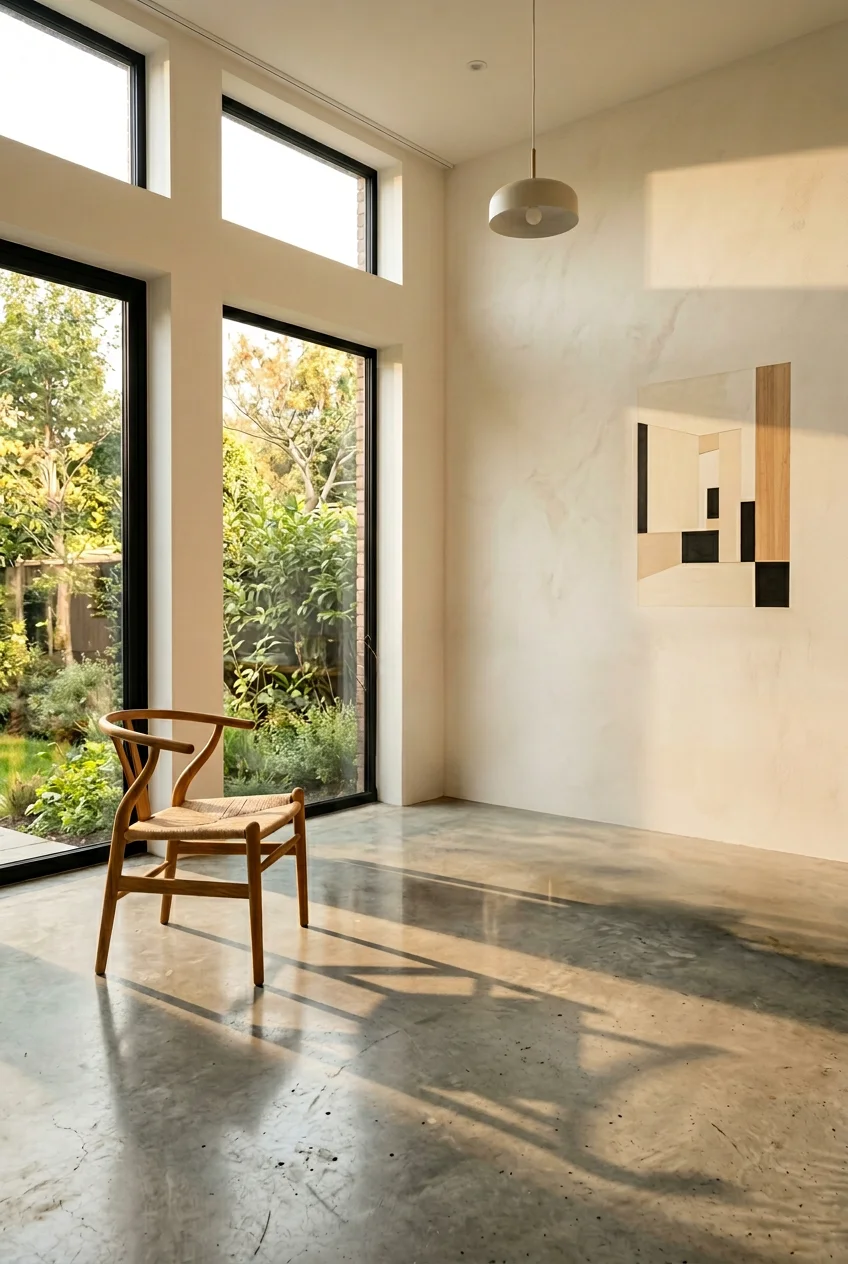
What’s Inside
- Embrace Warm, Earthy Neutrals
- Invest in Multi-Functional Furniture
- Layer Your Lighting for Depth
- Choose Biomorphic Shapes and Soft Geometry
- Prioritize Texture Over Color
- Follow Precise Art Placement Rules
- Use Matte Black Hardware Accents
- Hide Your Cords Relentlessly
- Incorporate Oversized Floor Mirrors
- Bring in Real Greenery
- Choose Linen Window Treatments
- Float Your Shelves
- Curate Your Coffee Table Trays
- Use Clear Glass for Negative Space
- Edit Your Books by Color
- Install Minimalist Wall Hooks
- Leave Empty Space on Purpose
I painted my living room bright, stark white in 2019 because I thought that was the only way to do modern minimalist decor. I spent $150 on premium paint, rolled it on for two days, and stepped back to admire my work. It felt exactly like the waiting room at my dentist’s office in Ohio. The echo was terrible, and the glare gave me a headache. Modern minimalist decor doesn’t mean living in a sterile white box. You can have empty space without feeling like you’re squatting in an art gallery. I figured out how to fix it over the last four years, mostly through trial and error—learned that the hard way, trust me on this. Here are twenty ways to get that clean look while keeping your house comfortable.
1. Embrace Warm, Earthy Neutrals

Let’s talk about paint. I used to think minimalist meant pure white. I tried Behr Ultra Pure White and it made my living room feel cold and unwelcoming. For 2026, trends show a shift toward warmer, character-rich homes. I repainted my walls with Benjamin Moore’s Balboa Mist OC-27. It costs about $75 a gallon. It’s a soft taupe that changes color depending on the light. In the morning, it looks like a warm beige, and by sunset, it takes on a mushroom gray tone. This makes the room feel snug without adding visual noise. You can also look at Sherwin-Williams Accessible Beige SW 7036 if you want something slightly darker. The tradeoff is that these colors can look a bit muddy if your room doesn’t get much natural light. I combated that by adding a large floor mirror opposite my window. I’ve had this color for three years now, and it hides scuffs way better than the stark white did.
2. Invest in Multi-Functional Furniture

A massive mistake I made early on was buying too many small side tables. I had three different tiny tables cluttering up my living room floor. Minimalist design fails when you overcrowd a room with furniture. I fixed this by getting a Homary lift-top coffee table for $249. It has a hidden storage compartment underneath the top surface. I keep my laptop, three remote controls, and a stack of coasters in there. This one piece replaced two side tables and a magazine rack. The lift mechanism is a little stiff when you first buy it, but it loosens up after a few weeks of use. It weighs almost 60 pounds, so you won’t be moving it around easily. Buying pieces that serve multiple purposes reduces the total number of items in your room. I’ve used this table every single day since last November, and the clean surface makes the whole room feel larger.
3. Layer Your Lighting for Depth

Leaving empty spaces without adequate lighting makes a minimalist room feel stark. Last winter, I only had one harsh overhead light in my bedroom. It felt like an interrogation room. I learned that layered lighting is crucial for creating mood. You need ambient, task, and accent illumination. I bought a Flos Glo-Ball pendant light for $695. It hangs right over my dining table and diffuses the light beautifully through the frosted glass. High-end pendants from brands like Artemide usually run between $300 and $1500, but they act as sculptural art pieces even when turned off. The installation was annoying because the wiring instructions weren’t clear, so I had to hire an electrician for an extra $150. I paired the pendant with warm LED lights in my floor lamps. You want bulbs in the 2700K to 3000K range. Anything higher looks blue and clinical. I put everything on Lutron dimmer switches ($29 each) to control the atmosphere.
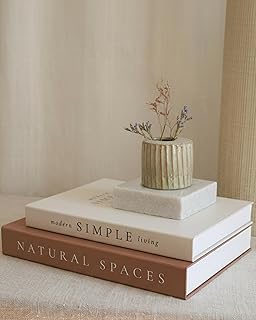
Beautiful Decorative Books
If you want something that just works, Beautiful Decorative Books – Set of 2 Boxes Enhance Your Coffee Table is a safe bet (288 reviews, 4.5 stars).
4. Choose Biomorphic Shapes and Soft Geometry

Minimalist silhouettes are softening up. The rigid, straight-edged boxes of the 2010s are out. Last year, I stubbed my toe on my square metal coffee table for the final time. I dragged it to the curb and started looking for softer edges. Cloud-style sectionals, rounded corners, and circular nesting tables reduce visual chaos. They make spaces feel much more inviting. I bought a curved, modular sofa from Povison for $1299. It has a gentle crescent shape that breaks up the harsh right angles of my living room walls. You can also find similar styles from MIGLIO 5792. The curved back means it doesn’t sit perfectly flush against a flat wall, which leaves a small gap behind it. I actually like this because it creates a sense of floating space. The fabric is a soft bouclé that adds texture. I’ve had it for eight months, and the rounded edges make navigating the room in the dark much safer.
5. Prioritize Texture Over Color

A common mistake is forgetting about texture. If everything is smooth glass, flat drywall, and polished wood, the room feels one-dimensional. I tried to keep my bedroom completely bare, and it just looked unfinished. Layering different textures adds interest without introducing visual clutter. I bought a chunky wool throw blanket from Parachute Home for $149. Parachute is known for Oeko-Tex certified textiles, which means they don’t use harmful chemicals. I keep it draped over the end of my bed. The thick wool contrasts nicely with my smooth cotton sheets. The only negative is that the wool sheds a little bit during the first few weeks, so you’ll need to vacuum around it. I also added a natural jute rug under my reading chair. The rough, organic feel of the jute breaks up the smooth hardwood floor. You don’t need bright colors to make a room interesting if you mix your materials correctly. You might also like: 18 True Summer Capsule Wardrobe You Need to See
6. Follow Precise Art Placement Rules

Minimalist art is about intentionality, not emptiness. I used to just hammer a nail wherever it looked okay to my naked eye. My art always looked slightly off-balance. A lesser-known tip is to use precise measurements for hanging frames. You need to hang the center of a piece of art exactly 57 to 60 inches from the floor. This is standard eye level. If you’re placing it above a sofa or console, ensure the bottom edge is exactly 6 to 8 inches above the furniture. If I didn’t measure, I’d have crooked frames forever. I bought two large abstract geometric prints and put them in simple black frames from Target for $35 each. Because they’re a diptych, I left exactly 2.5 inches between the frames. Any wider and they look disconnected. I used heavy-duty Command Strips from Walmart ($12.99 for a large pack) instead of nails so I could adjust them perfectly. Measuring takes ten extra minutes, but it anchors the room properly. You might also like: 15 Clever Minimalist Living Home Tips You Haven’t Thought Of

PoKat 23" Modern Ceramic Table Lamp Set of 2 for Living
Honestly, PoKat 23″ Modern Ceramic Table Lamp Set of 2 for Living Room White Des surprised me — sturdier than it looks in the photos, and over 15 buyers gave it 4.5 stars.
7. Use Matte Black Hardware Accents

Sometimes the smallest details dictate the entire style of a room. My kitchen cabinets had these shiny, ornate brushed nickel pulls from the 1990s. They completely ruined the clean lines of the space. I didn’t have the budget for a full kitchen renovation, so I just changed the hardware. I bought matte black edge pulls from CB2 for $8.95 each. They screw into the back of the cabinet door and wrap around the front, leaving just a thin black line visible. The matte black provides a sharp, high-contrast outline against my warm beige cabinets. The installation took me three hours because I had to fill the old holes with wood putty and paint over them. It was tedious work. However, the matte black finish doesn’t show fingerprints like polished chrome does. I’ve used these handles for two years, and they still look brand new. It’s a cheap way to modernize a dated room. You might also like: 15 Capsule Wardrobe Outfits Worth Trying
8. Hide Your Cords Relentlessly

Nothing ruins modern minimalist decor faster than a tangled black web of television cords. I used to let my router, lamp, and TV cables dangle behind my media console. It looked messy, no matter how clean the rest of the room was. I finally spent a Saturday fixing it. I bought a pack of JOTO cable management sleeves on Amazon for $12.99. They’re neoprene tubes with zippers. You just gather up all the cords, wrap the sleeve around them, and zip it up. It turns five messy wires into one thick, clean tube. I also bought a Yamazaki Home cable management box for $35 to hide my power strip. It’s a sleek white resin box that sits on the floor. The lid is a bit flimsy, so don’t step on it, but it completely hides the glowing lights of the surge protector. Getting the cords out of sight instantly makes the room feel deliberately styled.
9. Incorporate Oversized Floor Mirrors

Minimalist spaces rely heavily on natural light. If your room is small or dark, you need to bounce light around. I lived in a narrow apartment with only one north-facing window. It felt like a cave. I bought a massive, thin-framed floor mirror from the Project 62 line at Target for $70. I leaned it against the wall directly opposite the window. It instantly doubled the visual size of the room and reflected the sunlight into the dark corners. The frame is a very thin brass metal, so it doesn’t add visual bulk. The mirror is quite heavy, at around 45 pounds, so you absolutely must secure it to the wall with the included anti-tip hardware. I skipped that step initially and my dog almost knocked it over. A large mirror acts as a piece of architectural art. It fills a blank wall without introducing new colors or busy patterns.

UTTCMK Bookshelf Decor Thinker Statue
Honestly, UTTCMK Bookshelf Decor Thinker Statue – Abstract Art Reading Thinker S surprised me — sturdier than it looks in the photos, and over 809 buyers gave it 4.5 stars.
10. Bring in Real Greenery

Plants bring life to a stark room, but you have to choose the right ones. I used to have a bunch of tiny succulents scattered across every windowsill. It looked cluttered. In a minimalist space, one large statement plant is better than ten tiny ones. I went to Costco and bought a five-foot Fiddle Leaf Fig tree for $49.99. I put it in a matte white Bishop planter from West Elm, which cost $129. The large, sculptural leaves of the Fiddle Leaf Fig add organic shapes to the room. The tradeoff is that this specific plant is incredibly fussy. If you move it, it drops leaves. If you overwater it, it drops leaves. I water mine exactly two cups every Sunday. If you want something easier, a large Snake Plant requires almost zero maintenance. The key is using a sleek, unpatterned pot so the focus remains on the plant’s natural texture.
11. Choose Linen Window Treatments

Heavy velvet drapes or cheap plastic blinds ruin the minimalist aesthetic. I had thick blackout curtains in my living room for a year, and they made the space feel heavy and closed off. I swapped them out for European Linen curtains from Quince. They cost $89.90 per panel. Linen has a beautiful, natural texture that filters light instead of blocking it completely. When the afternoon sun hits them, they cast a soft, diffused glow across the room. I hung the curtain rod high and wide, about four inches below the ceiling and extending six inches past the window frame on each side. This trick makes the windows look massive. Linen does wrinkle easily. You’ll need to steam them after hanging, which took me about forty minutes with a handheld steamer. I’ve had them up for six months, and the breezy, relaxed look perfectly balances the structured furniture in the room.
12. Float Your Shelves

Bulky bookcases take up too much floor space. I had a heavy, dark oak bookshelf that dominated my home office. It held maybe twenty books, but the piece itself was huge. I sold it on Facebook Marketplace and bought three IKEA Lack floating shelves for $29.99 each. I installed them vertically up the wall. Floating shelves draw the eye upward and keep the floor clear. The installation is tricky because you have to hit a wall stud or use heavy-duty toggle bolts. I tried using standard drywall anchors first, and the shelf sagged immediately under the weight of my books. Once properly secured, they look like they’re hovering. I only display my favorite, visually cohesive books on them. I keep the rest out of sight. This swap freed up six square feet of floor space and made the room feel significantly taller and lighter.

Gold Leaf Home Decor Set – Metal Leaves Statues
Honestly, Gold Leaf Home Decor Set – Metal Leaves Statues surprised me — sturdier than it looks in the photos, and over 55 buyers gave it 4.5 stars.
13. Curate Your Coffee Table Trays

A coffee table can quickly become a dumping ground for mail, keys, and random items. I used to just leave things scattered across the surface. It drove me crazy. I learned that grouping items on a tray makes them look intentional. I bought a simple, round wooden tray from H&M Home for $34.99. Now, I keep a candle, a wick trimmer, and a small vase on the tray. If an item isn’t on the tray, it doesn’t belong on the coffee table. The tray creates a physical boundary for clutter. The wood tone adds warmth to my gray sofa. The tray isn’t water-resistant, so I have to be careful not to set wet glasses directly on the wood. I usually grab simple white tulips from Kroger for $5.99 and put them in the vase. This small styling trick takes thirty seconds but makes the whole living area look professionally designed.
14. Use Clear Glass for Negative Space

When you want to display items without adding visual weight, use clear glass. I wanted a large vase for my dining table, but solid ceramic ones felt too heavy for the space. I bought a Hatch glass vase from Crate & Barrel for $39.95. Because it’s transparent, your eye passes right through it. It takes up physical space without taking up visual space. I go to Trader Joe’s every two weeks and buy a $3.99 bundle of fresh eucalyptus branches to put inside. The green stems look beautiful through the water. The only downside to clear glass is that you have to change the water frequently. If you let it sit for more than a few days, the water gets cloudy and ruins the clean look. I wash the vase with hot soapy water every time I change the branches. It’s a small chore, but the airy, floating effect is worth it.
15. Edit Your Books by Color

Books are hard to style in a minimalist room because the spines are usually a chaotic mix of bright colors and bold fonts. I used to have a rainbow of paperbacks on my floating shelves, and it looked incredibly messy. You don’t have to throw away your books. I just turned the most brightly colored ones around so the white pages face outward. For the books I read constantly, I bought thick, textured drawing paper and wrapped the covers in a uniform cream color. I also went to Goodwill and bought five hardcover books for $2 each, just because they had beautiful, muted linen covers underneath their dust jackets. I stack these horizontally to act as bookends. Turning books backward makes it harder to find a specific title quickly, which is definitely annoying—took me years to figure out that trick. But for purely decorative shelves, this monochromatic editing technique calms the visual noise instantly.

CEMABT Modern Nordic Boho Vase Set
CEMABT Modern Nordic Boho Vase Set – Elegant Beige Matte Ceramic Home has been one of the most consistently praised picks in this category. 984 reviewers averaged 4.5/5.
16. Install Minimalist Wall Hooks

Entryways are magnets for clutter. My coats and bags used to end up draped over the back of my dining chairs. I needed a drop zone, but traditional coat racks look bulky and take up floor space. I bought a set of Muuto Dots for $30 each. These aren’t the cheap plastic hooks. They’re round, wooden wall pieces that look like sculptural buttons. I installed three of them in a staggered pattern by my front door. When they’re empty, they look like modern wall art. When I come home, they hold my heavy winter coat and my tote bag. The installation requires drilling a fairly large hole for the anchor, so you have to be sure about the placement before you start. I measured wrong on the first one and had to patch the drywall. Now that they’re up, they force me to only keep my current, daily-use jacket by the door.
20. Leave Empty Space on Purpose

The hardest lesson I learned about modern minimalist decor is that you don’t have to fill every corner. I had a weird, empty three-foot gap between my sofa and the wall. I spent weeks trying to find a slender side table or a tall plant to shove into that corner. I bought a cheap metal stand, hated it, and returned it. Finally, I just left the corner empty. It felt weird for a few days, but then I realized the empty space allowed the room to breathe. Negative space is a design element itself. It highlights the furniture you actually chose to include. If you fill every inch, nothing stands out. Now, when I vacuum, I appreciate that empty corner because I don’t have to move anything to clean the baseboards. Resist the urge to buy filler items. Let your walls be bare sometimes. It’s the ultimate minimalist flex—no exaggeration.
Finding your rhythm with modern minimalist decor takes time. You’re going to buy the wrong paint color, hang a picture too high, or buy a chair that looks great but feels like sitting on a rock. I’ve done all of that. But once you start focusing on texture, warm lighting, and intentional placement, your home stops feeling like a storage unit for your stuff and starts feeling like a retreat. I highly recommend starting with your lighting and your paint colors. Those two changes make the biggest impact for the least amount of money. If you found these tips helpful, pin this article to your home decor board so you can reference the measurements and brand names later!
Frequently Asked Questions
What is modern minimalist decor?
It’s a design style focusing on clean lines, empty space, and functional furniture. Instead of stark white boxes, the 2026 trend embraces warm neutrals, organic textures, and layered lighting to create a cozy but uncluttered home.
How do I add warmth to a minimalist room?
You add warmth through texture and lighting rather than clutter. Layer chunky wool blankets, use natural jute rugs, and install warm LED bulbs in the 2700K range. Paint walls in soft taupes instead of pure white.
Can I have plants in a minimalist space?
Yes, but scale matters. Instead of ten tiny succulents clustering up a windowsill, invest in one large statement plant like a Fiddle Leaf Fig. Put it in a sleek, unpatterned matte planter to maintain clean lines.
How do I hide cords in a minimalist living room?
Visible cords ruin the clean aesthetic. Group loose wires together using neoprene cable management sleeves. For power strips on the floor, place them inside a resin cable management box so the glowing lights and plugs aren’t visible.
