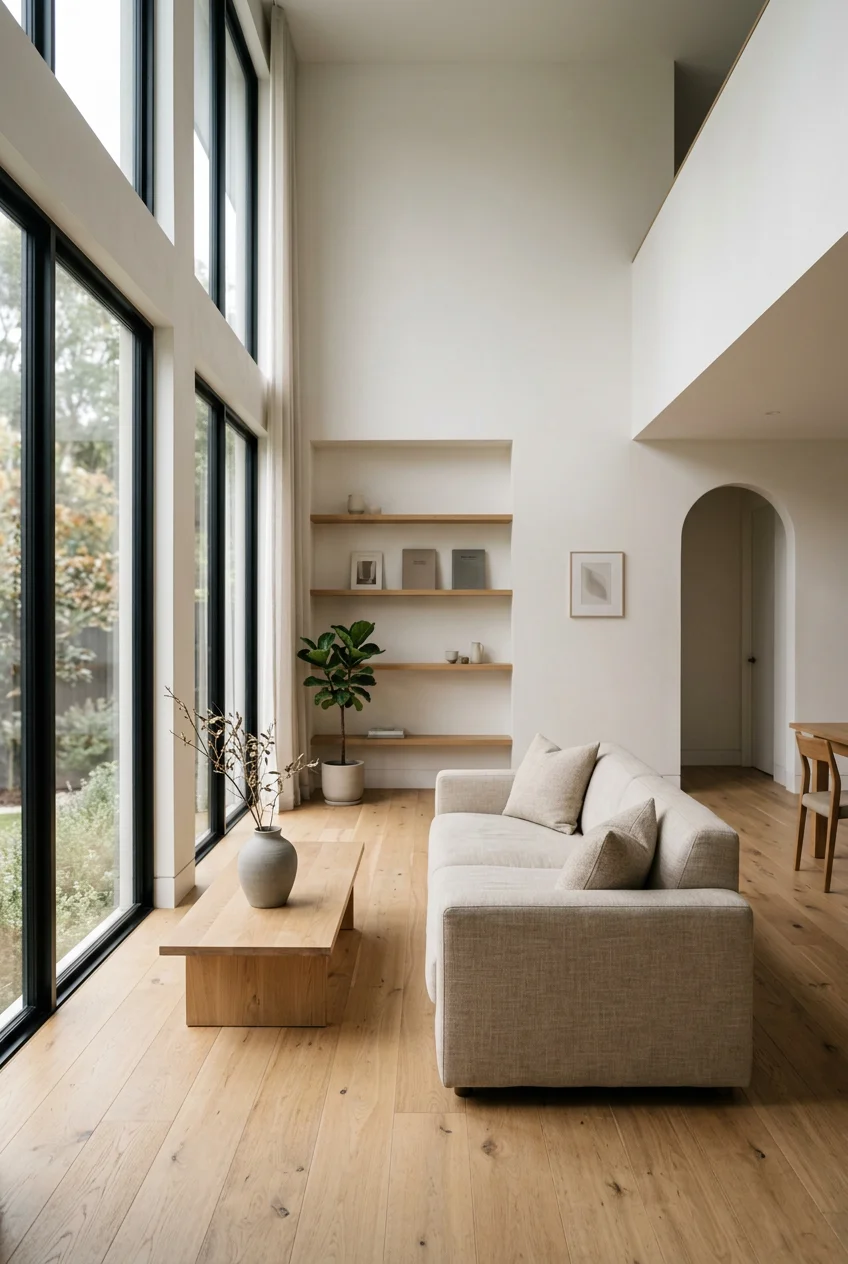
What’s Inside
- Embrace the Warm Minimal Trend with Earth Tones
- Prioritize Quality, Sustainable Furniture Pieces
- Choose a Coffee Table Proportionate to Your Sofa
- Implement Layered Lighting for Ambiance
- Integrate Invisible Smart Home Technology in Your Minimalist Living Room
- Maximize Natural Light with Minimal Window Treatments
- Prioritize Multi-Functional Furniture with Hidden Storage
- Incorporate Texture and Natural Materials
- Curate Personal Touches Thoughtfully
- Utilize the 60-30-10 Rule for Color Accents
- Opt for Large-Scale Decor Over Small Tchotchkes
- Invest in Smart, Concealed Storage Solutions
- Embrace Algorithmic Living for an Adaptive Environment
- Avoid Overcrowding by Focusing on Less is More
- Consider a Dark Accent Wall in Your Minimalist Living Room
- Size Your Area Rug Correctly to Ground the Space
- Disguise the Television to Maintain the Aesthetic
- Curate a Signature Scent for Atmosphere
Three years ago, I sat on the floor of my so-called minimalist living room and cried. It wasn’t serene. It looked like an abandoned waiting room. I’d stripped away everything until I was left with a cold, echoing box that smelled vaguely of fresh white paint and regret. My dog wouldn’t even sleep on the rug because it was too thin. Creating a minimalist living room isn’t just about throwing out all your stuff. I learned that the hard way. I spent months living in a sterile cube before I figured out how to inject warmth back in. Let’s fix those sterile spaces. I’m going to walk you through exactly how I turned my cold box into a cozy sanctuary. I’ve made all the expensive mistakes so you don’t have to.
1. Embrace the Warm Minimal Trend with Earth Tones

I used to paint everything stark white. Big mistake. It felt like a hospital ward. Every time the winter light hit the walls, the room felt freezing. Now I’m completely obsessed with the warm minimal trend of 2026. We’re moving beyond those stark, blinding whites. I want my space to feel emotionally supportive. Opt for soft neutrals like warm beige, greige, and taupe. These colors create visual depth without adding physical clutter. Last Tuesday at Whole Foods, I noticed their floral section set up against a soft, textured greige wall. It looked incredibly cozy and inviting. I went home and immediately bought a gallon of Benjamin Moore Swiss Coffee for $75. It completely changed the vibe of my space. The warm undertones catch the afternoon sun beautifully. If you’re stuck on paint colors, grab a 4 oz sample jar first. Paint a huge square on your wall and watch how it changes from morning to night. You won’t regret going slightly warmer.
2. Prioritize Quality, Sustainable Furniture Pieces

Stop buying cheap particleboard furniture. I did that in my twenties. I bought a TV stand that smelled like toxic glue for six months. The veneer peeled off the edges within a year. Invest in well-made pieces that’ll actually last a decade. I’m a massive fan of brands like Ethnicraft. They offer refined, timeless furniture crafted from FSC-certified solid wood. Their solid oak pieces are finished with natural oils, so you can actually smell the real wood. Greenington is another fantastic option. They specialize in sustainable bamboo furniture. Bamboo is surprisingly harder and more stable than most traditional hardwoods. Look for a sleek, low-profile sofa that anchors the room without overwhelming it. I bought a 3-seater from Greenington for $1,800. The clean lines keep the room looking tidy, even when I leave a coffee mug sitting out. A solid wood frame won’t warp or squeak when you sit down. Quality materials bring an undeniable sense of calm to a room.
3. Choose a Coffee Table Proportionate to Your Sofa

Most people get this wrong. I bought a tiny, cheap table from Walmart years ago. It cost $29.99. It looked absolutely ridiculous sitting next to my massive 9-foot couch. It was a complete design failure. Your coffee table should be roughly 16 to 18 inches high. That puts it about the same height or exactly 2 inches lower than your sofa cushions for a comfortable reach. Its length should be approximately two-thirds the length of your main sofa. For example, if your sofa is 9 feet long, aim for a coffee table around 6 feet in length. The Blu Dot Minimalista Coffee Table is a perfect example. It sits at a 16-inch height and a 47.5-inch width. It costs around $595. I saved up for it and it completely anchored my seating area. You shouldn’t have to strain your back to set down a glass of water. Get the proportions right. The whole room instantly feels professionally designed.

CEMABT Modern Nordic Boho Vase Set
A dependable everyday pick — CEMABT Modern Nordic Boho Vase Set – Elegant Beige Matte Ceramic Home pulls in 984 ratings at 4.5 stars. Not flashy, just solid.
4. Implement Layered Lighting for Ambiance

Don’t rely on a single harsh ceiling light. It casts terrible, unflattering shadows. I lived with a bright overhead dome light for a year. I hated reading on the couch because the glare gave me a headache. You need layered lighting to create a cozy atmosphere. Combine ambient, task, and accent lights. I strictly use warm LED bulbs. Aim for a 2700K to 3000K color temperature. I buy 4-packs of Philips warm LEDs at Target for $12.99. They mimic the glow of a sunset. Brands like Flos or Artemide make stunning sculptural pendant lights that act as art when turned off. Place a sleek floor lamp behind your reading chair. Put a small, dimmable table lamp on your console. When you turn off the overhead light and just use the layered lamps, the room feels like a high-end hotel lounge. It’s the cheapest way to make a minimalist space feel expensive.
5. Integrate Invisible Smart Home Technology in Your Minimalist Living Room

Visible wires are the enemy of a minimalist living room. I used to have a massive tangle of black cords behind my media console. It drove me absolutely crazy every time I looked at it. The biggest trend for 2026 is invisible technology. Instead of ugly gadgets sitting on your shelves, opt for integrated solutions. Hide your LED light strips inside aluminum wall channels. Install built-in speakers flush with your ceiling. Voice assistants like Amazon Alexa or Google Home can control your lighting and climate without adding visual clutter. I bought a flush-mount smart thermostat last month for $249. It completely cleaned up my hallway wall. I can ask Alexa to drop the temperature to 68 degrees without touching a clunky plastic dial. Hide your internet router inside a woven basket. Just cut a small hole in the back for the power cord. You’ll instantly feel more relaxed without blinking lights staring at you.
6. Maximize Natural Light with Minimal Window Treatments

Heavy velvet curtains trap dust and block the sun. I bought thick blackout drapes from Costco for $45.99 a few years ago. My living room felt like a depressing cave. I ripped them down after a week. Natural light is crucial for making a minimalist space feel expansive and inviting. Avoid heavy drapes at all costs. Instead, use sheer linen curtains or sleek roller blinds. They allow the sunlight to filter through while still giving you privacy at night. I found gorgeous white sheer panels online for $35 each. I hang them as high as possible, right near the ceiling line. It makes my standard 8-foot ceilings look incredibly tall. Strategically place a large floor mirror opposite your biggest window. It bounces the natural light around the room, amplifying the brightness. I bought a 6-foot arched mirror for $150. It acts like a second window. You might also like: 20 Lovely Minimalist Simple Living Home Tips for Every Budget

luckystyle Dimmable Floor Standing Tall Lamp
luckystyle Dimmable Floor Standing Tall Lamp has been one of the most consistently praised picks in this category. 28 reviewers averaged 4.5/5.
7. Prioritize Multi-Functional Furniture with Hidden Storage

Clutter happens to everyone. You need a place to hide the ugly, everyday items like remote controls, dog toys, and extra chargers. I refuse to buy bulky plastic storage bins. They ruin the aesthetic. Choose multi-functional furniture with hidden storage. I use a large, upholstered storage ottoman instead of a traditional coffee table. It holds three thick wool blankets and my heavy rubber yoga mat. You can also find sleek coffee tables with lift-up surfaces. This approach prevents the need for excessive standalone cabinets. I grabbed a minimalist storage bench at Target for $120. It sits perfectly under my front window. I toss my laptop and notebooks inside it at 5 PM every day. Out of sight, out of mind. If a piece of furniture doesn’t serve at least two purposes, I won’t let it in my house. It’s a strict rule that keeps my floor plan wide open. You might also like: 15 Creative Aesthetic Minimalist Apartment That Changed Everything
8. Incorporate Texture and Natural Materials

A completely flat room is a boring room. I designed a space once that was just smooth leather, glass, and polished concrete. It felt freezing and uninviting. A common mistake is creating a room that feels sterile due to a lack of texture. You’ve got to introduce a variety of materials. Mix wool, linen, leather, raw wood, metal, and rough stone. I toss a chunky knit blanket over the arm of my reading chair. I’m obsessed with the recycled cotton throws from Sabai. They cost about $95 and feel incredibly soft. The nubby texture contrasts perfectly with my smooth oak floors. Add a thick jute rug under your coffee table. The rough, scratchy fibers actually feel great under bare feet. Bring in a heavy stone bowl or a raw ceramic vase. These tactile elements add massive visual interest without adding messy clutter. You might also like: 20 Creative Women Capsule Wardrobe Ideas for Any Style
9. Curate Personal Touches Thoughtfully

Minimalism doesn’t mean stripping away your personality. I tried the ultra-minimalist thing where I hid all my family photos and keepsakes. I felt like a stranger in my own house. It was depressing. Select one or two meaningful statement pieces to serve as focal points. I’ve got a heavy, hand-thrown ceramic bowl that my grandmother gave me. It sits right in the middle of my coffee table. It holds exactly 3 fresh lemons that I buy from Sprouts every Sunday for $2.50. Display these personal items intentionally, allowing them to shine against an understated backdrop. Hang one large piece of original art that you truly love. Don’t buy generic canvas prints just to fill a blank wall. Leave the wall blank until you find something that actually means something to you. A curated room tells your specific story without overwhelming the senses.

PoKat 23" Modern Ceramic Table Lamp Set of 2 for Living
A dependable everyday pick — PoKat 23″ Modern Ceramic Table Lamp Set of 2 for Living Room White Des pulls in 15 ratings at 4.5 stars. Not flashy, just solid.
10. Utilize the 60-30-10 Rule for Color Accents

Monochromatic rooms aren’t easy to pull off. If you get the shades wrong, the whole room just looks muddy and dirty. While a neutral palette is foundational, subtle pops of color prevent a room from feeling bland. Apply the strict 60-30-10 rule. That means 60 percent primary neutral color, 30 percent secondary neutral color, and 10 percent accent color. My walls and main sofa are a warm cream. That’s my 60 percent. My accent chairs and area rug are a soft, sandy taupe. That’s the 30 percent. My 10 percent accent is a deep rust orange in my throw pillows. I found perfect heavy linen pillow covers on Etsy for $24 each. This mathematical approach allows for personality without overwhelming the minimalist aesthetic. It takes the guesswork out of decorating. If you stick to the ratios, the room will always feel balanced.
11. Opt for Large-Scale Decor Over Small Tchotchkes

Stop buying tiny decorative objects. I used to have a bookshelf crammed full of little ceramic birds, tiny candles, and miniature succulents. Dusting them took 20 minutes every single weekend. It was pure visual noise. To avoid visual clutter, choose fewer, larger decorative items. A single, impactful piece of art makes a much stronger statement than a messy gallery wall of 15 tiny frames. Buy a massive indoor plant. I bought a 6-foot Ficus Audrey tree at my local nursery for $150. It fills an empty corner beautifully and adds a huge pop of organic green. Place one oversized, heavy coffee table book in the center of your table. That’s all you need. When your eyes don’t have to dart around processing dozens of tiny trinkets, your brain can actually relax. Bigger decor creates a much more serene environment.
12. Invest in Smart, Concealed Storage Solutions

You can’t just shove things in a drawer and call it minimalist living. I opened my TV console last year and a massive tangle of phone chargers and old batteries fell out onto the floor. I had to fix it. Beyond multi-functional furniture, integrate dedicated storage that blends completely. Consider modular shelving systems from brands like String Furniture. For your hidden drawers, use sleek bamboo dividers from Neat Method. They cost $30 for a set. Now every single cord has a specific home. Brands like Yamazaki Home offer incredible minimalist organization tools inspired by Japanese design. I use their sleek steel remote control stand. It costs $22 and keeps my clickers perfectly upright. When the inside of your cabinets is as organized as the outside, you experience a profound sense of calm. Don’t hide a mess behind a minimalist door.

UTTCMK Bookshelf Decor Thinker Statue
If you want something that just works, UTTCMK Bookshelf Decor Thinker Statue – Abstract Art Reading Thinker S is a safe bet (809 reviews, 4.5 stars).
13. Embrace Algorithmic Living for an Adaptive Environment

This sounds a bit like sci-fi, but it’s a massive trend for 2026. Algorithmic environments respond to your daily rhythm automatically. I set up my smart bulbs to slowly brighten at 7 AM. They start at a crisp, cool 5000K color temperature for mental activation while I drink my morning coffee. By 8 PM, the system automatically shifts the bulbs to a warm, amber 2700K for relaxation. I don’t even touch a light switch anymore. It completely regulates my sleep cycle. You can program your smart blinds to lower when the afternoon sun hits the TV screen. It creates an environment that actively supports your routine. I bought a starter kit of smart bulbs for $45. It took 10 minutes to set up the schedules on my phone. Your living room should work for you, not the other way around.
14. Avoid Overcrowding by Focusing on Less is More

The most fundamental principle of minimalism is simple: don’t overcrowd the room. You don’t need a side table for every single chair. I used to cram furniture into every empty corner because I thought the room looked unfinished. It just made walking to the kitchen incredibly annoying. Leave negative space. Let the room breathe. Every single item should serve a clear purpose or bring you intense joy. Regularly declutter your space. I do a sweep every Sunday morning. I remove anything that doesn’t contribute to the overall aesthetic or functionality. I sell my unwanted decor on Facebook Marketplace or donate it. A minimalist living room needs wide pathways. You should be able to walk through the space without turning sideways or bumping your shin on a stray ottoman. Empty space is a luxury. Embrace it.
15. Consider a Dark Accent Wall in Your Minimalist Living Room

You can absolutely have a dark wall in a minimalist living room. I painted the wall behind my sofa a deep, moody charcoal last winter. It totally grounded the space. While bold, neon colors are generally avoided, a dark neutral accent wall adds massive visual interest without disrupting the calm design. Instead of a bright hue, select a darker shade to create a focal point. A rich forest green can add sophistication and depth. It mimics the feeling of looking out into a dense forest. I used Sherwin-Williams Iron Ore in an eggshell finish. A gallon costs about $65. It makes my light gray sofa pop beautifully. If you’re nervous about painting a whole wall, start with a small architectural feature like a fireplace bump-out. A dark backdrop makes your minimalist furniture look like expensive art gallery pieces. It completely changes the dynamic of the room without adding any physical clutter.

2 Pcs Natural Wood Arch Decor
2 Pcs Natural Wood Arch Decor has been one of the most consistently praised picks in this category. 49 reviewers averaged 4.5/5.
16. Size Your Area Rug Correctly to Ground the Space

A tiny rug floating in the middle of the floor looks like a tiny postage stamp. I made this exact mistake in my first apartment. I bought a cheap 5×7 rug from Kroger’s home aisle for $40. It barely touched the front legs of my sofa. It made the entire room look small and disjointed. Your rug needs to anchor the furniture. Buy an 8×10 or 9×12 rug. All the front legs of your main seating should rest firmly on it. I found a gorgeous, thick wool 8×10 rug online for $350. It immediately made my living room feel twice as big. A large, plush rug absorbs sound and stops the room from echoing. Don’t skimp on the rug pad either. I bought a 1/2 inch felt pad for $60. It makes my affordable rug feel like it costs a thousand dollars.
17. Disguise the Television to Maintain the Aesthetic

A giant, glossy black rectangle ruins a minimalist vibe instantly. I hated staring at a blank screen when the TV was turned off. It felt like a black hole sucking the energy out of the room. I finally saved up and splurged on the Samsung Frame TV. The 55-inch model costs around $1,498. It sits completely flush against the wall with a special slim mount. When you turn it off, it displays matte artwork. I bought a light oak magnetic bezel for it. It literally just looks like a framed painting hanging above my console. If a Frame TV isn’t in your budget, try hiding your standard TV inside a sleek cabinet with sliding doors. I built a custom cover for my old TV using basic pine lumber and cane webbing for under $80. Out of sight, completely out of mind.
18. Curate a Signature Scent for Atmosphere

Minimalism isn’t just visual. It’s about how the room feels, sounds, and smells. A cluttered mix of cheap air fresheners gives me a massive headache. I used to buy those cloying vanilla plug-ins from the grocery store. Never again. Stick to one signature, natural scent to improve the atmosphere. I love the earthy smell of cedarwood and bergamot. I buy pure essential oils from Trader Joe’s for exactly $3.99 a bottle. I put 5 drops in a matte ceramic stone diffuser on my coffee table. It smells like an expensive spa. Avoid burning five different candles at once. Choose one high-quality soy candle. I buy a large amber jar candle from a local maker for $28. The subtle scent lingers in the fabrics and greets me every time I walk through the front door. It’s the ultimate finishing touch. Scent is an invisible layer of design that completely changes how you experience your home.
Creating a minimalist living room takes time. You won’t get it right in a single weekend. I certainly didn’t. Start by clearing out the obvious clutter, then slowly layer in warm textures, smart lighting, and quality furniture. I highly recommend picking just one of these ideas to tackle this Saturday. Maybe swap out those harsh lightbulbs or finally paint that warm greige accent wall. Your home should be your sanctuary, not a source of visual stress. If you found these tips helpful, please pin this article to your home decor Pinterest board. Let’s keep making our spaces beautifully simple.
Frequently Asked Questions
How do I add warmth to a minimalist living room?
Swap stark whites for warm neutrals like greige or taupe. Layer in natural textures using chunky wool blankets, jute rugs, and raw wood furniture. Warm LED lighting (2700K) instantly makes the space feel cozy instead of sterile.
What is the best couch for a minimalist living room?
Look for a low-profile sofa with clean, straight lines and hidden legs. Solid wood frames from sustainable brands like Greenington or Ethnicraft are perfect. Choose a neutral, durable fabric like heavy linen or a soft performance weave.
How do I hide TV cords in a minimalist living room?
Use in-wall cable management kits to route cords behind the drywall. If you can’t cut into walls, use sleek aluminum cord covers painted to match your wall color. Store power strips inside woven baskets or dedicated cable management boxes.
Can I have color in a minimalist living room?
Absolutely. Follow the 60-30-10 rule. Keep 60% of the room a primary neutral, 30% a secondary neutral, and use 10% for a specific accent color. Deep rust orange or rich forest green pillows add personality without causing visual clutter.
