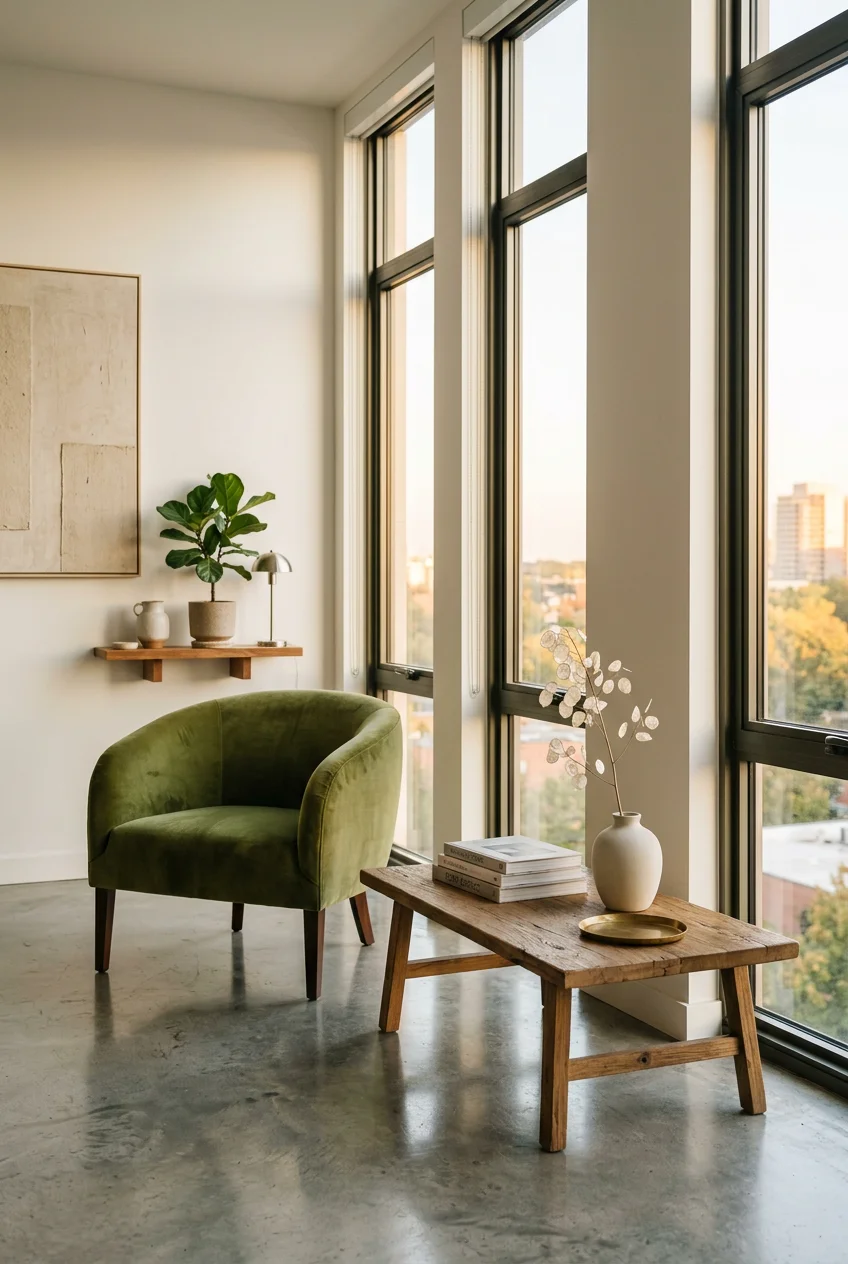
What’s Inside
- Establish a Neutral, Cohesive Foundation
- Invest in Quality, Multi-functional Minimalist Furniture
- Curate Eclectic Accents with Intentionality
- Embrace Textural Layering for Depth
- Maximize Vertical Space with Smart Storage
- Frame Your Eclectic Minimalist Apartment with Vintage Rugs
- Swap Builder-Grade Hardware for Unlacquered Brass
- Add Handmade Ceramics for Soul
- Hide the Clutter Behind Closed Doors
- Blend Mid-Century Modern with Global Finds
- Keep Your Color Palette Tight
- Bring in Large Scale Plants
- Mix Wood Tones Carefully
- Use Statement Lighting as Art
- Create Breathing Room Around Key Pieces
- Display Books Intentionally in an Eclectic Minimalist Apartment
- Choose Natural Linen Window Treatments
- Rotate Your Decor Seasonally
Last October, I tried to blend my grandmother’s Victorian floral armchair with a stark white modern sofa in my 600-square-foot living room. I stepped back and realized my attempt at an eclectic minimalist apartment looked like a thrift store exploded inside a hospital waiting room. Nailing this aesthetic is tricky. You want personality, but you also want peace. I spent six months moving furniture around, returning rugs, and spackling drywall holes before I finally figured out the formula. My apartment used to smell like dusty antique stores and feel cramped. Now it feels like a calm retreat that actually reflects my personality. If you’re struggling to balance your love for weird vintage finds with your need for clean surfaces, you aren’t alone. I’m going to walk you through exactly how I fix these spaces without spending a fortune or losing my mind. Let’s get into the specifics.
1. Establish a Neutral, Cohesive Foundation

Begin by painting your walls in soft, warm neutrals like creamy off-whites, sandy tones, or light grays to create a serene backdrop. This allows your eclectic elements to pop without overwhelming the space. I learned that the hard way. Last Tuesday at Home Depot, I almost bought a dark emerald green because it looked moody on a social media post. Don’t do it. I tried a dark accent wall in 2021 and my living room felt like a damp cave. Instead, use “Swiss Coffee” by Behr ($34.98 for a 1-gallon can) or “Pale Oak” by Benjamin Moore ($64.99 for a 1-gallon can). Interior designers love a pared-back color palette as a base for eclectic artwork to add soul. Aim for this dominant neutral to constitute about 60% of your room’s color palette. The creamy undertones in Swiss Coffee reflect the morning light beautifully, making my 8-foot ceilings feel much taller. The thick paint covers old scuffs with just two coats. It’s the perfect blank canvas for your weird thrifted art.
2. Invest in Quality, Multi-functional Minimalist Furniture

Prioritize two to three core furniture pieces per room that are functional, well-made, and feature clean lines. Brands like Article, HAY, Muji, and West Elm offer durable minimalist designs. Opt for pieces with hidden storage, such as a sofa with integrated compartments or a coffee table with a built-in shelf. A Thuma bed frame, crafted from 100% upcycled wood, offers a minimalist aesthetic and allows for under-bed storage, with prices starting around $275 for the twin size. Expect to allocate between $1,500 and $4,000 for essential minimalist living room furniture. I bought a cheap, trendy velvet sofa from an online retailer three years ago. The cushions flattened into hard pancakes within four months, and the synthetic velvet felt scratchy against my skin. I replaced it with a West Elm Harmony Sofa ($1,599 for the 76-inch version). The deep seats and durable linen weave hide dog hair, and the clean square arms anchor the room. You can’t build a calm space on flimsy foundation pieces. Trust me on this.
3. Curate Eclectic Accents with Intentionality

Introduce three to five unique, meaningful decor items per surface or area that tell a story or reflect your personality. This could be a vintage find, a handmade piece, or a global accent. Mix different styles, such as pairing a sleek metal mid-century modern lamp with a rustic 12-inch wooden bowl. Consider ethically crafted items from brands like The Citizenry or GOODEE, known for their unique, artisan-made collections. A common mistake is overcrowding surfaces. I used to line up ten different tiny vases on my windowsill. It just looked like cluttered trash. Ensure each piece has breathing room to be appreciated. I keep a single 8-inch terracotta vase from The Citizenry ($65) on my entryway console. The rough, unglazed clay feels gritty to the touch and contrasts perfectly with the smooth white wall behind it. When you limit your display items, you actually notice them. Dusting also takes five seconds instead of twenty minutes.

Pigort 3 Pieces Metal Flowers Wall Art- Rustic Farmhouse
Pigort 3 Pieces Metal Flowers Wall Art- Rustic Farmhouse Decor Minimal has been one of the most consistently praised picks in this category. 25 reviewers averaged 4.5/5.
4. Embrace Textural Layering for Depth

To prevent a minimalist space from feeling sterile, incorporate diverse textures. It’s a powerful tool, especially in smaller apartments. Layer soft fabrics like a faux sheepskin throw. I use IKEA’s TEJN rug for approximately $15. I drape it over a structured linen armchair. You can also pair a jute rug with smooth metallic accents. West Elm’s Jute Boucle Rug starts around $100 for a 3×5 foot size. The chunky, braided fibers of the jute feel rough under bare feet, grounding the room instantly. For 2026, natural, tactile materials such as handmade tile, unlacquered metals, and warm woods are trending, adding authenticity and warmth. I bought a cheap polyester blanket from Walmart last winter. It generated so much static electricity it shocked my cat, and it pilled after one wash. Stick to natural fibers. Wool, linen, cotton, and jute absorb light differently than synthetics, creating subtle shadows that make a room feel cozy without adding visual clutter.
5. Maximize Vertical Space with Smart Storage

Utilize walls and vertical areas to keep floor space clear, which is crucial for small apartment living. Install floating shelves for books or decorative objects. I use IKEA LACK shelves ($14.99 for the 43-inch length). Consider tall, narrow cabinets or the IKEA ALGOT storage system for concealed storage. Pro tip: mount your shelves high. I installed mine 12 inches below the ceiling. It draws the eye upward and makes the room feel massive. Last year, I tried stacking books on the floor because I saw it in a magazine. It just collected massive dust bunnies and I stubbed my toe on a hardback copy of Moby Dick at 2 AM. Floor space equals mental peace. Keep it clear. I store my winter sweaters in two 15-inch fabric bins on the top shelf of my closet. They stay out of sight, but easily accessible when the temperature drops.
6. Frame Your Eclectic Minimalist Apartment with Vintage Rugs

An eclectic minimalist apartment needs an anchor, and a vintage-style rug does this perfectly. I prefer faded, low-pile Turkish or Persian designs. You don’t need to spend thousands. Rugs USA sells decent printed versions. I bought their 5×8 foot distressed medallion rug for $125. The faded terracotta and navy threads hide dirt completely. The low pile means my vacuum glides over it without getting stuck. I learned not to buy high-pile shag rugs. I bought a 2-inch thick shag rug from Target in 2019. It trapped every single crumb I dropped, and within two months it looked matted and gray. The contrast between a faded, ornate rug and a sleek, modern coffee table is the exact tension you want in this design style. It provides the eclectic history while the furniture provides the minimalist calm. You might also like: 20 Charming Minimalist Counter Decor Kitchen Ideas That Are Totally Worth It

Framed Boho Wall Art Set of 4 for Wooded Minimalist
Honestly, Framed Boho Wall Art Set of 4 for Wooded Minimalist Botanical Print Wa surprised me — sturdier than it looks in the photos, and over 956 buyers gave it 4.5 stars.
7. Swap Builder-Grade Hardware for Unlacquered Brass

This is the cheapest way to add character to a boring rental kitchen. I unscrewed all the cheap, hollow nickel pulls in my apartment and replaced them with heavy unlacquered brass pulls. I found 4-inch solid brass pulls at Lowe’s for $6.48 each. The metal is heavy and cold to the touch. Over the past year, the oils from my hands tarnished the brass slightly, creating a beautiful, dull patina. Keep the original hardware in a Ziploc bag under the sink so you can swap it back when you move out. I tried painting my old knobs with gold spray paint once. The paint chipped off onto my fingers every time I opened a drawer, leaving sticky gold flakes on my hands. Real metal is worth the small investment. It grounds the minimalist white cabinets with a touch of historic charm. You might also like: 15 Gorgeous Homemaking Simple Living Tips to Steal Right Now
8. Add Handmade Ceramics for Soul

Mass-produced dishes feel lifeless. You need the slight imperfections of handmade ceramics. I collect 6-inch stoneware bowls from local craft fairs. I usually pay around $25 per bowl. The slightly lopsided rims and speckled glazes add personality to open shelving. If craft fairs aren’t your thing, Target’s Threshold line often has stoneware pieces that mimic this look. I bought a 10-inch speckled serving bowl there for $15. I keep it on my kitchen island filled with fresh lemons. The bright yellow citrus against the matte gray clay looks incredible. I buy a $3.99 bundle of fresh eucalyptus from Trader Joe’s every Tuesday and stick it in a tall ceramic pitcher. The sharp, medicinal smell fills the kitchen, and the dusty green leaves add organic texture. Avoid perfectly symmetrical, high-gloss white plates. They look like diner dishes. You might also like: 15 Brilliant Minimalist Simple Living Tips That Changed Everything
9. Hide the Clutter Behind Closed Doors

Minimalism isn’t about owning nothing. It’s about hiding the ugly things. I hide a massive collection of ugly charging cables, batteries, and mismatched pens in a Target Room Essentials 2-door cabinet ($40). The cabinet features clean, straight lines that blend right into the wall. Inside, I use 11-inch fabric bins from Walmart ($5.88 each) to sort the chaos. Common mistake: buying clear acrylic storage bins for your living room. I did this in 2020. Seeing all my messy cords through clear plastic completely ruined the calm vibe of the room. Opaque storage is mandatory. Your apartment will only feel minimalist if you contain the visual noise. I keep the top of this cabinet completely bare except for one brass lamp. The contrast between the hidden chaos inside and the empty surface outside makes the space work.

ASTRDECOR Abstract Framed Wall Art
ASTRDECOR Abstract Framed Wall Art has been one of the most consistently praised picks in this category. 251 reviewers averaged 4.5/5.
10. Blend Mid-Century Modern with Global Finds

The secret recipe for this aesthetic is mixing strict mid-century modern geometry with organic global textiles. I use a West Elm Mid-Century C-Side Table ($149). Its sharp, angled walnut legs and rigid structure provide the minimalist base. I drape a hand-woven 50×60 inch mudcloth throw over the chair next to it. I found the throw at a flea market for $45. The thick, coarse cotton and imperfect geometric dye patterns soften the hard edges of the table. I used to buy all my furniture from the same mid-century collection. My apartment looked like a sterile furniture showroom. It lacked personality. You must break up the matching sets. Let the clean lines of the modern furniture serve as the frame for your weird, textured, eclectic pieces.
11. Keep Your Color Palette Tight

Eclectic design quickly turns into a circus if you don’t restrict your colors. I stick to a strict rule of three colors. My apartment is 60% warm white, 30% camel leather, and 10% matte black. I went to Home Depot, grabbed three paint swatches in these exact shades, and kept them in my wallet. If a decor item doesn’t match those three swatches, I won’t buy it. Last summer, I impulse-bought a bright red 18×18 inch throw pillow at a boutique. I brought it home and it screamed at everything else in the room. I had to hide it in the closet. By restricting your colors, you can mix wild patterns and different eras of furniture without the space feeling chaotic. The tight color palette forces the eclectic shapes to harmonize.
12. Bring in Large Scale Plants

Tiny succulents cluttering a windowsill look messy. One massive plant makes a minimalist statement while adding organic life. I bought a 5-foot tall Ficus Audrey from Costco for $39.99 last spring. I repotted it into a 14-inch matte white fiberglass planter from Home Depot ($29.98). The massive, velvety green leaves cast beautiful shadows on the wall in the afternoon. Caring for one large plant is actually easier than watering ten tiny ones. I ruined a vintage wood side table by leaving a tiny, leaky 4-inch terracotta pot on it for a month. The water ring is permanent. Put your large planter directly on the floor on top of a plastic drip tray. The sheer size of a large tree fills empty corners without requiring more furniture.

Sage Green Boho Wall Art Set of 3
Sage Green Boho Wall Art Set of 3 punches above its price — 907 buyers rated it 4.5 stars. I would buy it again.
13. Mix Wood Tones Carefully

Matching all your wood furniture is a rookie mistake. It looks flat and artificial. But mixing too many woods looks like a garage sale. The trick is to pick one dominant wood and one accent wood. My dominant wood is pale ash. I bought a set of Muji oak stacking shelves ($45 per unit) that hold my books. The light wood keeps the room feeling airy. My accent wood is dark walnut. I own one vintage walnut side chair with a low 18-inch seat height. The dark wood pops against the light shelves. I once tried to mix cherry wood, pine, and mahogany in the same room. The clashing red and yellow undertones made me physically anxious. Stick to woods with similar temperature undertones. Ash and walnut both have cool, ashy undertones, so they complement each other perfectly despite the contrast.
14. Use Statement Lighting as Art

In an eclectic minimalist apartment, you don’t need a lot of wall art if your lighting is sculptural. I swapped out my basic living room dome light for a HAY Nelson Bubble Pendant ($150 for the saucer shape). The stretched white polymer over the steel wire frame looks like a glowing paper lantern. It hangs 36 inches above my coffee table. The soft, diffused light hides the scuffs on my walls. I used to rely on harsh LED overhead lights. They made my living room feel like a 7-Eleven at midnight. Good lighting changes the entire texture of a room. I also keep a small 10-inch globe lamp on my bookshelf. At night, I turn off the overheads and just use the ambient lamps. The shadows highlight the eclectic shapes of my furniture.
15. Create Breathing Room Around Key Pieces

Negative space is the most important element of minimalist design. You need empty space to make your eclectic pieces stand out. I leave at least 18 inches of empty floor space on either side of my sofa. I don’t shove end tables right against the armrests. Let the furniture breathe. I used to cram a side table, a floor lamp, and a basket of blankets all within two feet of my couch. I tripped over the basket daily, and the corner felt suffocating. Now, I leave the corners empty. An empty corner isn’t a wasted space. It’s a visual resting place for your eyes. When I bought a vintage 24-inch carved wooden stool, I placed it against a completely blank wall. Because nothing else sits around it, it looks like a museum exhibit rather than clutter.

Wagensteiger Stainless Steel Curved Garlic Presser or
A dependable everyday pick — Wagensteiger Stainless Steel Curved Garlic Presser or Cheese Grater pulls in 13 ratings at 4.5 stars. Not flashy, just solid.
16. Display Books Intentionally in an Eclectic Minimalist Apartment

Books are inherently eclectic. They have different fonts, colors, and sizes. To make them work in an eclectic minimalist apartment, you must organize them with strict intention. I group my books by spine color on my shelves. I know some people hate this, but it turns a chaotic library into a cohesive block of color. I buy cheap, interesting hardcovers at local thrift stores for $1.99 just for their faded linen spines. I remove all glossy paper dust jackets. The shiny paper looks cheap. The textured cloth covers underneath look expensive and vintage. I used to stack books both vertically and horizontally in messy piles. I could never find the book I wanted, and the shelves looked like a teenager’s bedroom. Now, I keep them strictly vertical, pushed to the front edge of the shelf so the line remains perfectly straight.
17. Choose Natural Linen Window Treatments

Heavy velvet curtains or cheap plastic blinds ruin the vibe. You need window treatments that filter light softly. I use Target’s Threshold Light Filtering Linen Curtains ($35 per 84-inch panel). The loose weave of the linen allows sunlight to pass through, casting a warm, dappled glow across the floor. I hang the curtain rod 4 inches below the ceiling line, not right above the window frame. This makes the windows look twice as tall. I made the mistake of buying blackout curtains for my living room three years ago. The stiff, rubbery backing made them hang awkwardly, and the room felt like a movie theater. Unless it’s your bedroom, embrace natural light. The slight wrinkling of the washed linen adds that necessary organic texture to the clean lines of the room.
18. Rotate Your Decor Seasonally

You don’t have to display everything you own all at once. I keep a 30-gallon plastic storage bin under my bed. In the spring, I display my lighter ceramic vases and pastel vintage books. In the fall, I swap them out for heavy brass candlesticks and dark woven textiles. I buy a few mini white pumpkins from Sprouts ($5.99 for a bag) in October and place them on my dining table. When winter ends, the heavy wool blankets go into the bin, and the lightweight cotton throws come out. I used to keep all my decor out year-round. The apartment felt stagnant and crowded. Rotating pieces keeps the space feeling fresh without requiring you to buy new things constantly. It forces you to re-evaluate your belongings and appreciate the eclectic items you truly love. It took me years to figure out that less is more.
Finding the balance between cozy and clean takes time. I tried this wrong for months before figuring it out. You won’t get it perfect on the first weekend. Start with the paint, clear off your flat surfaces, and slowly bring back only the pieces that actually mean something to you. Skip the cheap synthetic rugs and flimsy matching furniture sets. They aren’t worth the headache. If you found this helpful, pin this article to your apartment decor board so you can reference these exact paint colors and dimensions later. Let’s make your space actually work for you.
Frequently Asked Questions
What colors work best for an eclectic minimalist apartment?
Stick to a 60/30/10 rule. Use warm, creamy off-whites (like Behr’s Swiss Coffee) for 60% of the room to create a clean base. Add 30% warm secondary tones like camel or natural wood, and 10% dark accents like matte black.
How do I mix vintage and modern furniture?
Use clean, mid-century modern pieces as your foundation. Anchor the room with a sleek sofa or geometric coffee table, then layer in 2-3 vintage items, like a carved wooden stool or a distressed Turkish rug, to add character without clutter.
How many decor items should I display?
Limit yourself to 3-5 meaningful items per surface. Give each piece at least a few inches of breathing room. This prevents the space from feeling cluttered and allows your eclectic ceramic bowls or brass lamps to actually stand out.
What is the best way to add warmth to a minimalist space?
Use natural textures instead of bright colors. Layer jute rugs, unlacquered brass hardware, raw terracotta vases, and washed linen curtains. These materials add physical and visual warmth while keeping the overall aesthetic calm and uncluttered.
