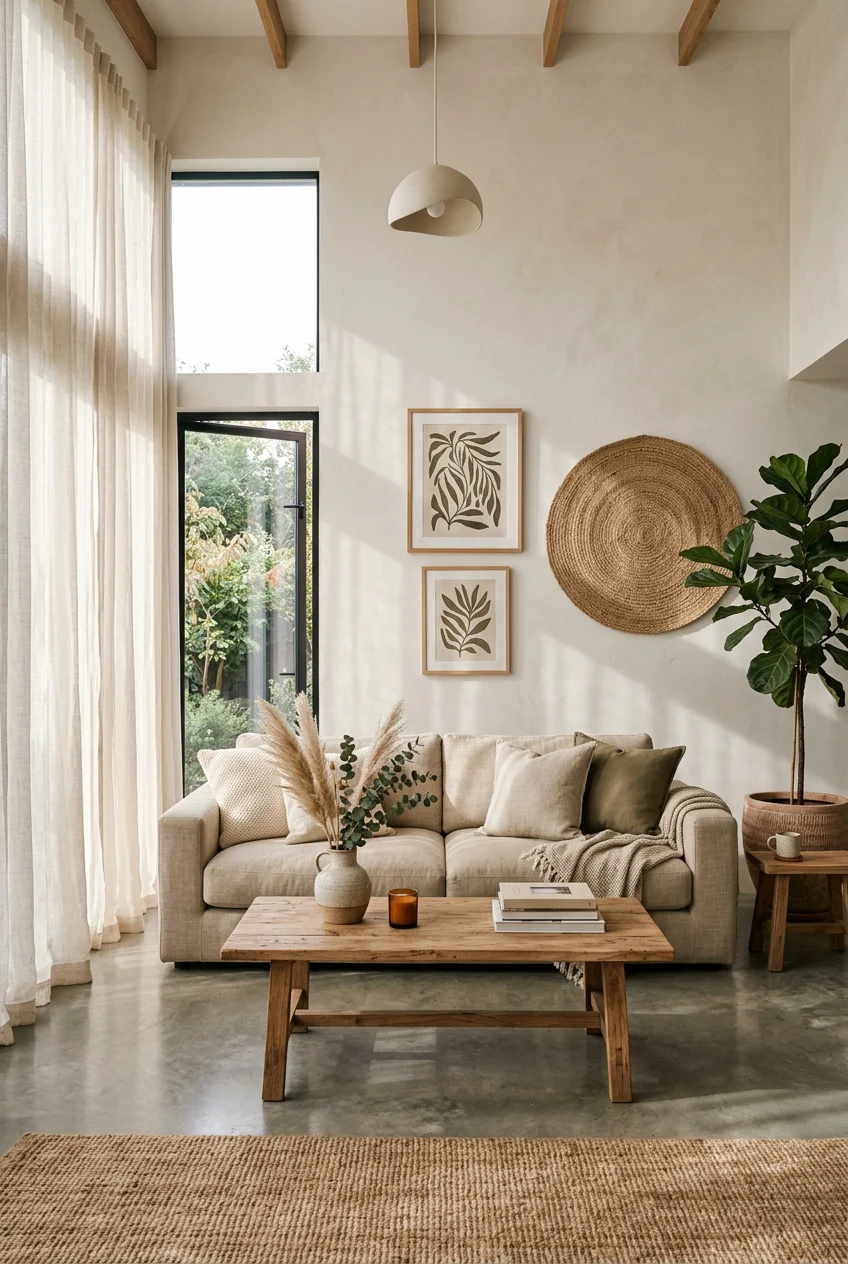
What’s Inside
- Choose Boho Minimalist Living Room Paint with Earthy Undertones
- Prioritize Natural Materials for Core Furniture
- Invest in Multi-Functional, Low-Profile Pieces
- Layer Textures Thoughtfully, Not Excessively
- Anchor Your Space with a Natural Fiber Rug
- Curate Decor with Intentionality: Quality Over Quantity
- Integrate Greenery Strategically with Easy-Care Plants
- Embrace Soft, Layered Ambient Lighting
- Incorporate Smart, Hidden Storage Solutions
- Master the 60/30/10 Rule for Your Boho Minimalist Living Room
- Source Sustainable and Artisan Pieces for 2026
- Embrace Intentional Negative Space
- Mix Earthy Luxury with Blended Styles
- Utilize Vertical Space with Hanging Plants
- Mix Modern Silhouettes with Handmade Pieces
- Swap Heavy Drapes for Light Linen Curtains
- Ground the Room with a Low-Profile Sofa
- Style the Coffee Table with Extreme Restraint
- Add Warmth with Organic Wood Accents
- Finish with Subtle, Earthy Scents
Last October, I tripped over a brightly colored macrame pouf I’d bought on impulse, spilling a 12 oz mug of black coffee across my white rug. That disaster proved my attempt at a boho minimalist living room was just a chaotic mess. I’ve spent the last year editing my space down to the essentials. Creating a true boho minimalist living room requires discipline, not just a credit card. I tried the maximalist approach wrong for months before figuring it out. This is how I finally balanced earthy warmth with clean, breathable space. Let’s fix your layout this weekend.
1. Choose Boho Minimalist Living Room Paint with Earthy Undertones

When I first painted my living room, I chose a stark, cool gray. It looked like a dentist’s waiting room. I tried this wrong for months before figuring it out. The foundation of a minimalist space relies on warm, earthy neutrals. In 2026, cool tones are officially out. You want soft whites, beige, and warm grays that create a serene backdrop. I repainted my walls with Benjamin Moore’s “White Dove.” A gallon costs about $70, and the subtle creamy undertone completely changed how the afternoon light hits the room. If you prefer slightly more depth, Sherwin-Williams “Accessible Beige” is another excellent option. Skip the bright white builder-grade paint. It feels sterile and flat. By starting with a warm canvas, your natural textures and few chosen decor pieces stand out without fighting the wall color. It’s the easiest way to make cheap furniture look expensive. Trust me on this.
2. Prioritize Natural Materials for Core Furniture

Minimalism doesn’t mean buying plastic acrylic chairs just because they look invisible. You need organic warmth. Opt for core furniture crafted from real wood, rattan, jute, and linen. I recently bought a media console from Nathan James for $250. It features solid wood construction with light rattan doors that hide my ugly internet router. The raw, slightly rough texture of the rattan contrasts perfectly with the smooth wood frame. When you’re selecting a sofa, a low-profile design in a light linen fabric serves as an ideal centerpiece. The breathable fabric adds a subtle wrinkled texture that feels relaxed but intentional. Avoid glossy veneers or heavy velvet fabrics. They trap dust and feel visually heavy. Natural materials age better and bring a quiet, grounding energy to the space that synthetic pieces simply can’t replicate.
3. Invest in Multi-Functional, Low-Profile Pieces

Clutter is the enemy of this aesthetic. To maintain clean visual lines while embracing boho comfort, choose furniture that serves multiple purposes. I keep a round, upholstered storage ottoman from Walmart that I bought for $89.99 right in the center of the room. It holds three spare blankets and functions as a coffee table when I put a wooden tray on top. Look for low-profile, relaxed furniture like floor cushions, poufs, or armless sofas. These lower pieces are trending heavily in 2026 because they make the ceiling feel taller and create an inviting, informal vibe. I used to own a massive, overstuffed recliner that dominated the floor plan. Getting rid of it and switching to lower, dual-purpose seating opened up an extra three feet of walking space. It’s practical and visually lighter.

CEMABT Modern Nordic Boho Vase Set
If you want something that just works, CEMABT Modern Nordic Boho Vase Set – Elegant Beige Matte Ceramic Home is a safe bet (984 reviews, 4.5 stars).
4. Layer Textures Thoughtfully, Not Excessively

A common mistake is thinking minimalism means flat surfaces everywhere. Texture is crucial to prevent your space from feeling sterile. You just must layer it thoughtfully. I use a Barefoot Dreams Cozychic Throw in a muted taupe. It costs around $180, but the thick, spongy knit fabric adds incredible depth when draped over my linen sofa. I pair this with two simple linen cushions and a rough jute pouf. The key is balance. If you own a chunky knit blanket, don’t add a macrame wall hanging right next to it. A few well-chosen textures create richness without overwhelming the eye. I learned that the hard way after buying six different fringed pillows. The couch looked like a shaggy dog. Keep the textures varied but limit the quantity so each piece actually registers.
5. Anchor Your Space with a Natural Fiber Rug

A large area rug made from natural materials like wool, jute, or seagrass is absolutely essential to ground the room. Most people get this wrong by buying a rug that is way too small. I did exactly this two years ago. I bought a cheap 5×7 foot rug that looked like a bath mat floating in the middle of my floor. It’s a mistake that makes the whole room look cheap. You need a rug large enough so that at least the front legs of your main seating pieces rest on it. A 9×12 foot rug is usually necessary for standard living rooms. I finally bought a chunky looped jute rug from Amigos De Hoy for $350. The thick, scratchy texture hides dirt perfectly and adds a massive layer of earthy warmth underfoot.
6. Curate Decor with Intentionality: Quality Over Quantity

Avoid overcrowding your surfaces. Instead of filling every single corner with cheap trinkets, select a few meaningful, handcrafted, or vintage items. I used to buy handfuls of generic decor on clearance, and dusting them took an hour. Now, every piece earns its place by form, texture, or narrative. I keep a single, unglazed ceramic vase from ILI Be Home on my console. It cost $45, and the matte, chalky finish looks incredibly sculptural against the white wall. I also display a small, hand-carved wooden bowl from Tribe Dubai. That’s it. Two items. The restraint makes the pieces look like art gallery installations rather than retail clutter. When you limit your decor, you’re forced to choose items you actually respect. Skip the mass-produced filler and save up for one beautiful, textured piece.

2 Pcs Natural Wood Arch Decor
Honestly, 2 Pcs Natural Wood Arch Decor surprised me — sturdier than it looks in the photos, and over 49 buyers gave it 4.5 stars.
7. Integrate Greenery Strategically with Easy-Care Plants

Plants are non-negotiable for a boho vibe, but a minimalist approach means choosing fewer, larger statement plants instead of thirty tiny succulents. I bought a 10-inch Monstera Deliciosa from Trader Joe’s last Tuesday for just $14.99. Its massive, split green leaves provide a dramatic, architectural statement in the corner of the room without taking up table space. If you’re terrible at watering, a Snake Plant (Sansevieria trifasciata) adds great vertical interest and thrives on neglect. I killed three fiddle leaf figs before accepting that I need low-maintenance greenery. Display your plants in simple, unglazed clay pots or plain woven baskets. The organic green tones pop beautifully against the beige walls, bringing literal life into the room. Just don’t turn your living room into a greenhouse. One or two large plants are plenty. You might also like: 15 Inspiring Minimalist Lifestyle Tips That Make a Real Difference
8. Embrace Soft, Layered Ambient Lighting

I never use the overhead lights in my living room. They cast harsh, flat shadows that make everything look like a cafeteria. Instead, create a cozy atmosphere with warm-toned ambient lighting. I use the Delilah Floor Lamp from Luxxe Lighting. It retails for $129 and features a simple brass stem with a woven rattan shade. The rattan diffuses the light gently, casting warm, textured shadows across the ceiling at night. You want to layer your lighting at different heights. Place a small linen-shaded table lamp on a side console and a floor lamp near the sofa. This draws the eye around the room and creates pockets of warmth. Make sure you’re using warm white bulbs, specifically 2700K color temperature. Anything cooler will instantly ruin the earthy, relaxed atmosphere you’re trying to build. You might also like: 20 Creative Women Capsule Wardrobe Ideas for Any Style
9. Incorporate Smart, Hidden Storage Solutions

A minimalist environment only works if you designate a place to hide your daily mess. You need storage that blends perfectly with your decor. I rely heavily on woven seagrass baskets from IKEA. Their Fladis basket costs $19.99, and the natural fibers fit the boho aesthetic perfectly. I keep one next to the sofa to stash my laptop cords, ugly remote controls, and dog toys. Brands like Imprint House also make beautiful, structured canvas bins that slide easily under low-profile furniture. Multi-purpose furniture with hidden compartments is another smart strategy. If your living room looks messy, it’s usually because small, functional items lack a dedicated hiding spot. By using textured, natural baskets, your storage actually contributes to the room’s design instead of just serving as a plastic utility bin. You might also like: 20 Beautiful Capsule Wardrobe Ideas for Any Style

UTTCMK Bookshelf Decor Thinker Statue
If you want something that just works, UTTCMK Bookshelf Decor Thinker Statue – Abstract Art Reading Thinker S is a safe bet (809 reviews, 4.5 stars).
10. Master the 60/30/10 Rule for Your Boho Minimalist Living Room

While traditional boho design embraces a chaotic explosion of color, the minimalist version requires strict discipline. If you use too many colors, the space feels heavy. Stick to your neutral base and follow the 60/30/10 rule. Your dominant neutral wall color should be 60 percent of the room. Your secondary neutral, like wood tones or a jute rug, makes up 30 percent. The final 10 percent is your accent color. I use muted terracotta as my accent. I bought two heavy linen throw pillows from Target for $25 each in a deep, burnt orange. That tiny pop of earthy color against the beige and wood is all the room needs. Olive green and muted ochre are also excellent choices. If you stick to this formula, you won’t accidentally create a visual circus.
11. Source Sustainable and Artisan Pieces for 2026

The biggest trend shift for 2026 is moving away from cheap, fast-fashion decor and focusing on sustainable, artisan pieces. A single handcrafted item with a story behind it anchors a room far better than a dozen mass-produced plastic decorations. I recently replaced a flimsy particle-board side table with a solid reclaimed wood stool from West Elm. It cost $199, which was an investment, but the heavy, scarred wood grain adds incredible character. Seek out organic cotton bedding, recycled glass, and handcrafted ceramics. The imperfections in handmade items provide the rustic soul that a minimalist space needs. I’d rather display one slightly lopsided, hand-thrown clay bowl on my coffee table than five perfect, machine-made vases. It grounds the space and ensures your room doesn’t look like a catalog showroom.
12. Embrace Intentional Negative Space

This was the hardest lesson for me to learn. You don’t need to fill every empty corner or bare wall. Minimalist boho thrives on breathing room. Empty space is an active design element, allowing the eye to rest and highlighting your curated pieces. I used to display a gallery wall with fifteen different frames. It felt loud and overwhelming. I took them all down and hung a single, large canvas with plenty of bare wall around it. The room instantly felt twice as large and significantly more expensive. When you leave negative space, the items you do display command attention. If you’re staring at an empty corner and feeling the urge to buy a plant or a chair to fill it, stop. Let the space simply exist.

luckystyle Dimmable Floor Standing Tall Lamp
luckystyle Dimmable Floor Standing Tall Lamp punches above its price — 28 buyers rated it 4.5 stars. I would buy it again.
13. Mix Earthy Luxury with Blended Styles

Another major 2026 trend is earthy luxury. This involves taking rough, natural boho elements and contrasting them with subtle, refined touches. I like mixing Scandinavian clean lines with rustic textures. I recently bought a heavy, brushed brass tray from Crate & Barrel for $49. I placed it on top of my raw wood coffee table. The sleek, cold metal against the warm, porous wood creates a beautiful tension. You can achieve this by adding elegant ceramic drawer pulls to a raw wood console, or pairing a highly structured, modern armchair with a slouchy linen throw. If everything is rough and rustic, the room looks like a cabin. If everything is sleek, it’s too modern. The magic happens when you blend the two, giving the space a sophisticated, refined tension.
14. Utilize Vertical Space with Hanging Plants

Most people completely ignore the top half of their living room. If all your furniture and decor sit below waist level, the room feels squat and heavy. You need to draw the eye upward. I bought a lush Boston Fern from Sprouts last weekend for $19.99 and hung it from a simple white ceiling hook in the corner. The cascading green fronds fill the empty vertical space without taking up any floor square footage. A String of Pearls plant is another fantastic, trailing option that usually costs around $15. Hanging plants add that crucial boho greenery while maintaining strict minimalist floor boundaries. Floating wooden shelves are another great way to utilize vertical space. Just remember to keep the styling on the shelves sparse so they don’t look cluttered.
15. Mix Modern Silhouettes with Handmade Pieces

To achieve the sculptural simplicity that defines modern boho, you must contrast clean lines with handmade accents. I own a very rigid, boxy, modern sofa. To soften it, I placed a genuine leather Moroccan pouf from Froy right in front of it. The pouf cost $120, and the hand-stitched embroidery and round, slouchy shape completely break up the harsh geometry of the sofa. You can also use a vintage wooden trunk as a coffee table in front of a sleek media console. This contrast prevents the room from feeling like a sterile waiting area. The handmade items bring the boho soul, while the modern silhouettes provide the minimalist structure. I’ve found that a 70/30 split works best. Keep 70 percent of the furniture modern and clean, and 30 percent handmade and organic. Took me years to figure out.

Gold Leaf Home Decor Set – Metal Leaves Statues
A dependable everyday pick — Gold Leaf Home Decor Set – Metal Leaves Statues pulls in 55 ratings at 4.5 stars. Not flashy, just solid.
16. Swap Heavy Drapes for Light Linen Curtains

Window treatments dictate the mood of a room. Heavy velvet or dark, patterned curtains block light and make a space feel incredibly oppressive. I swapped my old blackout curtains for a pair of 98-inch light beige linen blend curtains from H&M Home. They cost $34.99 per panel. The sheer, nubby fabric filters the afternoon sunlight beautifully, casting a warm, hazy glow across the living room. Hang your curtain rod as high and wide as possible. I mounted mine three inches below the ceiling and extended it six inches past the window frame on each side. This trick makes the windows look massive and the ceilings look taller. I couldn’t believe how much larger the room felt. The linen adds that essential organic texture while keeping the visual weight extremely light.
17. Ground the Room with a Low-Profile Sofa

The sofa is the largest piece of furniture in your living room, so its shape dictates everything. A bulky, overstuffed sofa instantly kills the minimalist vibe. I saved up for the Sven sofa from Article in a light oatmeal fabric. It retails for $1,299. The single bench seat cushion and low back create a clean, uninterrupted horizontal line across the room. The tufted details give it a slight mid-century boho feel, but the overall silhouette is incredibly sharp. When the back of your sofa is low, it allows more light to pass through the room, making the entire space feel open. I highly recommend avoiding sectionals with massive, blocky armrests. They’re visual black holes. Stick to slim arms and exposed wooden legs to keep the floor visible.
18. Style the Coffee Table with Extreme Restraint

Coffee tables are magnets for clutter. It’s so easy to pile up magazines, coasters, and random candles until the surface is unusable. I keep my coffee table styling aggressively simple. I use exactly two items. First, a large, neutral-colored architectural design book. Second, a decorative wooden chain link I found on Amazon for $22 draped over the book. The wood chain provides a chunky, interesting tactile element without taking up much space. That’s it. I leave the rest of the table completely bare. This leaves plenty of room to actually set down a mug of tea or rest my feet. If you must move five different decorative objects just to put down your laptop, your table is over-styled. Keep it functional and visually quiet.
19. Add Warmth with Organic Wood Accents

If your room is primarily white and beige, you need wood tones to keep it from looking like a hospital room. I incorporate wood through small, functional accessories rather than massive furniture sets. Last month, I picked up a stunning, raw olive wood bowl from Costco for $24.99. I leave it empty on my entryway console. The swirling, dark grain of the olive wood acts as a natural piece of art. You can also use wooden picture frames, a teak stool, or wooden candle holders. Just make sure the wood finishes aren’t perfectly matched. A mix of light ash, medium oak, and dark walnut looks collected and natural. Buying a matching five-piece wood furniture set is a massive mistake. It looks rigid and completely defeats the relaxed aesthetic.
20. Finish with Subtle, Earthy Scents

A true minimalist space engages all the senses, not just the eyes. However, cheap, overpowering synthetic air fresheners ruin the organic vibe immediately. I strictly use candles and diffusers with natural, earthy scent profiles like sandalwood, cedar, or bergamot. I regularly buy the Pacific Northwest amber glass candles from Whole Foods. They cost $12.99, and the dark amber glass looks incredibly chic on a shelf. I also bought a simple glass cloche from Kroger for $5.99 to cover the candle when I’m not burning it. This keeps the wax dust-free and looks like a deliberate decor choice. The subtle smell of woodsmoke and cedar grounds the room, making the space feel intentionally designed and deeply relaxing. It’s the final, invisible layer of the room. No exaggeration.
Stripping my living room back to these organic basics completely changed how I use the space. I’m no longer constantly reorganizing clutter. If you’re overwhelmed by your setup, start by clearing the surfaces and focusing on that neutral base. I recommend tackling the 60/30/10 color rule first. Save or pin this guide so you can reference these measurements and brands the next time you’re in the decor aisle.
Frequently Asked Questions
What is a boho minimalist living room?
A design style that blends the clean lines and intentional negative space of minimalism with the warm, earthy textures and organic materials of bohemian decor.
How do I add color to a minimalist boho room?
Follow the 60/30/10 rule. Use a warm neutral for 60 percent of the space, natural wood or jute for 30 percent, and a single muted accent color like terracotta for the final 10 percent.
What are the best plants for a boho minimalist space?
Focus on one or two large statement plants rather than dozens of small ones. A Monstera Deliciosa or a tall Snake Plant provides excellent architectural greenery with minimal maintenance.
How do I make a minimalist room feel cozy?
Layer organic textures thoughtfully. Incorporate a thick jute rug, a chunky knit throw, and warm 2700K ambient lighting from rattan floor lamps to prevent the space from feeling sterile.
