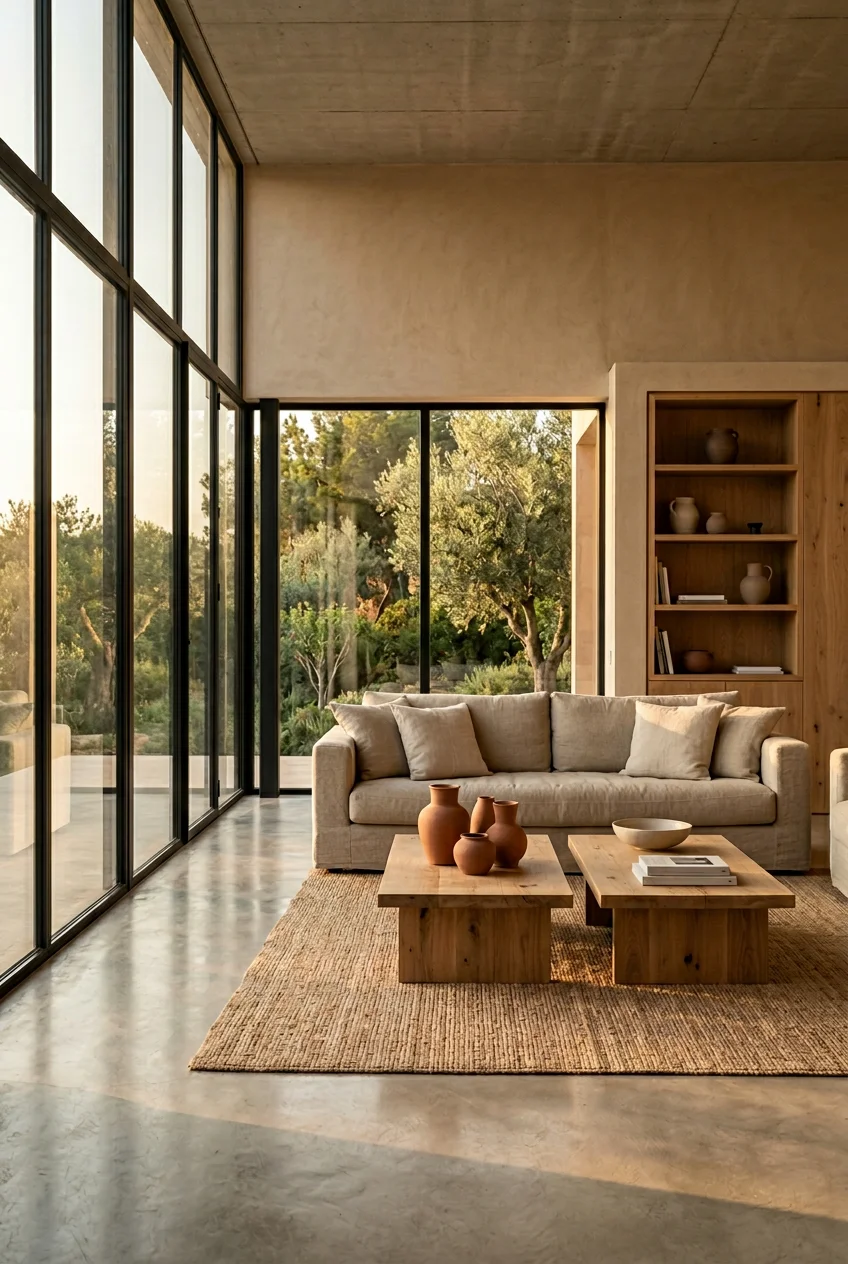
What’s Inside
- Embrace a Warm, Neutral Earthy Palette
- Invest in a High-Quality Linen Sofa
- Layer with Natural Fiber Rugs for Warmth
- Incorporate Multi-functional Furniture
- Master Layered Lighting with Warm Tones
- Curate Meaningful Decor, Not Clutter
- Integrate Biophilic Design Elements
- Choose Raw Wood Accents
- Ditch Heavy Drapes for Breezy Linen
- Hide the Tech with Clever Storage
- Add Texture through Woven Baskets
- Swap Glossy Finishes for Matte
- Ground the Space with Stone or Concrete
- Use Open Shelving Sparingly
- Select Low-Profile Seating
- Keep the Air Flowing with Negative Space
Last November, I sat on my cold, stark-white apartment floor surrounded by a mountain of returned throw pillows. My attempt at an earthy minimalist living room looked less like a serene retreat and more like an abandoned doctor’s clinic. I spent three months buying and returning cheap decor before I realized the actual problem. Minimalism isn’t just about emptying a room. It’s about letting the right textures and tones fill the quiet spaces left behind. If you strip everything away and leave only flat, shiny surfaces, the room dies. You need friction. You need warmth. I tried the all-white trend for months before figuring it out, and it just gave me a headache. Let’s walk through the actual pieces, measurements, and adjustments that fixed my space. I’m sharing the exact paint colors, the specific furniture dimensions, and the mistakes I made along the way so you don’t repeat them. Trust me on this.
1. Embrace a Warm, Neutral Earthy Palette

Modern minimalist interiors are shifting toward warmth, using soft neutral palettes like warm beige, light taupe, and mushroom gray. I painted my living room “Pure White” last January, hated it immediately, and repainted it three days later. The stark white made the shadows look blue and cold. I switched to “Accessible Beige” by Sherwin-Williams ($65 for a gallon of their Cashmere interior acrylic latex). The room instantly softened. The chalky, matte finish absorbs harsh afternoon light instead of reflecting it into my eyes. I used a 3/8 inch nap roller for a smooth finish without stipple marks. As Kelly Simpson, Senior Director of Design and Innovation at Budget Blinds, notes, minimalist interiors work best with a tight color story. Skipping sterile white for muted cream keeps the space from feeling unfinished. An all-white palette without texture just feels like a hospital waiting room. The beige grounds the space and makes the wood furniture pop.
2. Invest in a High-Quality Linen Sofa

I bought the Maiden Home Dune Sofa ($2,800) in October after my old polyester couch started pilling. The heavy linen weave hides dog hair better, and the flax tone adds immediate warmth. If you’re on a tighter budget, the West Elm Harmony Sofa ($1,899) is a solid option. Expect to spend between $1,500 and $4,000 for a quality linen piece. I opted for an 80-inch length, which seats three people comfortably without swallowing the room. The texture of performance linen is slightly scratchy at first, but it softens after a few months. The major tradeoff is the upkeep. Linen wrinkles easily. I have to fluff the back cushions every three days or they start to look sloppy. But the natural, muted tone is worth the effort. It feels organic and lived-in, unlike stiff leather or shiny velvet.
3. Layer with Natural Fiber Rugs for Warmth

I made a massive mistake two years ago dragging a cheap, $99 synthetic area rug into my cart at Costco. I thought a rug was just a rug. I unrolled it, and for six months, I dealt with curling corners and a weird chemical smell that wouldn’t fade. It felt like walking on a giant mousepad. I finally replaced it with an 8×10 foot handwoven wool rug from West Elm ($499). The difference is immediate. Real wool has a faint, natural lanolin scent when you unroll it, and the texture under bare feet is thick and slightly coarse. Wool rugs soften hard architectural lines and provide material integrity. For a standard 12×15 foot living room, an 8×10 size in a subtle sage green or muted beige anchors the furniture perfectly. The tradeoff is the shedding. I vacuum up fuzz twice a week, but the tactile softness is worth the extra chore.

Pigort 3 Pieces Metal Flowers Wall Art- Rustic Farmhouse
If you want something that just works, Pigort 3 Pieces Metal Flowers Wall Art- Rustic Farmhouse Decor Minimal is a safe bet (25 reviews, 4.5 stars).
4. Incorporate Multi-functional Furniture

One of the easiest ways to keep things minimalist is choosing furniture that serves more than one purpose. I picked up a Target Project 62 storage ottoman for $85 last spring. It has an 18-inch diameter and a hidden hinge. I keep 3 heavy wool blankets inside it. Kelly Simpson advises against single-use furniture because it fails to maximize space. The velvet texture on this ottoman adds a nice contrast to the linen sofa. The hidden storage means I don’t have blankets draped messily over the armrests. The tradeoff is the weight. The lid is heavy and actually pinched my finger pretty badly once when I let it slam shut. But having a place to store clutter keeps the visual noise down. When guests come over, it doubles as an extra seat. Multi-functional pieces are the only way to keep a small room from feeling cramped.
5. Master Layered Lighting with Warm Tones

Layered lighting is a cornerstone of good design. I used to rely on overhead lighting until I realized it made my living room look like a harsh interrogation cell. I bought the IKEA HEKTAR Floor Lamp ($69.99) to add task lighting next to the sofa. The matte metal finish fits the earthy vibe perfectly. The real trick is the bulbs. I made the mistake of buying a 4-pack of 4000K daylight bulbs at Kroger for $8.99. It was a disaster. The blue light completely ruined the warm beige walls. I swapped them out for 2700K warm LED lights. The yellow glow fosters a cozy atmosphere. Experts emphasize that light is crucial in minimalist spaces because there’s less physical stuff to focus on. If your lighting is bad, the room feels stark and empty. Layering a slim floor lamp with subtle wall sconces creates deep, interesting shadows. You might also like: 20 Lovely Minimalist Simple Living Home Tips for Every Budget
6. Curate Meaningful Decor, Not Clutter

Instead of clustering 15 tiny knick-knacks on my console table, I cleared it all off. Minimalism isn’t a lack of things; it’s a lack of excessive ornamentation. I replaced the clutter with one handcrafted ceramic vase from Flora Bloom Ceramics ($85). It’s 12 inches tall and has a rough, unglazed clay texture that feels like dried earth. I keep a 4 oz glass jar of matches next to it. That’s it. A common mistake is overcrowding surfaces with small items, which creates visual static. When you only have one or two larger, sculptural pieces made from earthy materials, the eye actually stops to appreciate them. I tried the “tray of small items” trend for months, and I was just constantly dusting tiny objects. One large, textured piece makes a stronger statement and requires a fraction of the maintenance. You might also like: 20 Cozy Minimalist Saving Money Lifestyle Tips You Need to See

CEMABT Modern Nordic Boho Vase Set
Honestly, CEMABT Modern Nordic Boho Vase Set – Elegant Beige Matte Ceramic Home surprised me — sturdier than it looks in the photos, and over 984 buyers gave it 4.5 stars.
7. Integrate Biophilic Design Elements

Biophilic design connects interiors with nature. I bought a large Monstera plant at Trader Joe’s for $14.99 last month. It came in a basic 10-inch plastic pot, so I repotted it into a heavy 12-inch terracotta planter I found at Lowe’s for $22. The smell of the damp potting soil after watering adds a subtle, earthy scent to the room. Bringing life and tranquility into a minimalist space is essential so it doesn’t feel sterile. I wipe the large leaves down weekly with 2 tablespoons of neem oil mixed with water to keep the dust off. The major negative here is fungus gnats. I had to buy sticky traps to deal with them during the summer. But the vibrant green against the warm beige walls provides the exact pop of color the room needs without relying on synthetic decor. You might also like: 15 Charming Minimalist Design Inspiration Kitchen You Can Try Today
8. Choose Raw Wood Accents

I replaced a shiny glass coffee table with a Crate & Barrel raw oak side table ($299). The glass table showed every fingerprint and dust particle, driving me crazy. The oak table is 22 inches high and has a deep, tactile wood grain. You can actually smell the raw wood when you sit next to it. Incorporating natural materials like oak, walnut, or ash brings an organic warmth that metal and glass can’t replicate. The matte finish of the wood absorbs light. The tradeoff with raw wood is durability. You have to use coasters religiously. If I set a wet glass down on this table for even five minutes, it leaves a permanent water ring. But the visual weight it adds is necessary. It anchors the lighter linen pieces and provides a sturdy, grounded feel.
9. Ditch Heavy Drapes for Breezy Linen

I used to have heavy velvet blackout curtains. They felt oppressive and gathered dust like crazy. I swapped them for Target Threshold linen curtains ($35 per panel). I bought the 84-inch length to hang just slightly above the floor. The light filtering effect is incredible. In the late afternoon, the sunlight hits the dust motes and creates a soft, hazy glow in the room. Linen curtains add vertical texture without adding visual weight. They let the room breathe. The annoying part is the wrinkling. When I first took them out of the package, they looked like crumpled paper bags. I had to spend an hour steaming them. Even now, the bottoms wrinkle if the dog brushes past them too often. But the breezy, relaxed look fits the earthy minimalist aesthetic perfectly. Heavy drapes just belong in a different era of design.

3D Floral Green Wall Art (Set of 2) Lightweight
Honestly, 3D Floral Green Wall Art (Set of 2) Lightweight surprised me — sturdier than it looks in the photos, and over 622 buyers gave it 4.5 stars.
10. Hide the Tech with Clever Storage

Nothing ruins an earthy minimalist vibe faster than a blinking internet router and a tangled nest of black cords. I bought a Walmart Better Homes & Gardens cane cabinet for $189 to hide all my tech. It’s 48 inches wide and features woven cane doors. The natural woven texture blends right into the room, and the holes in the cane allow the remote control signals to pass through to the cable box. I drilled a 2-inch hole in the back panel to route the power cords out cleanly. The doors on this cabinet are slightly misaligned, which is a bit annoying if you look closely, but the functionality is exactly what I needed. Hiding the digital clutter is just as important as hiding physical clutter. When the screens and cords aren’t visible, the room instantly feels more peaceful and grounded.
11. Add Texture through Woven Baskets

I was picking up groceries last Tuesday at Whole Foods when I spotted a fair trade woven basket in their home goods aisle. It was $39.99 and 14 inches wide. I bought it immediately. It smells strongly of dried seagrass, which I actually love. I use it to hold a 50×60 inch chunky cotton throw blanket next to the sofa. Adding woven textures is a cheap way to bring earthy elements into a sterile room. Baskets hide everyday items while acting as decor. The one negative is that natural seagrass sheds. I find little dry pieces of grass on the floor around the basket every few days. But the visual warmth it adds to the corner of the room makes up for the sweeping. It breaks up the straight lines of the walls and furniture with an organic, rounded shape.
12. Swap Glossy Finishes for Matte

Glossy finishes reflect light sharply, which creates visual noise and feels cold. I wanted a softer look. I took three shiny brass picture frames out to the driveway and sprayed them with Rust-Oleum Matte Black spray paint ($6.98 at Walmart). The matte finish absorbs light instead of bouncing it around the room. It makes the frames look like heavy cast iron instead of cheap brass. The fumes from the spray paint were terrible, so definitely do this outside and wear a mask. I let them dry for 24 hours before bringing them back inside. Swapping glossy ceramics, frames, and hardware for matte finishes is a subtle change, but it drastically lowers the visual volume of the room. It makes the space feel grounded and intentional rather than flashy and chaotic.

Dahey 2 Pack Wood Wall Planter Vase with Artificial
Dahey 2 Pack Wood Wall Planter Vase with Artificial Eucalyptus Farmhou has been one of the most consistently praised picks in this category. 15 reviewers averaged 4.5/5.
13. Ground the Space with Stone or Concrete

I went to Sprouts last Friday and bought a bunch of silver dollar eucalyptus for $5.99. I put it in a simple glass jar, but it looked like it was floating on my console table. It needed an anchor. I placed it on a CB2 concrete tray ($120). The tray is 16 inches round and has a cold, porous texture. Stone and concrete add a brutalist, earthy weight that contrasts beautifully with soft linens and wool. The concrete feels permanent and heavy. The downside to unsealed concrete is that it stains easily. I accidentally dripped a tiny bit of essential oil on it, and it left a dark spot. I had to mix 1/2 cup of baking soda with warm water to scrub the stain out. But introducing a hard, geological element prevents the room from feeling too soft and overly delicate.
14. Use Open Shelving Sparingly

I installed two IKEA LACK shelves ($24.99 each) on the wall behind my reading chair. They’re 43 inches long and made of hollow core wood. My initial mistake was treating them like a storage solution. I crammed 20 books, three plants, and a bunch of framed photos onto them. It looked incredibly cluttered and ruined the minimalist vibe. Now, I only keep exactly three hardback books and a small trailing pothos plant on them. Open shelving should be used for display, not storage. The negative space around the items is what makes them look important. The tradeoff with these cheap IKEA shelves is that they sag slightly if you put more than 10 pounds on them. Keep the weight light and the items sparse. Dusting is also much easier when you aren’t lifting 20 different objects every weekend.
15. Select Low-Profile Seating

Tall, bulky furniture blocks sightlines and makes a room feel cramped. I bought an Article Sven leather chair ($999) two years ago. It sits low to the ground, only 30 inches high at the back. When you walk into the room, your eyes sweep right over it to the window. The smell of the aniline leather is rich and earthy, and it squeaks slightly when you sit down. Low-profile seating keeps the air space in the middle of the room open. The tradeoff with this specific leather is that it scratches very easily. My dog jumped on it once and left a permanent mark down the seat cushion. I’ve learned to accept the patina, but it’s something to consider. Keeping the furniture low to the floor creates a grounded, relaxed energy that tall, formal wingback chairs can’t provide.

ASTRDECOR Abstract Framed Wall Art
If you want something that just works, ASTRDECOR Abstract Framed Wall Art is a safe bet (251 reviews, 4.5 stars).
16. Keep the Air Flowing with Negative Space

You can’t buy negative space, but it’s the most important element in the room. I used to jam my furniture together to make the room feel “cozy.” It just felt cluttered. I took my Stanley 25-foot tape measure ($12.97 at Home Depot) and forced myself to leave exactly 36 inches of walking space between the coffee table and the sofa. I pulled the armchair 12 inches away from the wall. The room needs to breathe. When furniture is pushed tight against the walls, it looks like a waiting room. Pulling things toward the center and leaving empty floor space around the perimeter creates flow. It feels awkward at first to leave blank corners, but that emptiness is what makes the earthy textures stand out. Don’t fill a corner just because it’s empty. Let the silence do the work. I learned that the hard way.
Building an earthy minimalist living room doesn’t happen in a single weekend trip to the store. It takes time to find the right textures and balance the warm tones without making the space feel heavy. I’ve wasted a lot of money on cheap shortcuts, but investing in real wool, natural linen, and matte finishes actually changes how the room feels to sit in. If you’re starting this process, pick one corner to declutter and add a single, highly textured item. Pin this article for later when you’re standing in the paint aisle trying to remember the name of that beige paint, and take it one step at a time. No exaggeration.
Frequently Asked Questions
What colors work best for an earthy minimalist living room?
Stick to warm, neutral tones like mushroom gray, light taupe, and soft beige. Avoid stark, cool whites, which can make a minimalist space feel cold and sterile. Paint colors like Accessible Beige provide a solid, warm foundation.
How do I add warmth to a minimalist room without adding clutter?
Focus heavily on natural textures. Incorporate handwoven wool rugs, raw oak wood accents, and performance linen upholstery. These materials add visual weight and physical warmth without requiring extra decorative objects that clutter the space.
What kind of lighting is best for minimalist spaces?
Layered lighting is essential. Combine ambient, task, and accent lighting using warm LED bulbs (2700K-3000K). Avoid harsh daylight bulbs. Use matte metal floor lamps and subtle wall sconces to create cozy, intentional shadows.
How do I decorate surfaces in a minimalist living room?
Choose one or two large, sculptural pieces made from natural materials, like a handcrafted ceramic vase or a concrete tray. Avoid clustering multiple small knick-knacks, which creates visual noise and requires constant dusting.
