What’s Inside
- Swap Stark White for Warm Neutrals
- Install Solid Walnut Open Shelving
- Curate Handmade Ceramics for a Boho Minimalist Kitchen
- Hide the Microwave in a Woven Basket Setup
- Swap Builder Grade Pulls for Unlacquered Brass
- Ground Your Boho Minimalist Kitchen Floor with a Vintage Runner
- Decant Dry Goods into Clear Glass Jars
- Soften Windows with Textured Linen Shades
- Grow Fresh Herbs in Aged Terracotta Pots
- Display Heavy End-Grain Cutting Boards
- Hang Oversized Rattan Pendant Lights
- Edit Down to a Single Stoneware Utensil Crock
- Apply Roman Clay to the Range Hood
- Install Imperfect Zellige Backsplash Tiles
- Build a Minimalist Pour-Over Coffee Station
- Group Counter Clutter on Woven Trays
I painted my kitchen stark white back in 2020. It ended up feeling like a sterile hospital cafeteria instead of a calming retreat. The morning glare off the high-gloss cabinets literally gave me a headache while I was chopping onions. I spent six months trying to fix the cold vibe with random thrifted junk before realizing a true boho minimalist kitchen requires intention, not just clutter. I thought adding a few macrame plant hangers would solve the problem. It didn’t. It just looked messy. Let’s fix your space. Here are sixteen specific ways to balance minimalist restraint with bohemian warmth.
1. Swap Stark White for Warm Neutrals

I spent three years living with stark white cabinets. I thought they looked clean. In reality, the morning sun bounced off the high-gloss finish and practically blinded me while I made coffee. A true boho minimalist kitchen needs a softer foundation. Moving away from stark whites and cool grays is the best thing you can do for your space. Opt for cabinet colors in warm neutrals like mushroom, taupe, or creamy whites. Benjamin Moore’s “Soft Chamois” is a favorite because it provides an inviting, creamy warmth without looking yellow. Designers are moving toward these soft, velvet-like taupes. They find them versatile and cozier than sterile white. If you’re on a budget, painting existing cabinets is a solid weekend project. Using a premium option like Farrow & Ball costs approximately $120 per gallon. A full DIY project usually runs between $500 and $3,000 depending on your kitchen size and supplies. I bought cheap paint the first time and it chipped around the handles within a month. Spend the extra money on good enamel. The soft taupe grounds the room instantly and makes the morning light feel warm instead of harsh.
2. Install Solid Walnut Open Shelving

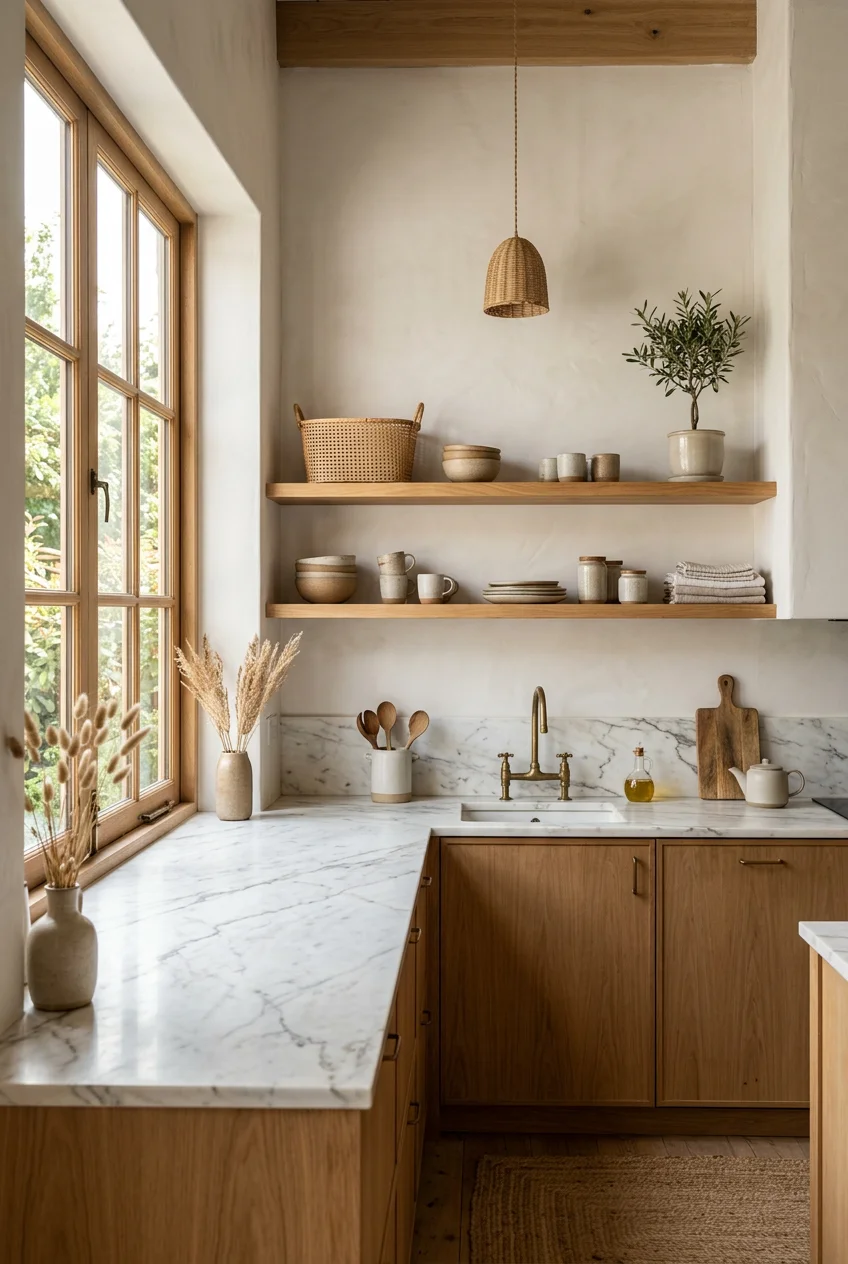
Open shelving forces you to edit your belongings. You can’t hide 14 mismatched plastic cups behind a solid door. Incorporating natural wood as a primary material rather than just a small accent adds immediate warmth. Walnut and white oak are the best options here. I recommend installing solid walnut open shelves. They should be approximately 1.5 inches thick and 10 to 12 inches deep to display curated items safely. Hannah Gebauer, Showplace Director of Marketing, points out that wood finishes are resurging because homeowners crave authenticity and craftsmanship. I learned that the hard way. I initially bought cheap hollow-core veneer shelves from a big box store. They bowed under the weight of six dinner plates. Now I use solid walnut. To maintain a calm space, pick one dominant wood tone and repeat it across the room. Don’t mix cherry, oak, and pine. That creates visual clutter. Repeating one wood tone across an island or tall cabinet run prevents a mixed-species mess. The dark walnut looks striking against creamy walls.
3. Curate Handmade Ceramics for a Boho Minimalist Kitchen

Once you have your walnut shelves up, you need something beautiful to put on them. A boho minimalist kitchen relies on texture instead of bright colors to create interest. I’d suggest installing two or three open shelves above your main countertop. Display handmade ceramic dinnerware here. Brands like East Fork make incredible pieces. Their plates typically range from $20 to $50 each. You can also find unique artisan pieces on Etsy, which generally vary from $15 to $60 per item. I bought a set of heavy stoneware bowls last October. The thick, unglazed bottoms scratch slightly on the wood, but the tactile feel of holding a heavy ceramic bowl makes morning oatmeal actually enjoyable. Ditch the matching, mass-produced porcelain sets. A stack of slightly irregular, hand-thrown plates in muted earth tones acts as functional art. The $38 price tag per plate means I buy fewer pieces and wash them more often. This naturally keeps the kitchen sink empty.

Wagensteiger Stainless Steel Curved Garlic Presser or
Honestly, Wagensteiger Stainless Steel Curved Garlic Presser or Cheese Grater surprised me — sturdier than it looks in the photos, and over 13 buyers gave it 4.5 stars.
4. Hide the Microwave in a Woven Basket Setup

Nothing ruins a carefully curated aesthetic quite like a giant black plastic microwave sitting on the counter. I kept mine out for years because I thought I needed it for convenience. I finally moved it into the walk-in pantry. If you don’t have a pantry, you can integrate it into a lower cabinet or cover the surrounding shelf space with woven textures. I bought a large water hyacinth basket from Target for $24.99. I use it to hide the microwave cord and store extra bags of coffee beans right next to the appliance. The natural woven material breaks up the hard lines of the cabinetry. It brings in that essential bohemian texture. Just make sure you leave at least three inches of clearance around the microwave vents. I accidentally pushed a stack of napkins too close to the side vent once and melted the plastic packaging. Keep the immediate area clear. Use the baskets on the shelf above or below to corral the ugly stuff you don’t want to look at.
5. Swap Builder Grade Pulls for Unlacquered Brass

Silver nickel hardware feels cold. It belongs in a modern, sterile space. To get that lived-in, earthy vibe, you need metals that age. Unlacquered brass is the exact material you want. I ran to Home Depot and bought solid brass cabinet knobs for $7.50 each. Because they aren’t coated in a protective lacquer, they react to the oils in your hands and the moisture in the air. Over a few months, they develop a dull, mottled patina. Some spots turn dark brown while the areas you touch most stay slightly polished. I initially bought cheap gold-painted pulls from Walmart. The gold paint chipped off within six weeks, revealing cheap zinc underneath. Don’t make that mistake. Buy solid, unlacquered brass. The heavy, cold feel of real metal in your hand makes opening a drawer feel substantial. The tarnished finish perfectly complements warm taupe cabinets and natural walnut shelves. It adds character without requiring any extra decorative items taking up counter space. You might also like: 15 Capsule Wardrobe Outfits Worth Trying
6. Ground Your Boho Minimalist Kitchen Floor with a Vintage Runner

Most people buy those squishy foam anti-fatigue mats for the sink. They are incredibly ugly. A boho minimalist kitchen needs a vintage runner rug to anchor the space. Look for muted reds, faded blues, and olive greens. I bought a vintage wool runner on Etsy for $145. It measures 2.5 feet by 7 feet, which fits perfectly between the island and the main sink counter. Wool is naturally stain-resistant because of the lanolin in the fibers. Last Tuesday, I dropped a spoonful of Trader Joe’s lentil soup directly onto the rug. I just wiped it up with a damp cloth and a drop of dish soap. It didn’t leave a mark. The intricate pattern hides crumbs between vacuuming sessions. The low pile means you won’t trip over it while carrying a hot pot of water. The worn edges and faded colors bring a sense of history to the room. It softens the hard lines of the floor tiles and cabinetry. You might also like: 18 True Summer Capsule Wardrobe You Need to See

Public Goods Kitchen Tool Set | 6 Piece Kitchen Utensil Set
Public Goods Kitchen Tool Set | 6 Piece Kitchen Utensil Set | Includes has been one of the most consistently praised picks in this category. 35 reviewers averaged 4.5/5.
7. Decant Dry Goods into Clear Glass Jars

Visual clutter is the enemy of minimalism. When I open a cabinet and see brightly colored cardboard boxes and torn plastic bags, my brain feels chaotic. I buy a lot of bulk dry goods at Costco. Leaving a massive 10-pound bag of rice on the counter looks terrible. I switched to using Anchor Hocking 1-gallon glass jars. They cost about $14.99 each at hardware stores or big box retailers. I line them up on the bottom shelf of my pantry. The clear glass lets me see exactly how much flour, sugar, and oats I have left. The heavy metal lids screw on tight. The thick glass feels durable. I tried using cheap plastic containers first. They absorbed the smell of cumin and eventually cracked in the dishwasher. Glass is heavy, but it lasts forever. Seeing the natural textures of lentils, beans, and coffee beans through the glass acts as subtle decor. You don’t need knickknacks when your actual food looks this good. You might also like: 20 Cozy Simple Living Tips You Can Try Today
8. Soften Windows with Textured Linen Shades

Those white faux-wood blinds that come standard in most houses are total dust magnets. They also block out too much natural light even when they are fully open. I ripped mine down last spring because the cords kept tangling. I replaced them with unlined, natural linen Roman shades. I found a custom-sized option on Etsy for $85. The unlined fabric filters the harsh afternoon sun into a soft, diffused glow that makes the whole room feel warmer. The slubby, uneven texture of the linen adds a necessary tactile element to the walls. When you pull them up, they fold into soft, relaxed pleats rather than rigid, perfect lines. This slight visual imperfection is exactly what makes a space feel bohemian rather than corporate. I originally tried a cheap cotton roller shade from Lowe’s. The plastic chain mechanism jammed constantly, and the thin fabric looked like a cheap bedsheet against the window frame. The heavier linen drapes beautifully. It brings a soft textile element into a room that is usually dominated by hard, cold surfaces like stone counters, wood cabinets, and metal appliances.
9. Grow Fresh Herbs in Aged Terracotta Pots

You don’t need a massive indoor jungle to get that earthy feel. A few well-placed plants are enough. I keep three fresh herb plants on the windowsill above my sink. I buy the living basil and rosemary plants from Sprouts for $3.99 each. Instead of keeping them in the ugly green plastic nursery pots, I repot them into 6-inch aged terracotta pots. You can buy basic terracotta pots for $2.50 at any garden center. I rub a little bit of plain yogurt on the outside of the pots and leave them outside for a few weeks. They develop a beautiful, powdery white patina that looks naturally aged. The rough texture of the clay contrasts nicely with smooth countertops. The smell of fresh basil when I brush against it while washing dishes is incredible. I killed my first three plants because I didn’t add drainage holes to the pots. Always make sure your terracotta has a hole in the bottom, and use a small clay saucer to catch the water.

Kitchen Gadgets Set 5 Pieces
A dependable everyday pick — Kitchen Gadgets Set 5 Pieces pulls in 42 ratings at 4.5 stars. Not flashy, just solid.
10. Display Heavy End-Grain Cutting Boards

Stop hiding your cutting boards in a dark cabinet. A thick, solid wood cutting board is a functional piece of art. I lean a massive maple end-grain block against the backsplash behind my stove. I bought a John Boos block for $95. It measures 1.5 inches thick and weighs almost 12 pounds. The end-grain construction shows off the natural variations in the wood tone. It brings warmth to the cold tile backsplash. I used to buy those thin plastic cutting boards from Kroger. They warped in the dishwasher and got deep, ugly knife scores that trapped bacteria. The heavy wood board requires maintenance. I have to oil it with food-grade mineral oil once a month to keep it from cracking. The oiling process takes five minutes, but it deepens the color of the wood beautifully. Leaning it against the wall frees up drawer space and adds a large, warm focal point to the counter without adding useless decor.
11. Hang Oversized Rattan Pendant Lights

Lighting dictates the entire mood of a room. Standard glass dome pendants look too clinical. To nail the boho aesthetic, you need woven natural materials overhead. I installed two large rattan pendant lights over my kitchen island. The IKEA Sinnerlig bamboo pendant costs about $65 and measures 20 inches across. The large scale makes a statement, but the open weave means they don’t block sightlines across the room. When you turn them on at night, the woven bamboo casts incredible, intricate shadows across the ceiling. I made a huge mistake a few years ago by buying small, opaque metal pendants. They directed all the light straight down in a harsh spotlight and left the rest of the ceiling dark. The rattan diffuses the light outward. The natural beige color of the bamboo ties in perfectly with the walnut shelves and terracotta pots. It adds a crucial layer of texture to the upper half of the room.
12. Edit Down to a Single Stoneware Utensil Crock

Most utensil crocks are stuffed with 40 different tools. You don’t need three ladles and a bright red silicone spatula shaped like a smiley face. A minimalist approach requires serious editing. I emptied my entire utensil drawer onto the counter. I only kept the wooden spoons, the stainless steel whisk, and a pair of metal tongs. I put these essential, natural-looking tools into a heavy stoneware crock. I found a handmade ceramic crock at Whole Foods for $22. The matte glaze and heavy weight keep it from tipping over when I grab a spoon. When I’m cooking, throwing away the brightly colored plastic utensils instantly calmed down the visual noise on the counter. The combination of the gray stoneware and the warm olive wood spoons looks intentional. I tried keeping the crock right next to the stove, but grease splattered all over the wooden handles. Now I keep it tucked in the corner, out of the splash zone.

Mfacoy Spoon Rest for Stove Top
A dependable everyday pick — Mfacoy Spoon Rest for Stove Top pulls in 796 ratings at 4.5 stars. Not flashy, just solid.
13. Apply Roman Clay to the Range Hood

A standard stainless steel vent hood feels very industrial and sterile. If you want a softer, more organic look, consider covering the hood with Roman clay. Roman clay is a plaster-like material that dries to a smooth, matte finish with subtle, cloudy color variations. I used Portola Paints Roman Clay in a warm beige color. A small bucket costs about $45. I applied it directly over a custom wooden hood frame using a flexible metal putty knife. The application process is incredibly messy. I dropped wet clay all over my glass stove top and spent an hour scraping it off with a razor blade. The result is completely worth the hassle. The hood now looks like it was carved out of a solid block of limestone. The matte, suede-like finish absorbs light instead of reflecting it. It creates a beautiful, earthy focal point right above the stove. The subtle movement in the plaster finish prevents the large surface area from looking flat or boring. It feels incredibly smooth to the touch, almost like polished stone, and wipes clean easily.
14. Install Imperfect Zellige Backsplash Tiles

Standard white subway tile is classic, but it can look a bit too uniform and rigid for this aesthetic. Boho minimalism thrives on slight imperfections and natural variations. Authentic Moroccan Zellige tiles are hand-molded and fired in traditional kilns, meaning no two tiles are exactly alike. They have uneven surfaces, slightly chipped edges, and noticeable variations in glaze thickness. I bought a square white Zellige tile from Cle Tile for about $18 per square foot. The installation process drove me crazy. Because the tiles aren’t perfectly flat, you can’t use traditional plastic tile spacers. You have to butt them up tightly against each other and let the grout fill in the uneven, jagged gaps. The finished look is absolutely stunning. The uneven glaze catches the under-cabinet lighting and sparkles slightly at night. It literally looks like a wall of crushed pearls. The organic, wavy surface breaks up the rigid, straight lines of the rectangular cabinets. It adds a subtle layer of texture that a perfectly flat, machine-made ceramic tile simply can’t replicate.
15. Build a Minimalist Pour-Over Coffee Station

Those massive, plastic pod coffee makers take up a ridiculous amount of counter space. They also look terrible. I got rid of my bulky machine last winter. I replaced it with a simple glass Chemex. The 8-cup Chemex costs $47. I keep it on a small, round wooden tray next to an electric gooseneck kettle. The glass and wood construction of the Chemex looks like a beautiful science experiment on the counter. The wooden collar and leather tie add just the right amount of organic texture. Making coffee this way takes five minutes instead of thirty seconds. The slow process of pouring the hot water and smelling the blooming coffee grounds forces me to slow down in the morning. I tried hiding the coffee station in a cabinet, but the steam from the kettle warped the wood shelf above it. Now I keep it out on the counter on a dedicated tray. It looks intentional and functions perfectly.
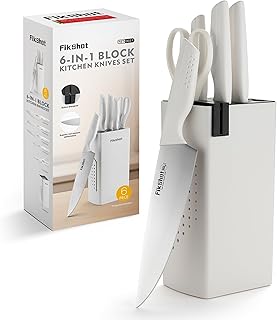
Knife Set, FIKSHOT 6-Piece Kitchen Knife Block Set with &
A dependable everyday pick — Knife Set pulls in 116 ratings at 4.5 stars. Not flashy, just solid.
16. Group Counter Clutter on Woven Trays

You will always have some functional items that need to live on the counter. Dish soap, a scrub brush, and hand lotion are unavoidable. If you leave them sitting directly on the stone counter, they look like clutter. If you group them together on a tray, they look like a deliberate arrangement. I use a shallow, woven water hyacinth tray I found at Target for $15. I place a glass bottle of dish soap, a bamboo scrub brush, and a small ceramic dish for my rings inside the tray. The woven texture of the tray ties in with the microwave basket and the pendant lights. It provides a visual boundary for the functional items. When water splashes out of the sink, the tray keeps the soap bottles from sitting in a puddle. I used to use a marble tray, but the soap scum built up and ruined the stone finish. The woven material is much more forgiving and adds that essential bohemian warmth. Trust me on this.
Creating a boho minimalist kitchen isn’t about buying a bunch of macrame wall hangings or painting everything beige. It’s about carefully selecting materials that feel warm, textured, and functional. You’re trying to build a space that feels calm but lived-in. I’ve spent years tweaking my own kitchen, swapping out cold metals for unlacquered brass and hiding ugly plastic appliances behind natural woven fibers. The result is entirely worth the effort. Start small. Swap your cabinet hardware or decant your pantry staples into glass jars this weekend. You’ll notice the difference immediately. If you found these ideas helpful, pin this article to your kitchen mood board and save it for your next weekend project.
Frequently Asked Questions
What colors work best in a boho minimalist kitchen?
Move away from stark whites and cool grays. Opt for warm neutrals like mushroom, taupe, or creamy whites. Benjamin Moore’s Soft Chamois is a great choice to create an inviting, earthy foundation without looking yellow.
How do I display items without creating clutter?
Use solid walnut or white oak open shelving, but edit ruthlessly. Display only functional, beautiful items like handmade ceramic plates or clear glass jars filled with pantry staples. Keep the color palette muted and earthy.
What type of hardware fits the boho minimalist style?
Unlacquered brass is the perfect choice. Unlike brushed nickel or painted gold, unlacquered brass develops a natural, mottled patina over time from the oils in your hands, adding authentic character and warmth to the space.
How can I add texture to a minimalist kitchen?
Introduce natural materials through functional items. Hide appliances in water hyacinth baskets, hang textured linen Roman shades, use a vintage wool runner rug, and install woven rattan pendant lights to break up hard surfaces.
