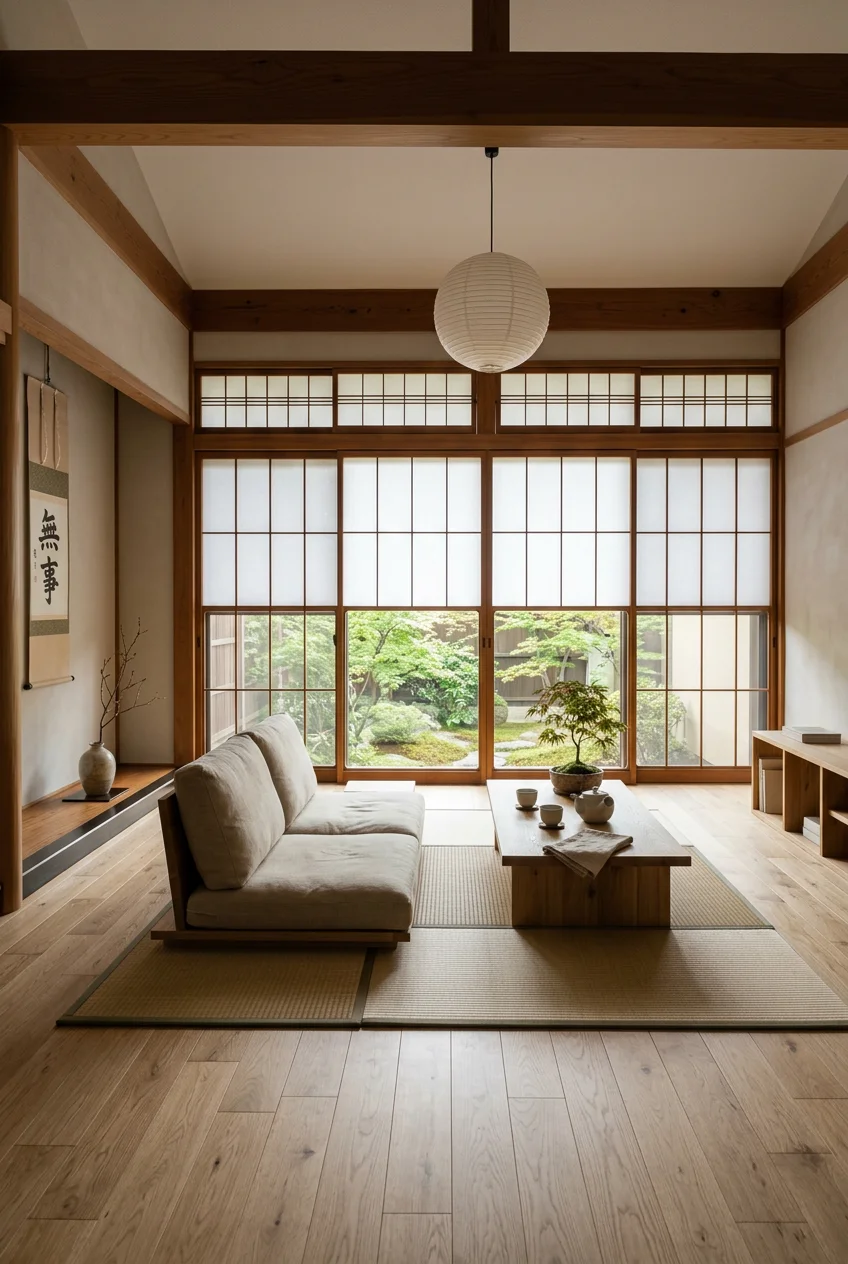
What’s Inside
- Embrace Warm Neutral Palettes for 2026
- Prioritize Low-Profile Furniture
- Integrate Natural Materials Extensively
- Master Ikebana for Intentional Decor
- Implement Thoughtful Washi Lighting
- Ground the Space with Tatami Mats
- Use Shoji Screens for Soft Partitioning
- Add Floor Cushions (Zabuton)
- Hide the Tech in a Japanese Minimalist Living Room
- Embrace Wabi-Sabi in Your Ceramics
- Choose a 12-Inch Coffee Table
- Keep Walls Mostly Bare (The Concept of Ma)
- Layer Organic Cotton and Linen
- Add a Single Statement Branch
- Conceal Clutter with Woven Baskets
- Introduce Hinoki Wood Scents
- Swap Bulky Bookshelves for Low Consoles
- Keep Your Japanese Minimalist Living Room Practical
Last Tuesday at Whole Foods, I caught myself staring blankly at a $45 ceramic vase and realized how entirely I used to misunderstand this design style. My first attempt at a Japanese minimalist living room was a total train wreck. I painted every single wall a stark hospital white. I bought a rigid floor cushion that made my lower back spasm within twenty minutes of sitting down. My apartment smelled like harsh bleach and echoed loudly whenever I talked on the phone. It felt exactly like a dental clinic waiting area. I’d completely missed the warmth that makes this style actually function in a real home. True Japanese minimalism isn’t about stripping away your personality until your space is empty and sad. It’s about intentionality and keeping only what serves a distinct purpose or brings quiet joy. After three years of tweaking my own space and helping clients fix their sterile apartments, I figured out the specific details that actually matter. I learned the hard way that you can’t just throw out all your furniture, sit on the floor, and call it zen. You need organic texture. You need the right layered lighting. You need furniture precisely scaled to the room. Here are 18 specific ways to make this work without sacrificing your daily comfort.
1. Embrace Warm Neutral Palettes for 2026

Move beyond stark whites if you want a warmer, more livable space. Trending right now are warm neutral color palettes like beige, taupe, soft cream, and greige. These shades create a soothing backdrop that doesn’t feel clinical or cold. I painted my living room walls in a soft greige called Benjamin Moore Revere Pewter. It costs about $50 to $80 per gallon depending on the finish. I paired it with a heavy cream linen sofa. The difference was immediate. The room felt emotionally supportive instead of icy. I tried pure white for months before figuring this out. Pure white reflects too much blue light from streetlamps and television screens. Greige absorbs that harshness beautifully. When you walk into the room at 4 PM, the walls look like soft, warm clay. It completely changes how your nervous system reacts after a long workday. Skip the cool-toned grays entirely. They look like wet cement in low light and ruin the cozy vibe.
2. Prioritize Low-Profile Furniture

You can create an instant illusion of spaciousness by selecting furniture that sits very close to the floor. This grounds the room. Brands like Flannel Sofa from Nagoya design low-profile pieces specifically to make standard ceilings feel much higher. You want to aim for a sofa height of no more than 28 to 30 inches at the backrest. I bought a Japandi-inspired low sofa from IKEA last year for $499. It sits exactly 29 inches high. The low height forces you to physically lower your center of gravity when you sit down. It completely changes your posture and your mindset. If you have standard 36-inch high sofas, they block the visual flow of the room. A low-profile couch lets your eyes travel across the space uninterrupted. Just be warned that older guests might need a hand getting up. I keep a firmer, slightly higher accent chair in the corner specifically for my mom when she visits. Trust me on this.
3. Integrate Natural Materials Extensively

Connect your space with nature by using authentic, raw materials. You need light wood tones like oak, ash, maple, or bamboo. Mix these woods with raw stone and natural textiles like cotton, linen, and wool. I bought a solid oak side table from MUJI for $150. It smells faintly of raw timber when the afternoon sun hits the wood grain. I paired it with a hand-woven jute area rug from Nordic Knots. Their smaller sizes start around $200. The rough, scratchy texture of the jute contrasts perfectly with the smooth, sanded oak. Don’t buy cheap plastic furniture covered in wood-grain contact paper. It peels after six months and looks terrible. I made that mistake in my twenties with a fake ash coffee table. The edges chipped and exposed the crumbly particle board underneath. Spend the extra money on real solid wood. It ages well and develops a natural patina over time.

Gold Leaf Home Decor Set – Metal Leaves Statues
A dependable everyday pick — Gold Leaf Home Decor Set – Metal Leaves Statues pulls in 55 ratings at 4.5 stars. Not flashy, just solid.
4. Master Ikebana for Intentional Decor

Instead of cluttered, massive floral arrangements, practice Ikebana. This is the traditional Japanese art of flower arranging. It emphasizes the concept that less is truly more. Traditional Ikebana focuses on three main elements. Shin represents heaven and is the tallest line. Soe represents Earth as the supporting middle line. Hikae represents the human element as the shortest line. You typically use just 5 to 13 stems total. I usually create an arrangement with just 3 carefully chosen stems. I use a single bare branch, one large monstera leaf, and a delicate white lily. I place them in a simple ceramic bowl using a heavy metal kenzan. A kenzan is a spiked flower frog that costs about $10 to $30 at local craft stores. It holds the stems exactly where you want them. A massive bouquet of grocery store roses looks chaotic and messy. A single branch arranged with precise intention looks like a museum piece.
5. Implement Thoughtful Washi Lighting

Harsh overhead lighting is usually terrible for relaxing. You need to create ambiance without visual clutter by combining ambient, task, and accent lighting. Japanese-inspired pendant lights often feature natural materials like washi paper, wood veneer, or woven rattan. These materials diffuse a very soft, warm glow. I bought a Round Paper Lantern Pendant Light for $95 online. I hung it in the far corner of my living room with a warm 2700K LED bulb. The washi paper softens the light so much that it looks like a glowing harvest moon. I complement this with a small matte black task lamp from Target that cost $35. I use the task lamp specifically for reading books on the sofa. Never use daylight or cool-white bulbs in your living room. They mimic fluorescent office lighting and completely ruin the relaxing vibe. Stick to warm LEDs and rely on paper shades to scatter the light gently. You might also like: 15 Minimalist Goth Home for Every Budget
6. Ground the Space with Tatami Mats

Traditional tatami mats are made from tightly woven rush grass. They give a room an immediate, authentic Japanese feel. The smell of fresh tatami is incredible. It smells like sweet, dried summer hay. I purchased a large tatami-style area rug from Costco last summer for $120. It isn’t a traditional two-inch thick mat, but it gives the exact visual texture I wanted. The woven surface is slightly rough under bare feet. It feels incredibly grounding. If you buy real traditional tatami, be prepared for heavy maintenance. You have to wipe them down with a damp cloth and you absolutely can’t wear shoes on them. I strictly enforce a no-shoes rule in my house anyway. Dirt gets trapped in the woven grass and ruins the fibers. The Costco version is much easier to vacuum. It provides that geometric, natural grid pattern on the floor without the high cost of imported mats. You might also like: 16 Minimalist Colorful Home You Need to See

CEMABT Modern Nordic Boho Vase Set
A dependable everyday pick — CEMABT Modern Nordic Boho Vase Set – Elegant Beige Matte Ceramic Home pulls in 984 ratings at 4.5 stars. Not flashy, just solid.
7. Use Shoji Screens for Soft Partitioning

Shoji screens are wooden frames filled with translucent paper panels. They’re brilliant for dividing a room or diffusing harsh window light. I live in an open-concept apartment and hated staring at my messy kitchen from the sofa. I bought a four-panel pine shoji screen from Wayfair for $135. I set it up right between the living area and the kitchen island. The paper panels hide the cluttered counters but still let the morning light filter through beautifully. The light turns soft and milky. Real traditional shoji paper is very delicate. If you have cats or toddlers, they’ll poke holes in it. I learned this when my sister’s cat visited and shredded the bottom panel in five minutes flat. You can buy screens with reinforced synthetic paper now. They look identical to the real thing but resist tearing. It completely changes the architecture of a boring square room. You might also like: 20 Cozy Simple Living Tips You Can Try Today
8. Add Floor Cushions (Zabuton)

Floor seating is a massive part of this design aesthetic. You need proper zabuton cushions. These are square floor cushions specifically designed for sitting on tatami mats. Don’t just throw a cheap couch pillow on the floor. It’ll compress instantly and hurt your knees. I bought two authentic cotton zabuton cushions filled with organic buckwheat hulls. They cost $45 each online. The buckwheat shifts to support your exact weight and doesn’t flatten out over time. I found some decent backup options at Walmart for $25 when I needed extra seating for a dinner party. They were filled with dense memory foam instead of buckwheat. They aren’t traditional, but they look simple and clean. Sitting on the floor changes how you interact with your space. You feel more anchored to the ground. Just make sure your rug is thick enough underneath the cushion. Hardwood floors will still feel brutal after an hour.
9. Hide the Tech in a Japanese Minimalist Living Room

Nothing ruins a serene aesthetic faster than a tangled rat king of black HDMI cords and a glowing internet router. You absolutely have to hide your technology. I used an IKEA Besta TV unit to solve this exact problem. The frame cost $90. I bought solid wood doors to cover the front compartments. I drilled a two-inch hole in the back panel to route all the cables directly into the wall. My television sits on top, but the router, the streaming box, and the ugly power strips are completely invisible. I even put black electrical tape over the tiny standby lights on my TV frame. Those little red and blue dots are visual clutter in a dark room. Keeping your Japanese minimalist living room free of digital distractions is crucial. When I sit on my sofa now, I see wood grain and clean walls. I don’t see a blinking router demanding my attention.

PoKat 23" Modern Ceramic Table Lamp Set of 2 for Living
A dependable everyday pick — PoKat 23″ Modern Ceramic Table Lamp Set of 2 for Living Room White Des pulls in 15 ratings at 4.5 stars. Not flashy, just solid.
10. Embrace Wabi-Sabi in Your Ceramics

Wabi-sabi is the Japanese philosophy of finding beauty in natural imperfection. You don’t need a perfectly matching set of flawless white mugs. You want ceramics that show the actual hand of the maker. I found an amazing asymmetrical clay bowl at a local potter’s studio last year. It cost $40 and has a slightly warped, uneven edge. I keep it on my coffee table to hold my house keys. I also have a mug I bought from the seasonal aisle at Kroger for $15. It has a rough, unglazed bottom and a speckled green glaze on top. When I dropped it and chipped the rim, I didn’t throw it away. I painted the chip with a food-safe gold lacquer. It was my cheap, DIY version of kintsugi. The mug looks better now than it did when it was brand new. Stop buying mass-produced, identical decor. Choose pieces that have texture and tiny flaws.
11. Choose a 12-Inch Coffee Table

Your coffee table needs to match the low height of your sofa. If you buy a standard 18-inch table, it’ll look awkwardly tall and out of place. Aim for a coffee table around 12 to 16 inches high to maintain open sightlines. I found a solid walnut table that is exactly 14 inches tall. It cost $250 online. When I sit on my floor cushions, the table is at the perfect ergonomic height for eating dinner or drinking tea. The low height keeps the center of the room feeling completely open and airy. A heavy, tall coffee table acts like a visual roadblock in the middle of the room. I used to have a massive glass and metal table. I stubbed my toe on it constantly. This low wooden table softens the room entirely. Make sure you measure your sofa seat height before buying a table. The table should sit about two inches lower than your cushions.
12. Keep Walls Mostly Bare (The Concept of Ma)

The Japanese concept of Ma translates roughly to negative space. It is the intentional empty space between objects. Most people feel the frantic need to fill every blank wall with gallery frames or floating shelves. Don’t do it. Leave your walls alone. I have one single piece of art in my entire living room. It’s a large, textured canvas that cost $120. The other three walls are completely bare greige paint. At first, it felt really weird. I kept wanting to buy shelves to fill the void. I forced myself to wait a month. Now, I deeply appreciate the visual quiet. The empty walls give my eyes a place to rest. When you fill every inch of space, your brain has to process all that visual data constantly. Bare walls reduce mental fatigue. If you must hang things, group them tightly in one area and leave the rest of the room completely empty.

Dog Sculpture Home Decor Cute Man and Dog Statue Decoration
Dog Sculpture Home Decor Cute Man and Dog Statue Decoration for Office punches above its price — 340 buyers rated it 4.5 stars. I would buy it again.
13. Layer Organic Cotton and Linen

Minimalism doesn’t mean your house has to be uncomfortable. You need soft textures to make the room livable. Focus heavily on organic cotton and washed linen. I keep a heavy, textured cotton throw blanket draped over the arm of my sofa. I bought it at Sprouts in their seasonal home section for $35. It feels thick and heavy, almost like a comforting weighted blanket. I also use 100 percent linen covers for my throw pillows. Linen has a natural, slightly wrinkled texture that looks very relaxed. I buy my pillow covers from a small Etsy shop for $28 each. Avoid polyester fleece or cheap faux fur. They look tacky and create terrible static electricity in the dry winter months. Natural fibers breathe better and add a subtle, matte texture to the room. The wrinkles in the linen perfectly complement the wabi-sabi aesthetic. You don’t want anything to look perfectly ironed or stiff.
14. Add a Single Statement Branch

Houseplants are great, but a jungle of fifty tiny succulents on a windowsill looks extremely cluttered. For a truly minimalist vibe, use a single large branch in a sturdy vase. I go to the floral section at Whole Foods every few weeks. They usually sell tall seasonal branches for about $12. In the spring, I buy fresh cherry blossoms. In the fall, I buy dried oak branches. I place one massive branch in a heavy stone vase on the floor. It draws the eye upward and adds a dramatic, organic shape to the corner of the room. The trick is to use a vase heavy enough that the tall branch won’t tip it over. I filled the bottom of my vase with two pounds of river rocks from the hardware store. The rocks cost $5. A single, dramatic branch requires zero watering and makes a much stronger architectural statement than a cluster of small potted plants. No exaggeration.
15. Conceal Clutter with Woven Baskets

You will inevitably have ugly things you need to store in your living room. Remote controls, dog toys, extra phone chargers. The key is hiding them in natural materials. I use tightly woven seagrass baskets with matching lids. I found a set of three at Target for $45. I keep the largest one next to the sofa to hold my laptop and planner when I’m done working for the day. The lid is absolutely crucial. Open baskets just display your messy cables to the world. A basket with a lid looks like a deliberate, clean decor choice. I used to use clear plastic storage bins under my coffee table. It was awful. I could see every tangled wire and crumpled receipt inside them. Swapping to opaque, natural woven baskets instantly cleaned up the visual noise. Just make sure the baskets match the wood tones in your room so they blend in seamlessly.

luckystyle Dimmable Floor Standing Tall Lamp
If you want something that just works, luckystyle Dimmable Floor Standing Tall Lamp is a safe bet (28 reviews, 4.5 stars).
16. Introduce Hinoki Wood Scents

The atmosphere of a room isn’t just visual. Scent plays a massive role in how a space actually feels. Japanese spaces often smell like natural wood, specifically hinoki cypress. I bought a small bottle of hinoki essential oil for $24. I put three drops into a matte ceramic stone diffuser. The stone cost $18. The smell is incredible. It smells exactly like a traditional wooden Japanese bathhouse. It’s woody, clean, and slightly citrusy. I used to burn cheap vanilla cupcake candles from the mall. The artificial sweetness would give me a headache after an hour. Natural wood scents ground the room and make it feel expensive. The ceramic stone diffuser requires no electricity and sits quietly on a shelf. It releases the scent very slowly over a few days. It’s a tiny detail that completely transforms the mood when you walk through the front door after work.
17. Swap Bulky Bookshelves for Low Consoles

Tall bookshelves dominate a room. They draw the eye up and usually end up stuffed with random junk and paperbacks. I got rid of my 72-inch tall bookcase last year. I replaced it with a long, low console table that sits just 24 inches off the floor. I bought it used for $75 on Facebook Marketplace. I only kept the books I actually plan to read again. I stacked them horizontally on the console. This completely opened up the top half of my living room. The room feels twice as big now. Tall furniture creates dark shadows and blocks natural light from windows. Keeping all your storage below waist level makes the ceiling feel endlessly high. It forces you to be ruthless about what books and items you actually keep. I donated four boxes of books I was only keeping out of guilt. The low console looks intentional and incredibly serene.
18. Keep Your Japanese Minimalist Living Room Practical

A beautiful room is completely useless if you can’t actually live in it. Your Japanese minimalist living room must be easy to clean and maintain. I keep my floor completely clear of small objects. This means my robot vacuum can run every morning without getting stuck on cords or shoes. I buy simple, unscented castile soap from Kroger for $12 to clean my oak furniture. I don’t use harsh chemical sprays anymore. If a space requires an hour of dusting, it isn’t truly minimalist. I learned this when I bought a slatted wood coffee table. Dust got trapped between every single slat. I spent twenty minutes every Saturday cleaning it with a cotton swab. I sold it after three months and bought a flat-topped table. True minimalism gives you your time back. Choose furniture with clean, flat lines. Avoid intricate carvings or unnecessary grooves. Your future self will thank you when cleaning takes ten minutes.
Creating a space like this takes serious time. You can’t just buy a new sofa and expect your life to feel instantly peaceful. It took me years of removing the wrong things and slowly adding the right textures to get it right. Start small. Paint your walls a warm greige, hide your TV cords, or buy one beautiful floor cushion. The goal is to build a room that quietly supports you at the end of a chaotic day. If you found these tips helpful, please pin this article to your home decor boards so you can reference these specific measurements and prices later when you’re shopping.
Frequently Asked Questions
What colors work best for a japanese minimalist living room?
Stick to warm neutral palettes like greige, taupe, and cream. Avoid sterile hospital whites, which feel cold. Benjamin Moore’s Revere Pewter is a great choice to create a soothing, earthy backdrop for natural wood furniture.
How tall should furniture be in a Japanese style room?
Low-profile furniture is essential. Sofas should be no taller than 28 to 30 inches at the backrest. Your coffee table should sit around 12 to 16 inches high to keep sightlines open and ground the space.
How do I add decor without creating clutter?
Use intentional, single-item statements like one large dried branch in a stone vase or a single handmade ceramic bowl. Practice Ikebana flower arranging using just three stems instead of massive, chaotic floral bouquets.
What are the best materials for this aesthetic?
Focus entirely on authentic natural materials. Solid oak, ash, or bamboo for wood pieces. Use woven rush grass for tatami mats, and organic cotton, jute, or washed linen for your rugs and throw pillows.
