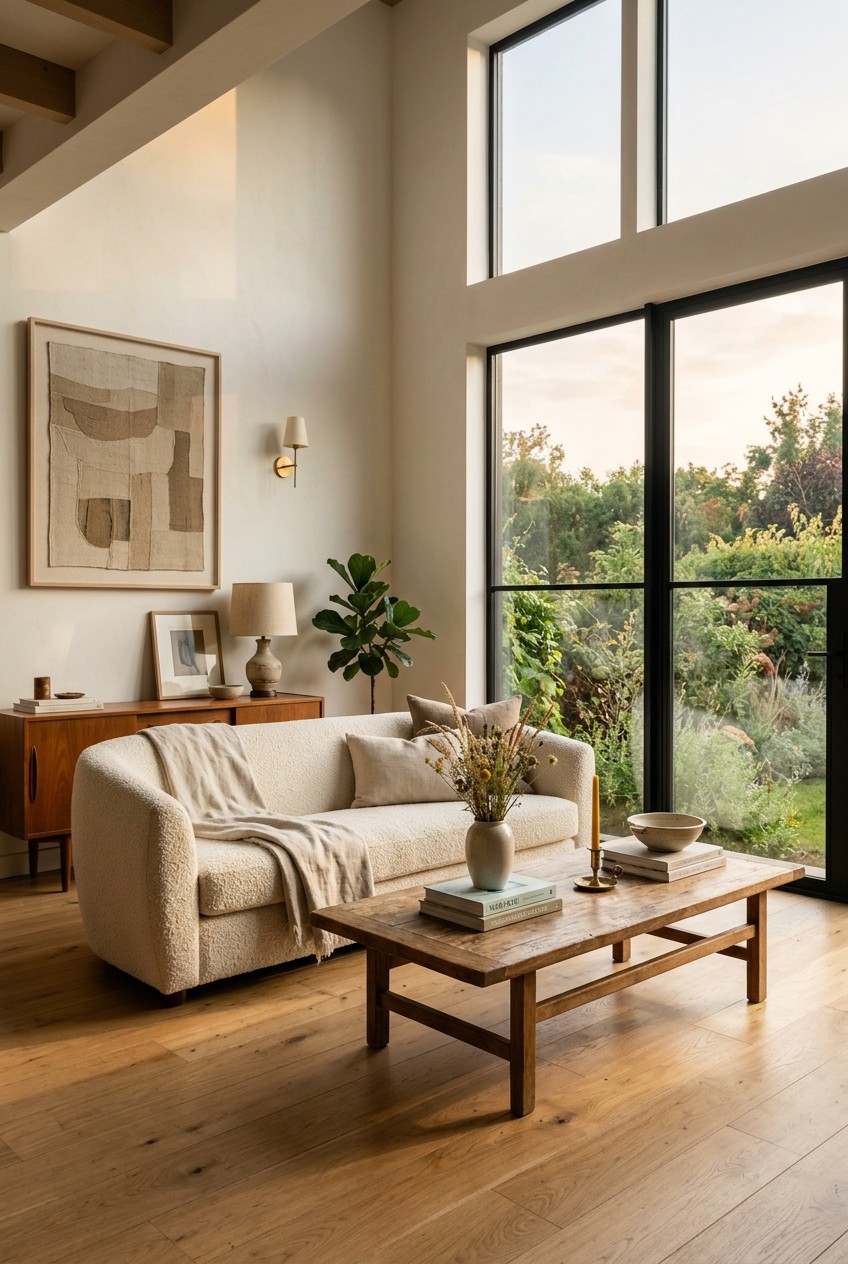
What’s Inside
- Master the Neutral Base with a Warm Palette
- Invest in Clean-Lined, Quality Furniture
- Curate Eclectic Statement Pieces with Intentionality
- Embrace the “Less is More” Philosophy for Decor
- Play with Textures and Materials for Depth
- Integrate Biophilic Design Elements
- Prioritize Multi-functional and Modular Furniture
- Define a Cohesive Color Palette
- Layer Lighting to Create Ambiance
- Incorporate Antiques and Vintage Finds as Anchors
- Mind the Scale of Furniture and Prints
- Use Bold Rugs to Add Depth Without Clutter
- Embrace Collectible Design Over Singular Statement Pieces
- Don’t Be Afraid to Mix Eras and Styles
- The Surprising Power of “If You Love It, It Will Work”
- Ground the Space with Matte Black Accents
- Use Books as Architectural Elements
- Soften Hard Edges with Organic Shapes
- Keep Everyday Clutter Hidden Beautifully
I sat on my living room floor last Tuesday, staring at a pile of mismatched thrift store finds. Why did my place look like a garage sale instead of a curated home? Nailing that minimalist eclectic vibe is harder than it looks. I spent months doing it wrong. I thought minimalism meant tossing everything, while eclectic meant keeping it all. The result was a mess of bare walls and cluttered corners. Let’s fix that nonsense. I’m going to show you how to balance clean lines with those weird, soulful vintage pieces you love.
1. Master the Neutral Base with a Warm Palette

I learned the hard way that stark white walls are a mistake. I painted my apartment blinding white, and it felt like a dental clinic. The harsh paint gave me a headache. You won’t want to relax in a sterile box. Building a warm foundation is key. I’m obsessed with Sherwin-Williams “Accessible Beige.” A gallon costs $72.49. It’s a low-VOC, mineral-based paint with a soft mushroom tone. Skip the cheap stuff; it looks like wet cardboard. A warm base lets your funky vintage decor pop. Grab $4.99 sample pots first. I picked up rollers at Walmart for $14.98 to keep things budget-friendly. Trust me.
2. Invest in Clean-Lined, Quality Furniture

The core of this style is picking furniture with clean lines. If your main pieces are fussy, the room feels chaotic. I learned this the hard way after buying a tufted, bright pink velvet sofa from a thrift store. It was scratchy and made my living room look like a circus tent. I sold it and bought a West Elm “Harmony Sofa” in a neutral fabric, starting around $1,500. It provides a sleek silhouette without the visual clutter. Brands like Ethnicraft also offer that refined feel. When your big pieces act as a quiet base, you’re free to go wild with smaller decor. A quiet sofa means you can’t mess up your throw pillows.
3. Curate Eclectic Statement Pieces with Intentionality

You can’t just toss random knick-knacks on a shelf. You have to be intentional. Designer Erika Dale suggests treating items with the same discipline as a hardcore minimalist. Let each piece shine by giving it space. I used to buy cheap, mass-produced decor to fill empty gaps. It just created a dusty mess. Now, I look for unique items from brands like OTTO Studio or Lichen NYC. Last month, I bought a hand-thrown ceramic bowl from Lichen NYC for $120. It sits alone on my entryway console. The gritty texture of the unglazed clay is striking. I’d rather own one $120 piece that makes me gasp than twenty $5 items collecting dust.

PoKat 23" Modern Ceramic Table Lamp Set of 2 for Living
PoKat 23″ Modern Ceramic Table Lamp Set of 2 for Living Room White Des punches above its price — 15 buyers rated it 4.5 stars. I would buy it again.
4. Embrace the “Less is More” Philosophy for Decor

This is crucial. A common mistake is adding way too much tiny decor, which leads to clutter. I limit myself to two or three items per surface. On my coffee table, I keep exactly two things: a sculptural ceramic vase from Wooj Design that cost $45, and a stack of two heavy art books I found at Costco for $29.99 each. That’s it. You aren’t doing yourself any favors by cramming candles and coasters into every inch. Your eyes need room to rest. When you restrict your display, the pieces you show off feel infinitely more special.
5. Play with Textures and Materials for Depth

To keep a minimalist space from feeling cold, you have to play with texture. Mix sleek modern furniture with richer, heavier decor. Think soft wool, velvet, and heavy linen. In 2026, natural fibers like wool and hemp are favorites. I swear by “Belgian Linen” curtains from Pottery Barn. They’re $149 per panel, but the rough texture adds an understated luxury that polyester can’t replicate. I remember buying thin curtains from a discount bin once; they sounded like a cheap windbreaker every time I closed them. Learned that the hard way. Layering textures adds warmth without clutter. A smooth leather chair paired with a $60 wool blanket from Target creates a perfect sensory experience.
6. Integrate Biophilic Design Elements

A huge trend for 2026 is biophilic design, which is just a fancy way of saying we need more nature indoors. This goes beyond a sad potted plant in the corner. You want organic shapes and materials like rattan or cane. I love bringing in living things. Last Tuesday at Trader Joe’s, I picked up a massive Monstera for $12.99. The deep green leaves breathed life into my stark dining room. I also propagate cuttings in $2.50 glass mason jars from Kroger. The sound of water clinking and the smell of fresh soil changes the room’s energy. If you aren’t a plant person, try a rattan accent chair. The natural tones bring warmth inside without the watering. You might also like: 15 Brilliant Minimalist Simple Living Tips That Changed Everything

Dog Sculpture Home Decor Cute Man and Dog Statue Decoration
Dog Sculpture Home Decor Cute Man and Dog Statue Decoration for Office has been one of the most consistently praised picks in this category. 326 reviewers averaged 4.5/5.
7. Prioritize Multi-functional and Modular Furniture

In a minimalist eclectic home, every piece needs to earn its keep. If you live in a small space, you can’t afford single-use items. I bought a Project 62 storage ottoman from Target for $60. It’s a footrest, extra seating, and hides my messy gaming controllers. Modular seating is also trending. A cloud-style sectional lets you break pieces apart and reconfigure them. I used to own a massive, rigid sofa that blocked my windows and couldn’t be moved. It was a nightmare. A coffee table with a hidden shelf gives you a clean surface while hiding ugly remotes underneath. You might also like: 20 Lovely Minimalist Simple Living Home Tips for Every Budget
8. Define a Cohesive Color Palette

A common mistake is failing to define a color scheme. If you skip this, your space looks messy. While eclecticism embraces variety, a minimalist base requires a restrained approach. I follow the 60-30-10 rule. You use a dominant color for 60 percent of the room, a secondary for 30, and an accent for the last 10. My living room is 60 percent warm beige, 30 percent deep olive green, and 10 percent terracotta. Before I learned this, my bedroom was a disaster of blue, purple, and red. It felt like a preschool classroom. I even buy $3.99 hand towels at Sprouts in olive green just to keep the ratio right. You might also like: 20 Charming Minimal Classic Capsule Wardrobe Ideas That Actually Work
9. Layer Lighting to Create Ambiance

Don’t rely on the harsh overhead light. Layering your lighting is the secret to a cozy home. Avoid leaving empty corners dark. I used to flip on the “big light” every evening, and the glaring, blue-toned bulbs gave me headaches. Now, I layer ambient, task, and accent lighting. Use warm LED lights. I love my “mini wooj Tamp wavy lamp” from Wooj Design. It’s $65, and the 3D-printed squiggly shape adds a perfect eclectic touch. Dimmers are non-negotiable. I bought a pack of Philips Hue smart bulbs for $89.99, and controlling the warmth from my phone changed my entire evening routine.
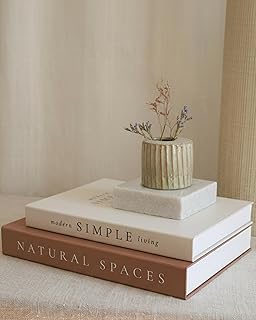
Beautiful Decorative Books
Beautiful Decorative Books – Set of 2 Boxes Enhance Your Coffee Table has been one of the most consistently praised picks in this category. 282 reviewers averaged 4.5/5.
10. Incorporate Antiques and Vintage Finds as Anchors

The return to vintage furniture is a sustainable trend for 2026. Use older pieces as anchors to ground your rooms with craftsmanship and patina. A few years ago, I bought everything brand new, and my apartment felt like a generic hotel. It had zero soul. Now, I hunt for older pieces. I found a mid-century walnut credenza on 1st Dibs. Prices there can be eye-watering, but I negotiated this one down to $850. The wood smells like polish and history. When you pair a 60-year-old dresser with a sleek minimalist mirror, the contrast is magic. If 1st Dibs is out of budget, hit the local flea markets.
11. Mind the Scale of Furniture and Prints

Pay attention to scale, especially when you collect items slowly. If everything is the same height, the room looks flat. You need to mix heights. I pair my low-slung floor sofa with a slender brass floor lamp I found for $129 at West Elm. The visual tension between the heavy sofa and the skinny lamp makes the room interesting. When hanging art, balance your sizes. Don’t use only oversized patterns. I mix one large 24×36 inch abstract canvas with tiny 4×6 inch vintage sketches framed in $4.94 frames from Walmart. Mixing scale keeps the eye moving.
12. Use Bold Rugs to Add Depth Without Clutter

Bold rugs are a great way to add visual interest without cluttering your counters. If your furniture is minimal, the floor is the place to inject personality. An eclectic rug can range from a $10 thrift find to a $600 designer piece. I recently bought the “Unique Loom Hygge Shag Valley Blue 8 ft. x 10 ft. Area Rug” for $233.99. The plush pile feels amazing, and the blue geometric pattern anchors my gray sofa. I used to own a tiny pale beige rug that looked like a sad bathmat. A vintage Persian rug paired with a sharp contemporary sofa is a perfect example of eclectic blending.

UTTCMK Bookshelf Decor Thinker Statue
A dependable everyday pick — UTTCMK Bookshelf Decor Thinker Statue – Abstract Art Reading Thinker S pulls in 771 ratings at 4.5 stars. Not flashy, just solid.
13. Embrace Collectible Design Over Singular Statement Pieces

Instead of one giant mass-produced statement piece, 2026 interiors favor a curatorial approach. These pieces are often made in small batches using traditional techniques. A home should feel collected over years, not decorated in a weekend at the mall. I started collecting handmade ceramic mugs. I have a heavy stoneware mug with a raw bottom I bought for $38 at a craft fair. The rough texture brings me more joy than a generic $5 factory mug. When you buy collectible design, you’re buying a story. You won’t want to throw these away. Let your home evolve.
14. Don’t Be Afraid to Mix Eras and Styles

Eclectic design thrives on blending eras, cultures, and aesthetics. Don’t be afraid to mix things that shouldn’t technically go together. Designer Juan Montoya says a room should never let the eye settle in one place. It should be a little bit of a fantasy. I love pairing my modern acrylic coffee table ($189 on Amazon) with a Victorian armchair I inherited. The smooth, cold plastic next to the dusty velvet is a weird, beautiful contrast. I used to think all my furniture had to match. I bought a matching cherry wood set once and it was so boring I couldn’t stand it. Put a 1970s chrome lamp on an 1800s farm table.
15. The Surprising Power of “If You Love It, It Will Work”

There is a simple rule: if you love it, it will work. This is the heart of eclectic design. While guidelines like the 60-30-10 rule help, your home should reflect you. If you love a bizarre neon pink flamingo sign, buy it. I’ve kept a terrifying vintage oil painting of a glaring cat I bought for $15. It doesn’t fit my warm minimalist vibe at all, but I love it. It makes me laugh every time I walk past. Because I kept the surrounding walls bare and the lighting soft, the cat painting just works. Trust your gut. If a piece brings you joy, bring it home.

seenlast Candle Warmer Lamp with Timer Dimmer Adjustable
seenlast Candle Warmer Lamp with Timer Dimmer Adjustable Height for Ne has been one of the most consistently praised picks in this category. 38 reviewers averaged 4.5/5.
16. Ground the Space with Matte Black Accents

If your room is floating in a sea of beige, you need something sharp to ground it. I rely on matte black accents for crisp definition. It’s like adding eyeliner to a bare face. I swapped out all the shiny silver hardware in my kitchen for matte black pulls from CB2. They were $6.95 each, but the cold metal changed the whole look. I sprinkle black picture frames and curtain rods throughout the house. Before this, my living room felt too soft, like a giant marshmallow. The black accents provide visual punctuation. I even buy my kitchen trash bags in black from Costco just to keep the aesthetic going.
17. Use Books as Architectural Elements

Books aren’t just for reading; they are tools for adding height and texture. I use oversized art books as architectural elements. I own a Taschen book on modern architecture that cost $75. I lay it flat on my console and use it as a pedestal for a glass vase. The crisp paper edges contrast beautifully with the smooth glass. I used to line paperbacks up tightly on a shelf, and it looked like a messy library. Now, I stack them horizontally and sort them by color. I even picked up vintage hardcovers with worn fabric covers at Whole Foods for $14. They smell like old paper and dust.
18. Soften Hard Edges with Organic Shapes

Minimalism relies on straight lines and right angles. To make the space feel human, you have to soften those edges with organic shapes. If a room has too many sharp corners, it feels hostile. I swapped my rectangular mirror for an asymmetrical pebble mirror from West Elm that cost $199. Its weird, blob-like shape relaxes the rigid lines of the doorway. I also look for furniture with rounded legs or curved backs. I tried a sharp-edged glass dining table once, and I was constantly bruising my hips. It was awful. Now, I hunt for pieces that mimic nature. A lopsided ceramic bowl or a wavy rug breaks up the stiff grid.
19. Keep Everyday Clutter Hidden Beautifully

You can’t maintain a minimalist eclectic home if your mail and keys are scattered everywhere. You must keep clutter hidden. I despise visual noise. I use rattan baskets from Muji that cost $35 each to hide my daily necessities. The rough texture looks eclectic on my white shelves, but inside, they hold a mess of receipts and leashes. I also bought a hollow faux-book storage box from Target for $15 to hide my remotes on the coffee table. Before I got serious about storage, my kitchen island was a dumping ground. Hide the ugly stuff so your intentional pieces can actually be seen.
Putting together a minimalist eclectic home doesn’t happen overnight. It requires patience, trial and error, and the willingness to admit when a piece just isn’t working. Start with your paint and your biggest furniture, then layer in the weird accessories as you find them. Don’t rush out and buy a whole room from a catalog. Let your space evolve. If you found these tips helpful, save and pin this article for your next weekend refresh. You’ll want to reference these paint colors and brand names later!
Frequently Asked Questions
What exactly is a minimalist eclectic home?
A minimalist eclectic home blends the clean, uncluttered lines of minimalism with the soulful, varied textures of eclectic design. It relies on a warm neutral base and highly intentional, curated vintage statement pieces instead of overwhelming the space with mass-produced decor.
How do I mix vintage and modern furniture without it looking messy?
The secret is maintaining a strict 60-30-10 color palette and limiting your display items. Use sleek, modern furniture as your quiet 60 percent base, then layer in your wild, vintage eclectic pieces as the 30 percent secondary and 10 percent accent elements.
What paint colors work best for warm minimalism?
Stark white paint often feels too cold and clinical. Instead, opt for low-VOC mineral paints in soft, earthy tones like mushroom, clay, warm beige, or caramel. Sherwin-Williams’ Accessible Beige is an excellent choice for creating a cozy, inviting backdrop.
Can I have bold rugs in a minimalist space?
Absolutely. Bold rugs are a fantastic way to add deep visual interest without adding physical countertop clutter. A vintage Persian or bright geometric rug anchors the room perfectly, provided your main furniture pieces feature clean, simple lines to balance the heavy pattern.
