What’s Inside
- Embrace Warm Minimalism with Earthy Neutrals
- Prioritize Texture Over Ornamentation
- Invest in Multi-Functional, Low-Profile Furniture
- Layer Textiles Thoughtfully
- Optimize Lighting for Mood and Warmth
- Embrace Japandi Elements for Serenity
- Curate Meaningful Decor
- Go Big with Oversized Wall Art
- Incorporate Wabi-Sabi for Authentic Charm
- Choose Sustainable and Organic Bedding
- Define Spaces with Noren Fabric Dividers
- Integrate Smart Home Technology Invisibly
- Utilize Mirrors Strategically to Amplify Light
- Follow the 60/30/10 Color Rule
- Incorporate Low Japanese Tables
- Bring the Outside In with Intentional Greenery
- Layer in Subtle Earthy Scents
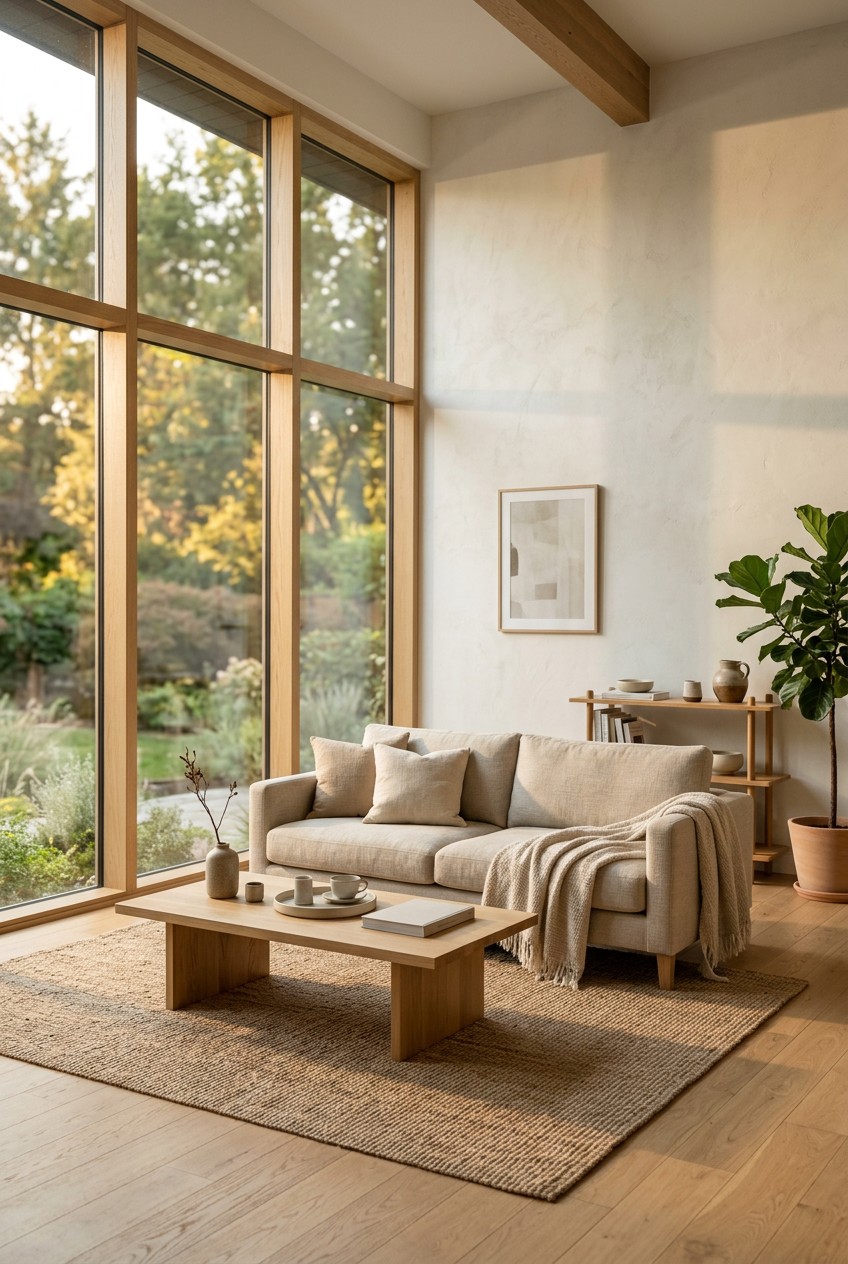
I stared at my living room last Tuesday with a half-empty mug of lukewarm coffee, realizing my attempt at a chic space just looked like a sad, abandoned waiting room. If you want real cozy minimalist home inspiration, you’ve got to learn from my early mistakes. Cold gray walls and empty surfaces aren’t relaxing. They just feel hollow. Finding the right vibe is about adding warmth, not deprivation. Let’s fix your space this weekend.
1. Embrace Warm Minimalism with Earthy Neutrals

I painted my entire apartment a stark, icy white back in 2021. Big mistake. It felt like living inside a commercial refrigerator. The harsh glare gave me headaches by 3 PM every single day. In 2026, we’re fully embracing warm minimalism. Think sand, clay, warm whites, soft beige, muted greens, and rich terracotta. I recently repainted my bedroom using Behr Premium Plus in a shade called “Warm Oatmeal” ($49.98 for a 1-gallon can at Home Depot). I applied it with a standard 9-inch woven roller, and the difference is wild. The afternoon light bounces off the walls with a soft, diffused glow instead of blinding you. If you’re stuck in the gray-floor-gray-wall trend, please break out of it. Skip the cool grays; they make your house feel like a sterile dentist office. Grab a paint sample of a muted green or soft beige. Even painting a small accent wall changes the whole vibe. I’m telling you, finding the right cozy minimalist home inspiration starts with fixing your paint colors. Warm tones are the secret sauce.
2. Prioritize Texture Over Ornamentation

When you strip away the visual clutter, your room can feel a little naked. That’s exactly where texture comes in. Since we aren’t relying on bright neon colors or fifty little knick-knacks, your materials have to do the heavy lifting. I used to buy cheap, shiny polyester throw pillows from Walmart. They felt like slippery plastic and looked awful after one wash. Now, I focus on things that beg to be touched. I’m obsessed with my CB2 white bouclé throw pillow (exactly $39.95 for the 18×18 inch size). Expert Kashi Shikunova, Director of YAM Interiors, says layering texture into a minimalist design is crucial for balance. I agree completely. Think heavily textured lime wash walls, deeply grained matte wood finishes, and raw unpolished stone. I’ve got a 12-inch raw travertine tray on my coffee table that adds so much visual grit. Don’t buy smooth, glossy everything. It looks cheap. Mix a chunky heavy knit with a smooth, cool linen. The harsh contrast is what makes the room feel alive and cozy instead of flat and boring.
3. Invest in Multi-Functional, Low-Profile Furniture

Clutter is the ultimate enemy of coziness. You still need practical places to put your stuff, though. The trick is buying furniture that works double shifts. I used to have a flimsy wire basket for my blankets that just looked messy. Now, I use a 14-inch round faux-leather storage ottoman from Target ($60.00). It hides three heavy wool blankets and serves as a footrest when I’m watching TV. Low-profile furniture with rounded edges is a massive trend right now. It makes your ceilings look higher and the room feel much more open. I saved up for the 72-inch Article Sven sofa in tan leather ($1,299.00). Its low back means it doesn’t block the window light. Plus, the thick leather adds incredible warmth. A major mistake people make is buying bulky, overstuffed recliners. They eat up your floor space and make the room feel cramped. Choose pieces with exposed wooden legs. Being able to see the floor underneath your sofa tricks your brain into thinking the room is bigger than it actually is.

UTTCMK Bookshelf Decor Thinker Statue
Honestly, UTTCMK Bookshelf Decor Thinker Statue – Abstract Art Reading Thinker S surprised me — sturdier than it looks in the photos, and over 771 buyers gave it 4.5 stars.
4. Layer Textiles Thoughtfully

You can’t just throw ten random blankets on a couch and call it cozy. I’ve tried that. It just looked like a messy laundry pile. You need to layer textiles thoughtfully. Stick to three or four distinct textures per room to maintain visual balance. Any more than that, and it gets chaotic. I like to start with a large, flat-weave natural jute rug as a base layer. Then, I drape a soft, breathable blanket over the sofa arm. My absolute favorite is the 50×60 inch European linen throw from Quince ($49.90). It has this perfect, slightly rumpled look that feels effortless and lived-in. I pair that with a smooth cotton canvas pillow. The physical contrast between the rough jute, the soft linen, and the crisp cotton creates massive depth. Artisan-made textiles from brands like The Citizenry or We Are Pampa are amazing if you have the budget. But you can get the exact same effect by mixing basic natural materials. Just avoid shiny synthetics at all costs. They ruin the natural, grounded vibe we’re going for.
5. Optimize Lighting for Mood and Warmth

The worst thing you can do to a minimalist space is light it up like a sterile operating room. I lived in an apartment with aggressive overhead fluorescent lights for two long years. It was miserable. I never wanted to hang out in my own living room after dark. You have to layer your lighting. Use warm LED bulbs, dimmers, and smart lighting systems. I swapped out every single bulb in my house for the Philips Hue White Ambiance smart bulbs ($24.99 for a 60W equivalent). I set them to a warm 2700K color temperature. It mimics the glow of candlelight and instantly softens the room. Don’t rely on just one harsh ceiling fixture. You need ambient, task, and accent lighting working together. I’ve got a small 10-inch frosted glass globe lamp on a narrow console table behind my sofa. It creates a beautiful, soft pool of light in the corner. Empty corners in minimalist rooms look dead without a little illumination. Put a small lamp in that dark, forgotten corner. It changes everything. You might also like: 15 Inspiring Minimalist Lifestyle Tips That Make a Real Difference
6. Embrace Japandi Elements for Serenity

Japandi design is everywhere right now, and for good reason. It perfectly blends Japanese minimalism with Scandinavian warmth. It’s the definition of cozy minimalist home inspiration. I used to think my personal style was pure mid-century modern, but it felt a little too rigid for everyday living. Adding Japandi elements softened everything up. Focus on natural materials like light white oak, woven rattan, and heavily textured stone. Furniture should have simple geometry but organic, curved shapes. I bought a stunning replica of the famous CH24 Wishbone Chair from Diiiz ($149.00 for the natural wood finish). I use it as my daily desk chair. The curved wooden back and woven paper cord seat are incredibly comfortable and visually lightweight. If you want to try this look, stop buying dark, heavy mahogany furniture immediately. It weighs the whole room down. Stick to lighter woods and keep the lines clean. A simple slat-wood bench or a delicate paper lantern pendant light are easy, cheap ways to bring this serene vibe into your home this weekend. You might also like: 20 Beautiful Capsule Wardrobe Ideas for Any Style

Dog Sculpture Home Decor Cute Man and Dog Statue Decoration
Dog Sculpture Home Decor Cute Man and Dog Statue Decoration for Office punches above its price — 326 buyers rated it 4.5 stars. I would buy it again.
7. Curate Meaningful Decor

I used to hit up the clearance aisle at HomeGoods every weekend and buy random ceramic birds and fake plastic plants just to fill empty shelves. I ended up with a dusty collection of junk that meant nothing to me. Minimalism isn’t about having zero things. It’s about having the right things. Curate meaningful decor. Pick a few high-quality, personal pieces. I’ve got an 8-inch handmade ceramic vase from West Elm ($39.00) sitting completely alone on my oak dining table. It holds exactly three dried eucalyptus branches. It looks intentional. When you have fewer items, each one stands out. Display a souvenir from a favorite trip, a piece of smooth driftwood, or a beautiful, heavy hardcover book. Don’t fill space just because it’s empty. Let your surfaces breathe. A cluttered coffee table makes your brain feel cluttered. Keep it to one nice stone tray, a scented candle, and a book. That’s it. You’ll feel so much more relaxed when you aren’t constantly staring at fifty little trinkets gathering dust. You might also like: 20 Cozy Minimalist Saving Money Lifestyle Tips You Need to See
8. Go Big with Oversized Wall Art

Gallery walls are exhausting. I spent three full days measuring, hammering, and leveling a massive gallery wall in my hallway. A week later, half the frames were crooked, and the whole thing looked messy. If you want a truly cozy minimalist look, skip the cluster of tiny frames. Go big with one piece of oversized wall art. It creates a strong focal point and stops the room from feeling sparse. I ordered a 30×40 inch framed canvas print from Minted ($298.00 in a natural wood frame). It features soft, abstract, muted green and beige shapes. Minimalist art is softening up right now. We’re moving away from harsh black-and-white geometric lines and embracing gentle movement and organic, flowing forms. A large, soothing canvas anchors the room beautifully. It gives your tired eyes a quiet place to rest. Plus, hanging one big frame takes five minutes. It’s easier and looks infinitely more expensive than a bunch of cheap 5×7 frames crowded together on a tiny wall.
9. Incorporate Wabi-Sabi for Authentic Charm

Wabi-Sabi is the traditional Japanese concept of finding beauty in imperfection. This is exactly what keeps a minimalist home from looking like a sterile science laboratory. I used to obsess over keeping everything perfectly symmetrical and spotless. It was exhausting. Now, I let things be a little raw and natural. This translates beautifully into home materials. Think hand-scraped textures or stone tiles with slightly chipped, soft edges. When I replaced the ugly yellow carpet in my bedroom, I chose COREtec wide-plank light oak luxury vinyl plank flooring ($4.59 per square foot). It has a subtle, wire-brushed texture that looks like real, aged wood. It makes the space feel lived-in and peaceful. Don’t stress about a tiny scratch on your leather couch or a slight wobble in a handmade ceramic bowl. Those imperfections add rich character. A room that looks too perfect feels unapproachable. You want your friends to feel comfortable sitting down, not terrified they might ruin a pristine, bright white velvet cushion.

PoKat 23" Modern Ceramic Table Lamp Set of 2 for Living
PoKat 23″ Modern Ceramic Table Lamp Set of 2 for Living Room White Des punches above its price — 15 buyers rated it 4.5 stars. I would buy it again.
10. Choose Sustainable and Organic Bedding

Your bed is the ultimate cozy minimalist sanctuary. I used to sleep on a cheap microfiber sheet set I grabbed at Costco on a whim. They made me sweat all night and pilled terribly after just three washes. Never again. Investing in high-quality, eco-friendly bedding completely changed my sleep quality. Brands like Tekla, SÕL Organics, and Coyuchi are amazing. I personally swear by the European Linen and Organic Cotton blends from Quince. Their organic percale cotton sheet set ($99.90 for a Queen size) is crisp, cool, and gets softer every single time I wash it. They won’t pill after three washes, either. It’s free from harsh chemicals, which is huge for my sensitive skin. Stick to solid, calming colors like warm white, oat, or soft sage green. Busy floral patterns or loud, aggressive stripes disrupt the visual calm of a minimalist bedroom. Keep the bed styling simple. Two standard pillows, a fitted sheet, and a fluffy duvet in a linen cover. You don’t need a dozen decorative throw pillows that you just have to toss on the floor every night anyway.
11. Define Spaces with Noren Fabric Dividers

Open-concept living is great, but sometimes you desperately need a little visual separation. I live in a studio apartment, and staring at my dirty kitchen sink while I’m trying to relax in bed is a total mood killer. Instead of building an expensive wall or using a bulky folding screen, I started using Noren. These are traditional Japanese fabric dividers. They create soft, beautiful transitions between rooms without blocking airflow or natural light. I bought a simple, unbleached linen Noren curtain on Amazon ($24.99 for a 33×59 inch size). I hung it in the doorway between my kitchen and living area using a basic adjustable tension rod ($9.99 for a 28-48 inch size). It provides a clear visual boundary and acts as a beautiful layer of textile art. It’s brilliant. You can walk right through the split panels, but it hides the kitchen clutter perfectly. Most people get room dividers wrong by choosing heavy, dark materials. A light, breezy linen Noren keeps the minimalist vibe airy and spacious.
12. Integrate Smart Home Technology Invisibly

Smart home gadgets are convenient, but they usually look terrible. Chunky black plastic boxes with glowing blue lights ruin a cozy minimalist aesthetic instantly. The major goal for 2026 is completely invisible technology. I used to have thick black cords dangling from my TV and a bulky internet router sitting right on my media console. It looked like a Best Buy clearance bin. I finally hid everything. I use small white cable clips to run cords along the baseboards invisibly. I tucked my Amazon Echo Dot 5th Gen ($49.99) behind a large ceramic planter on my bookshelf. You can hear it perfectly, but you can’t see it. I even mounted my Apple TV box directly to the back of my television using heavy-duty 3M Command Strips ($4.29 for a 4-pack). Ensure your devices blend perfectly with your space. If you have to display a smart speaker or thermostat, choose models with soft fabric covers or matte white finishes. Keep those surfaces uncluttered. Tech should make your life easier, not uglier.

seenlast Candle Warmer Lamp with Timer Dimmer Adjustable
If you want something that just works, seenlast Candle Warmer Lamp with Timer Dimmer Adjustable Height for Ne is a safe bet (38 reviews, 4.5 stars).
13. Utilize Mirrors Strategically to Amplify Light

Dark rooms aren’t cozy. They’re gloomy. If you have a small space or tiny windows, you need to bounce whatever natural light you have around the room. I lived in a basement apartment during college that felt like a damp cave. I bought a massive, cheap mirror and leaned it against the wall opposite the only tiny window. It literally doubled the light in the room. Place large mirrors opposite windows or light sources to create the illusion of a much more expansive space. I’ve hung the Threshold designed with Studio McGee arched brass mirror from Target ($100.00 for the 30×34 inch size) right in my dark entryway. It catches the afternoon sun and brightens the whole hallway beautifully. It’s a simple trick, but it works every single time. Don’t buy mirrors with heavy, ornate, gothic frames. Stick to thin metal borders or frameless designs to keep things minimal. A big mirror is the easiest way to brighten a room without adding more clutter.
14. Follow the 60/30/10 Color Rule

I used to buy home decor simply because I liked the color in the store. I ended up with a teal rug, a bright orange chair, and mustard yellow pillows. My living room looked like a circus tent. To get that true cozy minimalist look, you have to be disciplined with your palette. I swear by the 60/30/10 rule. It’s foolproof. Your room should be 60% dominant color, 30% secondary color, and 10% accent color. For my living room, the 60% is warm white walls painted in Benjamin Moore’s Swiss Coffee ($54.99 for a 1-gallon can). The 30% is my soft beige linen sofa and light oak wood floors. The 10% accent is a few muted olive green throw pillows and a potted olive tree. Avoiding too many colors is crucial. Too much color detracts from the minimalist aesthetic and makes the room feel chaotic. I’d highly recommend sticking to this exact ratio, as your space will always look balanced, intentional, and calming.
15. Incorporate Low Japanese Tables

Here’s a lesser-known trick that completely changed how I use my living space. I ditched my bulky, high dining table and bought a traditional Japanese low table, known as a chabudai. High furniture cuts a room in half visually. Low furniture opens up the vertical space, making even a tiny, cramped apartment feel airy and expansive. I found a beautiful 31-inch round folding wooden low table on Etsy ($185.00). I sit on a thick, comfortable floor cushion to eat my meals or work on my laptop. It encourages a much more relaxed, casual posture. Honestly, sitting on the floor grounds you in a way sitting in a hard wooden dining chair just doesn’t. When I’m done using it, the wooden legs fold under, and I can slide it completely under my sofa to clear the floor space. If you have a small space, a chabudai is practical. It brings an instant sense of intimacy and coziness to your daily routines without adding bulk.
Beautiful Decorative Books
A dependable everyday pick — Beautiful Decorative Books – Set of 2 Boxes Enhance Your Coffee Table pulls in 282 ratings at 4.5 stars. Not flashy, just solid.
16. Bring the Outside In with Intentional Greenery

A minimalist room without any organic life feels sterile. I learned this the hard way after spending a month in a perfectly clean but totally lifeless living room. It felt like a cheap hotel. You need plants. But you don’t need a massive, unmanageable indoor jungle that drops dead leaves everywhere. I keep it very simple. Last Tuesday at Whole Foods, I grabbed a healthy, trailing Pothos plant ($14.99 in a standard 6-inch plastic grower pot). I dropped it into a simple terracotta cylinder. It sits on my top bookshelf and adds the perfect pop of vibrant green. I also buy a fresh bunch of silver dollar eucalyptus from Trader Joe’s ($3.99 for a generous bunch) every two weeks. I drop it in a clear glass vase on my kitchen counter. The subtle, spa-like scent is amazing. Stick to low-maintenance plants like snake plants, ZZ plants, or pothos. Dead, crispy plants are the opposite of cozy minimalist home inspiration. Keep it alive, and keep it simple.
17. Layer in Subtle Earthy Scents

We focus so much on how a room looks and feels, but we often forget how it smells. Scent is an invisible layer of interior design. I used to buy those aggressively sweet, neon-pink candles from the mall. They gave me a massive headache and made my apartment smell like a cheap candy factory. Now, I strictly use earthy, subtle scents. My absolute favorite is the Teakwood & Tobacco soy candle from P.F. Candle Co. ($24.00 for the 7.2 oz amber jar). It smells like aged leather, teak, and orange. It’s grounding. If I just want warm ambiance without the strong smell, I grab a 3-pack of basic white pillar candles from Kroger for $5.99. If you prefer diffusers, I buy pure cedarwood essential oil from Sprouts ($9.99 for a 0.5 oz bottle) and put exactly three drops in my ceramic stone diffuser. The scent of warm wood instantly makes the space feel cozier and more intentional. Don’t overwhelm your space with synthetic plug-ins. Keep the air fresh, crack a window, and introduce one natural, woody scent.
Creating a truly cozy space doesn’t mean stuffing it with things you don’t need. It’s about being intentional with what you allow through your front door. I’d highly recommend starting with your lighting and your textiles this weekend. Those two simple changes make the biggest visual impact for the least amount of money. Save this post, pin it to your interior design boards, and take it one room at a time. You’ve got this.
Frequently Asked Questions
What is cozy minimalist home inspiration?
It’s a design approach that blends the clean lines and intentionality of minimalism with warm, inviting textures. Instead of stark white rooms, it uses earthy palettes, layered fabrics, and natural materials to create a relaxing space.
How do I make a minimalist room feel cozy?
You add warmth through texture and lighting. Swap out cool gray paint for warm beige, layer chunky knit blankets over linen sofas, and use 2700K warm LED bulbs in floor and table lamps instead of harsh overhead lighting.
What colors work best for a cozy minimalist home?
Stick to warm, earthy neutrals. Shades like warm oatmeal, soft terracotta, muted sage green, and clay work perfectly. Avoid cool, icy grays and stark hospital whites, which make a room feel sterile and uninviting.
Can I have plants in a minimalist home?
Absolutely. Plants bring essential organic life to a minimal space. Stick to low-maintenance options like a single trailing Pothos in a terracotta pot or a simple vase of fresh eucalyptus on the counter to keep things uncluttered.
