What’s Inside
- 1. Finding Your Personal Magic Number for Capsule Wardrobe Outfits
- 2. Investing in High-Quality Staples That Actually Last
- 3. Nailing a Cohesive Neutral Color Palette
- 4. Prioritizing Versatile Foundational Pieces
- 5. Embracing Eco-Friendly and Circular Fashion
- 6. Cataloging Your Outfits to Avoid Decision Fatigue
- 7. Stop Blindly Copying Someone Else’s Style
- 8. Incorporating Smart Fabrics for Seasonless Wear
- 9. Playing with Texture to Add Visual Depth
- 10. Allocating Your Budget Based on Cost Per Wear
- 11. Trying Ethical Maximalism for Personal Expression
- 12. Prioritizing Perfect Fit and Professional Alterations
- 13. Utilizing Accessories for Maximum Versatility
- 14. Implementing a Strict Shopping Ban
- 15. Maintaining Your Wardrobe with Proper Care
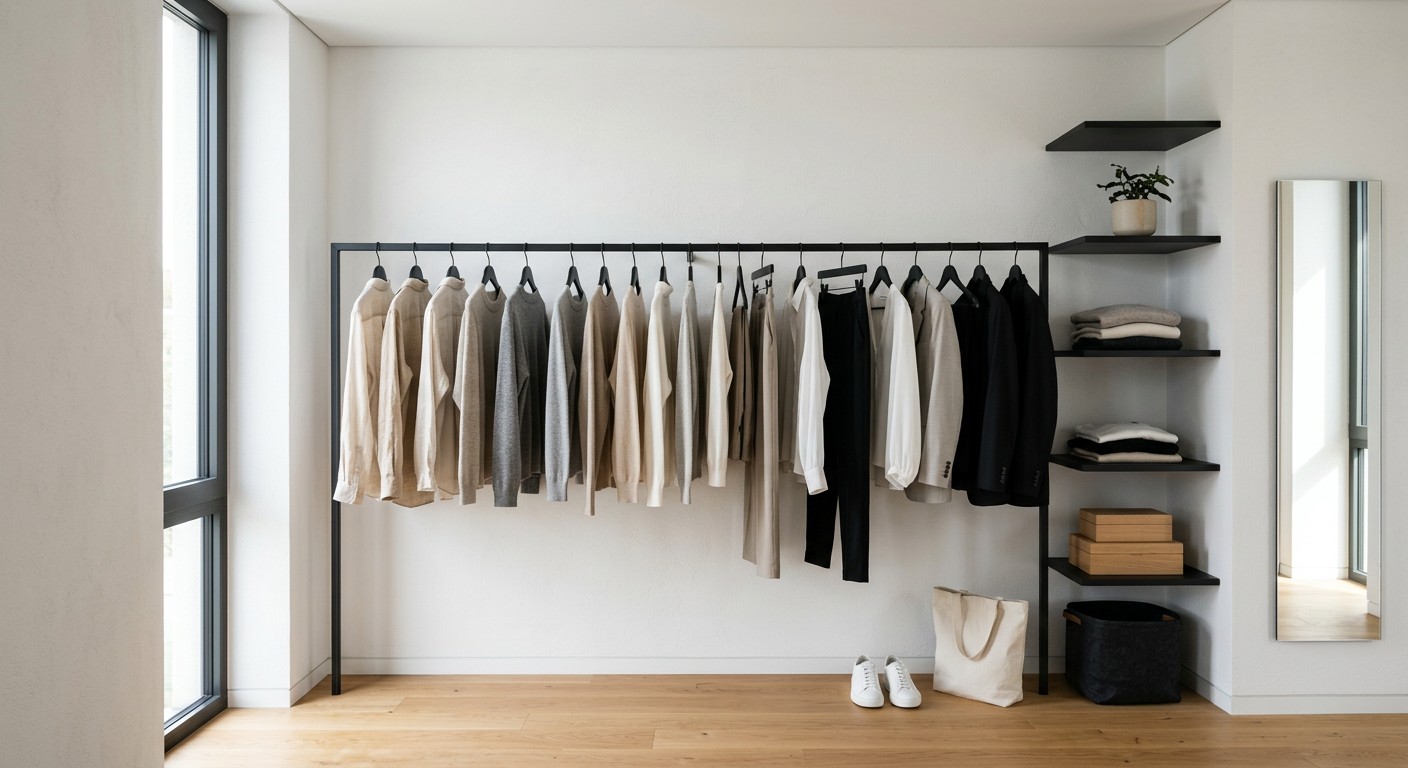
Last Tuesday at Whole Foods, I caught a glimpse of myself in the reflective glass of the dairy case and I looked like a walking laundry pile. My oversized neon green sweater was pilling, my jeans were sagging, and I realized my so-called capsule wardrobe was just a chaotic mess of whatever was clean. I’d tried to copy a minimalist Pinterest board I saw online, buying 30 random beige items that made me look like a sad, lumpy potato. The fabrics were itchy, the fits were terrible, and I felt invisible. It took months of bad outfits, wasted money, and silent frustration before I figured out how to actually build a functional closet. Most advice out there is unrealistic for a normal person who spills coffee and sweats on the subway. I’m going to share what worked for me, what failed, and how you can stop staring blankly at your hangers every morning. Let’s fix your closet.
1. Finding Your Personal Magic Number for Capsule Wardrobe Outfits
I tried the ultra-minimalist 15-item closet last winter. Total disaster. I ran out of clean shirts by Thursday and ended up doing emergency laundry with an $8.99 bottle of Tide from Target at 10 PM. While Caroline Rector of Un-Fancy swears by 30 to 37 items per season, and author Annmarie O’Connor pushes a 20-piece wardrobe, you can’t just copy their math. I’m currently sitting at 42 items. That includes my $19.90 Uniqlo crew neck tees, which have a nice 5.3 oz cotton weight, and my heavy winter workwear. If you work in a corporate office, a 10-piece wardrobe won’t survive the week. Don’t force yourself into an arbitrary box. Your magic number is the amount of clothing that lets you get dressed in five minutes without smelling like yesterday’s gym session. Most people get this wrong and purge too much, leaving them stressed and desperately washing a single pair of pants in the sink. Count your current favorites. If it’s 45, let it be 45. The goal is peace of mind, not a strict formula. I learned that the hard way.

2. Investing in High-Quality Staples That Actually Last
I used to buy those $5 paper-thin shirts from fast fashion stores. They felt like wet tissues after one wash. Now, I prioritize durability because replacing clothes every few months is exhausting and expensive. I’m obsessed with Quince right now. Their $50 Mongolian Cashmere Crewneck is softer than sweaters triple the price, made with 15-micron thick cashmere that feels like a warm hug. For basics, expect to spend around $40 to $90 for good tanks and tees, like the $45 organic cotton ones from Everlane. Bottoms will run you $100 to $250. I bought a pair of $148 Everlane Way-High jeans, and the thick, sturdy 13 oz denim holds its shape instead of stretching out by noon. Outerwear from brands like Almina Concept usually hits the $190 to $450 mark. Yes, spending $200 on a coat hurts at first. But a cheap polyester jacket makes you sweat while somehow keeping you freezing in the wind. Buy the good stuff once, and you won’t have to shop again next year.

3. Nailing a Cohesive Neutral Color Palette
I spent my early twenties buying bright magenta blouses and loud patterned skirts, then crying because nothing matched. Build your foundation around three to five core neutral colors. Think black, crisp white, navy, camel, taupe, or soft grey. These colors make up about 70 percent of expensive-looking outfits. I personally swear by a black, camel, and cream base. It makes getting dressed at 6 AM idiot-proof. Once you have your neutrals, pick one or two accent colors. I use a deep olive green. I bought a $39.50 ribbed olive turtleneck from J.Crew Factory, and it pairs perfectly with all my black trousers and cream skirts. The biggest mistake you can make is buying five different accent colors. A red shirt won’t match your mustard yellow cardigan, and suddenly you’re back to having a closet full of clothes and nothing to wear. Keep it simple. If you stick to a tight palette, everything goes with everything.

WIHOLL Womens Summer Tops 2026 Short Sleeve V Neck T Shirts
If you want something that just works, WIHOLL Womens Summer Tops 2026 Short Sleeve V Neck T Shirts Fashion Be is a safe bet (64 reviews, 4.5 stars).

4. Prioritizing Versatile Foundational Pieces
You need clothes that pull double duty. I’m talking about the heavy hitters that work for a Tuesday morning corporate meeting or a casual Saturday brunch. My absolute holy grail is a tailored black blazer. I grabbed the $135 COS regular-fit wool blazer, and the structured shoulders instantly make my sloppy t-shirts look intentional. You also need well-fitting straight-leg jeans. Levi’s 501 Original Fit Jeans cost about $98, and the rigid denim lasts literal years. Add a crisp white button-down shirt and a classic little black dress. I found a $69.90 linen blend midi dress at Zara that works with sneakers or heels. If you buy pieces that only work for one specific event, you’re wasting money. I once bought a $150 sequin top for a New Year’s Eve party. The sequins scratched my arms, it snagged on everything, and I wore it once. Stick to the classics. They form the sturdy backbone of your closet.

5. Embracing Eco-Friendly and Circular Fashion
The fabrics we wear matter. By 2026, the shift toward sustainable materials isn’t just a trend; it’s a necessity. I’m talking about organic cotton, TENCEL Lyocell, hemp, and recycled polyester. I recently bought a $98 lightweight TENCEL button-down from Reformation. The shirt has 4-inch side slits, a slightly oversized drape, and the fabric feels like liquid silk against my skin. It breathes better than standard polyester, which just traps sweat and smells sour by the end of the day. I’m also relying on circular fashion platforms. Patagonia’s Worn Wear program is brilliant. I scored a gently used Better Sweater fleece for $65 instead of the usual $149 retail price. It smelled faintly of cedar wood and looked brand new. Buying second-hand or upcycled fabrics keeps perfectly good clothes out of landfills. Plus, the older pieces usually have better stitching anyway. Skip the cheap plastic clothes. You might also like: 20 Lovely Minimalist Simple Living Home Tips for Every Budget

6. Cataloging Your Outfits to Avoid Decision Fatigue
Most people get this wrong. They build a capsule, hang it up, and then stare blankly at it every morning. You have to document your wins. When I put together an outfit that makes me feel confident, I snap a quick mirror selfie. I keep a dedicated photo album on my phone called “Closet.” Last month, I was running late for a dentist appointment and my brain was fried. I opened my album, saw a photo of my $120 Madewell oversized denim jacket paired with black leggings and a $25 striped Target tee, and just copied myself. It took two seconds. This habit forces you to maximize the potential of your limited wardrobe. You start seeing new combinations. I realized I could layer my $34.99 H&M chunky knit sweater over a summer slip dress, creating a whole new fall look. Take the photos. It saves so much mental energy. You might also like: 15 Creative Minimalist Home Tips You’ll Want to Bookmark

WIHOLL Womens Satin Summer Tops Cap Short Sleeve Blouses V
Honestly, WIHOLL Womens Satin Summer Tops Cap Short Sleeve Blouses V Neck Shirts surprised me — sturdier than it looks in the photos, and over 35 buyers gave it 4.5 stars.
7. Stop Blindly Copying Someone Else’s Style
I learned this the hard way. I found a gorgeous minimalist blogger who lived in Southern California. Her capsule was all linen shorts, silk camisoles, and strappy sandals. I live in Seattle. I bought a $75 linen skirt from Abercrombie & Fitch and nearly froze to death waiting for the bus in the October rain. The wet fabric stuck to my legs, and I was miserable. Your capsule must reflect your actual daily life, not your fantasy life. If you work from home, you don’t need five $150 silk blouses. You need high-quality loungewear, like the $118 Lululemon Align leggings that feel soft and don’t pill. If you’re chasing toddlers, you need washable fabrics, not dry-clean-only cashmere. Be ruthlessly honest about your climate and your calendar. Buy for the life you have right now, not the vacation you might take in three years. You might also like: 15 Gorgeous Homemaking Simple Living Tips to Steal Right Now

8. Incorporating Smart Fabrics for Seasonless Wear
Storing massive plastic bins of seasonal clothing under your bed is annoying and takes up too much space. The secret is seasonless smart fabrics. Look for materials that regulate temperature naturally. Merino wool is magic. I own a $149 Patagonia Merino Air base layer. In the winter, it traps heat and keeps me warm. But surprisingly, I can wear it on a brisk 60-degree spring morning without sweating through it. Uniqlo is also dominating this space with their technical fabrics. Their $29.90 HEATTECH long-sleeve shirts are thin. I can layer them under a bulky sweater in January, or wear them alone with jeans in October. When your clothes adapt to the weather, you don’t need a separate wardrobe for all four seasons. You just add or remove layers. It cuts your clothing budget in half and frees up closet space.

9. Playing with Texture to Add Visual Depth
When you only wear black, white, and camel, you risk looking like a boring uniform. The fix is texture. Mixing different materials adds the visual depth that colors usually provide. I love pairing my rough, rigid $98 Levi’s 501 jeans with a buttery soft $120 washable silk blouse from Quince. The stark contrast makes the outfit look expensive. Last week, I wore a $45 chunky ribbed knit sweater from Target over an $89 smooth satin midi skirt from Aritzia. The heavy, fuzzy wool against the sleek, shiny satin looked amazing. If you wear a flat cotton shirt with flat cotton pants, the outfit falls flat. Add a $150 leather belt from Nisolo or a suede jacket. Texture catches the light differently. It makes people notice your outfit without needing loud, obnoxious prints.

Zeagoo Satin Blouses for Women Silk Button Down Shirts Long
Zeagoo Satin Blouses for Women Silk Button Down Shirts Long Sleeve Bus punches above its price — 3 buyers rated it 4.5 stars. I would buy it again.
10. Allocating Your Budget Based on Cost Per Wear
Stop looking at the initial price tag. It’s lying to you. I used to buy $20 boots from fast fashion sites. The faux leather would peel after ten wears, and the thin soles felt like walking barefoot on concrete. My feet constantly ached. The cost per wear was $2, and the physical pain wasn’t worth it. Then I bought a pair of $199 leather Chelsea boots from Blundstone. The thick leather smelled amazing out of the box, and they molded to my feet perfectly. I’ve worn them at least 300 times over the last three years. That makes the cost per wear about 66 cents. High-quality pieces hurt your wallet once, but they save you hundreds of dollars in replacements. A $15 t-shirt that shrinks into a crop top in the wash is a worse investment than a $50 t-shirt you wear for five years. Do the math before you swipe your card.
11. Trying Ethical Maximalism for Personal Expression
Minimalism doesn’t mean you have to dress like a sad beige monk. The 2026 trend of Ethical Maximalism is a breath of fresh air. It proves that a sustainable capsule can still have personality. I incorporate unique vintage finds to break up the endless sea of neutrals. I found a stunning, heavy embroidered jacket at a local thrift store for $45. The intricate red and gold stitching smells faintly of old books and gives my basic black $30 Gap turtleneck a massive upgrade. Your capsule needs one or two wild card items. Maybe it’s a $150 bold patterned silk scarf you bought on a trip, or a pair of $130 bright green Adidas Gazelle sneakers. These pieces carry a personal story. They keep your wardrobe from feeling too safe, while keeping your overall item count low.
12. Prioritizing Perfect Fit and Professional Alterations
You can buy a $500 pair of designer trousers, but if they drag on the floor and gap at the waist, you’ll look sloppy. Honestly, this changed how I view my clothes. Fit is everything. I bought a pair of $89 wide-leg trousers from Zara. They were a beautiful heavy fabric, but they were two inches too long and the waist was loose. I took them to a local tailor. For $25, she hemmed them and took in the waist. When I put them on, they looked like custom-made luxury pants. That small investment of time and money improved the garment. Most off-the-rack clothing is cut for a generic fit model. You aren’t a generic fit model. Find a good tailor. Having a $30 Old Navy dress darted to fit your exact curves looks better than a poorly fitting expensive designer piece. Trust me.

Arach&Cloz Women’s Wool Blend Sweaters Non See Through
Arach&Cloz Women’s Wool Blend Sweaters Non See Through Summer Business punches above its price — 16 buyers rated it 4.5 stars. I would buy it again.
13. Utilizing Accessories for Maximum Versatility
Accessories are the ultimate cheat code for capsule wardrobe outfits. They let you change the vibe of a look without adding bulk to your closet. I keep a small wooden box on my dresser dedicated strictly to this. A simple $49.50 black J.Crew slip dress looks appropriate for a serious funeral on its own. But if I add a $35 chunky gold chain necklace from Mejuri and a $98 leather wrap belt from Madewell, it suddenly looks like I’m heading to a fancy cocktail bar. I even got a compliment from the cashier at Trader Joe’s while buying my $3.99 basil plant. I also swear by silk scarves. I found a beautiful 100% silk floral scarf at a vintage shop for $15. I tie it around my neck, loop it on my leather tote bag, or use it as a headband. The texture is soft, and the bright colors refresh a plain white tee.
14. Implementing a Strict Shopping Ban
Before you buy a single new item for your capsule, you need a detox. I did a 30-day shopping ban last spring, and it rewired my brain. No clothes, no shoes, no accessories. I had to make do with what I already owned. The first week was awful. I kept opening shopping apps on my phone out of habit. I used to impulsively buy those $16.99 2-pack leggings at Costco while shopping for toilet paper. But by week three, I realized something important. I didn’t actually need another grey sweater. What I needed was a decent pair of black flats, because my old ones were giving me blisters. A shopping ban forces you to identify the actual gaps in your wardrobe. You stop buying fantasy pieces and start noticing functional deficits. Try it for a month. Delete the apps, unsubscribe from the sales emails, and just wear your clothes.

15. Maintaining Your Wardrobe with Proper Care
Your capsule will fall apart if you treat it like garbage. I used to throw everything into the washer on hot and blast it in the dryer. My sweaters shrank, and my black jeans faded to a sad, dusty grey. Now, I wash almost everything on cold. I buy a 100 oz bottle of Seventh Generation laundry detergent from Kroger for $14.99, which is gentle on the fibers. I also add a 1/2 cup of baking soda to remove odors naturally. I grabbed a $24.99 wooden drying rack from Walmart. I air-dry all my knits, denim, and delicate tops. It takes extra space in my hallway, but the fabric stays crisp and the elastic doesn’t melt. I also use cedar blocks I found at Sprouts for $9.99 to keep moths away from my wool coats. The subtle woody smell is lovely. Taking care of your clothes is a mandatory part of minimalism. If you aren’t willing to read the care tags, you’ll be replacing your expensive staples every six months.
Building a capsule wardrobe isn’t about restriction. It’s about freedom from the stress of having nothing to wear. I’ve never felt more confident than I do now, opening a closet full of pieces I actually love and wear regularly. Start small, find your neutral base, and don’t be afraid to invest in quality. If you found these tips helpful, please pin this article to your favorite style board so you can reference it during your next major closet cleanout.

Sampeel Womens Short Sleeve Sweater Mock Neck Summer Top
Honestly, Sampeel Womens Short Sleeve Sweater Mock Neck Summer Top Dressy Casual surprised me — sturdier than it looks in the photos, and over 83 buyers gave it 4.5 stars.

Frequently Asked Questions
How many items should be in capsule wardrobe outfits?
There isn’t a strict rule, but most people find success with 30 to 40 items per season. It depends heavily on your climate and job requirements. Focus on versatility rather than an arbitrary number.
What colors work best for capsule wardrobe outfits?
Stick to three to five core neutrals like black, white, navy, or camel for your base. These colors mix easily. Then, add one or two accent colors that you genuinely love to keep things interesting.
Can I wear patterns in capsule wardrobe outfits?
Yes. While solid colors are easier to mix, classic patterns like stripes, subtle plaids, or a single floral piece can add much-needed visual depth. Just ensure the pattern colors match your chosen neutral palette.
How much does it cost to build capsule wardrobe outfits?
It varies, but expect to invest around $40 to $90 for quality basics and $100 to $250 for durable bottoms. Buying second-hand or focusing on cost per wear can significantly lower your long-term expenses.