What’s Inside
- Embrace the Japandi Aesthetic
- Invest in Multi-functional Furniture
- Apply the 80/20 Rule for Decluttering
- Master the KonMari Method for Deep Decluttering
- Optimize Storage with Modular Systems
- Prioritize Integrated Kitchen Appliances
- Avoid Common Kitchen Layout Errors
- Curate a Capsule Wardrobe
- Maximize Natural Light and Strategic Lighting
- Embrace a Neutral and Earthy Color Palette
- Digitally Declutter Regularly
- Handle Sentimental Items Thoughtfully
- Incorporate Biophilic Design with Minimal Plants
- Focus on Quality Over Quantity for Investment Pieces
- Add Personality Through Texture, Not Clutter
- Finding Inspo Minimalist Apartment Ideas at Thrift Stores
- Keep Your Bathroom Counters Completely Bare
- Creating Your Inspo Minimalist Apartment Entryway
- Use Scent to Anchor the Space
- Establish a One-In, One-Out Rule
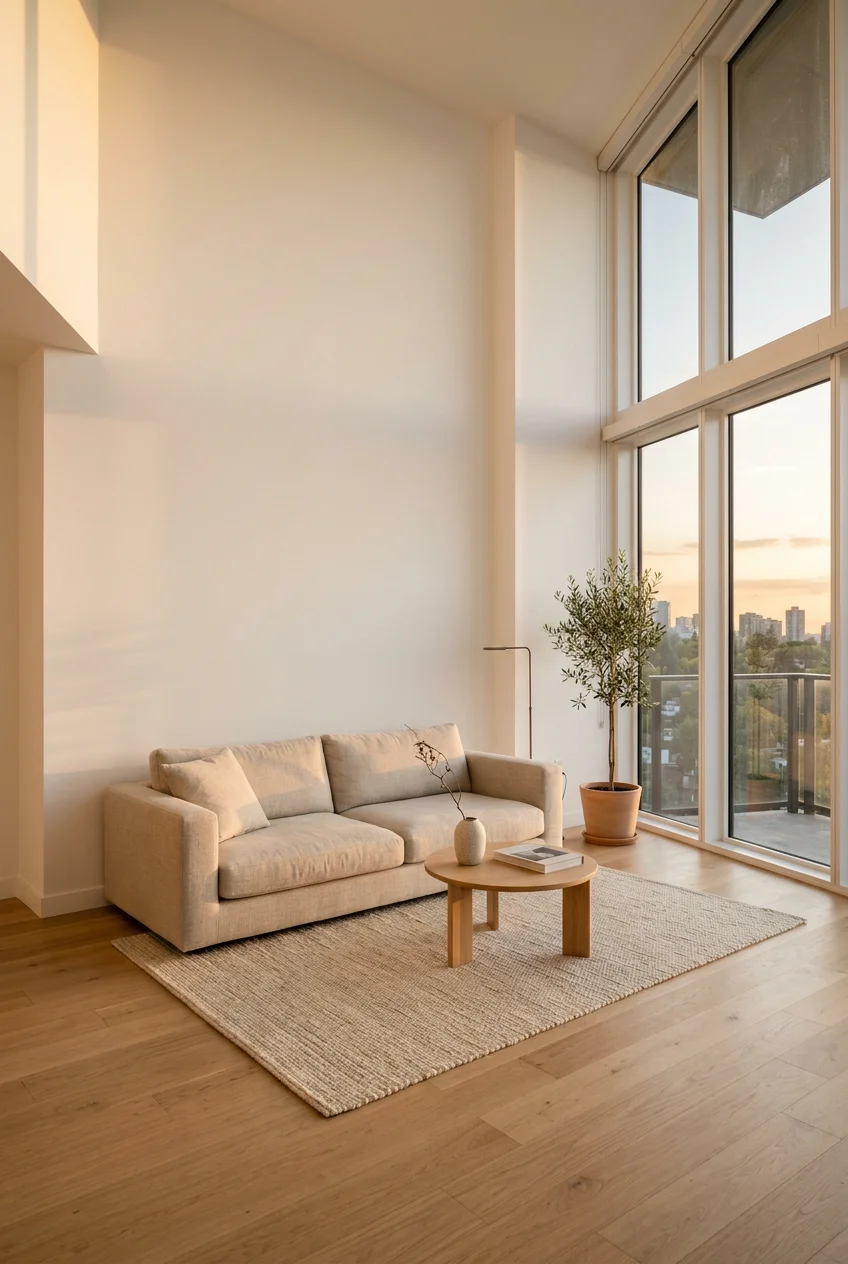
Three years ago, I sat on the floor of my living room and cried because it looked like a sterile hospital waiting room. I wanted that perfect inspo minimalist apartment I kept seeing online, but I just ended up with a cold, empty box. Creating a true inspo minimalist apartment takes more than just throwing away all your stuff. It requires texture, warmth, and actual intention. I tried this wrong for months before figuring it out. I bought cheap furniture, painted everything stark white, and wondered why I felt so anxious in my own home. Let’s walk through twenty specific ways to make your stripped-down space actually feel like a home you want to live in, using real products and methods that completely changed my space.
1. Embrace the Japandi Aesthetic

Right now, the Japandi aesthetic is taking over, and I’m entirely here for it. It mixes Japanese minimalism with Scandinavian functionality. Think light-toned woods like pine, beech, oak, and bamboo mixed with natural stone. I used to buy cheap black metal furniture, and it made my space feel like a teenager’s dorm room. Don’t do that. Instead, I picked up a solid oak side table from West Elm for exactly $149 last month. The smooth, raw wood grain instantly warmed up my living room corner. You want a muted color palette of soft beiges, warm greys, and sage greens. Charcoal and black should only be tiny accents. I bought a 16 oz sample of Magnolia Home paint in “Emmie’s Room” for $9.99 at Ace Hardware to test on a canvas. The muted green against the light oak wood is incredibly calming. It smells like fresh earth and visually softens the harsh angles of modern apartment walls. Trust me on this.
2. Invest in Multi-functional Furniture

When you live in a small space, every piece of furniture needs to earn its keep. I made the mistake of buying a massive velvet armchair that swallowed half my living room. I stubbed my toe on it daily. Now, I swear by multi-functional pieces. A rattan daybed is a perfect example. It acts as a comfortable sofa by day and turns into a full-sized bed for guests at night. Another incredible option is a lift-top coffee table. I snagged the West Elm Mid-Century Pop-Up Coffee Table for $699. It has hidden storage underneath and a top that lifts up to become my desk. I eat my $4.99 Trader Joe’s frozen pad thai on it while working on my laptop. It hides all my messy charging cables and pens. If you’re tight on space, skip the traditional bulky desk. A lift-top table gives you a dining table, a workspace, and storage all in one sleek wooden box.
3. Apply the 80/20 Rule for Decluttering

You’re probably only using 20 percent of your belongings 80 percent of the time. This is the Pareto Principle. I didn’t believe it until I audited my own kitchen. I had three different garlic presses and a massive food processor I used maybe twice a year. The rest of the time, they just collected sticky kitchen grease on the counter. I applied the 80/20 rule and boxed up the 80 percent of items I rarely used. I bought a 4-pack of Target Brightroom 66qt clear bins for $36.00 total. I packed away the extra spatulas, the waffle maker, and the specialized baking pans. I put the bins in my coat closet. If I didn’t reach for an item in six months, I donated it. It turns out I only need my favorite 8-inch chef’s knife and a solid cutting board. My counters are finally clear, and wiping them down takes ten seconds instead of ten minutes.

Wagensteiger Stainless Steel Curved Garlic Presser or
A dependable everyday pick — Wagensteiger Stainless Steel Curved Garlic Presser or Cheese Grater pulls in 13 ratings at 4.5 stars. Not flashy, just solid.
4. Master the KonMari Method for Deep Decluttering

Marie Kondo’s method of decluttering by category instead of location is still the most effective system I’ve tried. Before this, I’d clean my bedroom closet, feel proud, and ignore the coats stuffed in the hallway. You have to gather every single item from a category in one giant pile. I bought her book for $11.99 at Target and followed the order: clothes, books, papers, komono, and sentimental items. Last Tuesday, I dumped every piece of clothing I owned onto my bed. It was a terrifying, suffocating mountain of fabric. I held a scratchy, neon pink sweater I bought on sale for $15 three years ago. It didn’t spark joy. It sparked guilt. I bagged it up in a 13-gallon Hefty trash bag. By forcing yourself to confront the sheer volume of stuff you own all at once, you break the cycle of mindless consumerism. Don’t skip the order. Starting with sentimental items will derail your entire weekend.
5. Optimize Storage with Modular Systems

Built-in storage is rare in most apartments, so you have to fake it. Standard bookshelves often look cheap and sag in the middle. I highly recommend investing in flexible, modular storage systems that can grow with you. The Floyd Shelving System is brilliant. A basic unit starts around $540 for members or $675 regular price. Each shelf holds up to 65 lbs. It’s made of real wood and powder-coated steel. I have the ash wood version, and the heavy metal brackets feel incredibly sturdy. If that’s out of your budget, the classic IKEA Kallax series is a reliable backup. You can get a 4×4 cube unit for $89.99. I used to buy flimsy $20 particle board shelves, and they always warped within six months. The peeling laminate looked awful. Modular systems let you add cabinets or wardrobe bars later. They look intentional and custom, which is the secret to making a rental apartment look expensive.
6. Prioritize Integrated Kitchen Appliances

A massive, glaring stainless steel refrigerator jutting out past your cabinets ruins the clean lines of a kitchen. Most people get this wrong. They buy the biggest fridge possible and ignore the visual clutter it creates. If you’re renovating, prioritize integrated models. These appliances get covered with custom cabinet panels to blend right into the woodwork. I recently saw a kitchen with a Bosch 800 Series Dishwasher (around $1,299) hidden behind a flat oak panel. You couldn’t even tell it was a dishwasher. The visual flow was completely uninterrupted. When I lived in a cheap rental, my bulky freestanding fridge stuck out six inches into the walkway. I kept bumping my hip on the sharp metal handle. If you can’t change your appliances, at least clear the magnets and papers off the front of your fridge. A bare refrigerator door instantly calms down a chaotic kitchen. You might also like: 15 Creative Aesthetic Minimalist Apartment That Changed Everything

Pigort 3 Pieces Metal Flowers Wall Art- Rustic Farmhouse
If you want something that just works, Pigort 3 Pieces Metal Flowers Wall Art- Rustic Farmhouse Decor Minimal is a safe bet (25 reviews, 4.5 stars).
7. Avoid Common Kitchen Layout Errors

Interior designers warn against excessive open shelving, and I completely agree. I tried the open shelving trend two years ago. I thought it would look like a cute Parisian cafe. Instead, my mismatched coffee mugs and half-empty boxes of cereal just looked messy and gathered a thick layer of sticky dust. It’s a nightmare to keep clean. Stick to closed cabinets for your ugly everyday items. Also, ensure you have adequate circulation space. You need at least 4 feet between open cabinet doors so you aren’t trapped in a corner. To maximize my closed cabinets, I installed a Rev-A-Shelf pull-out organizer for $49.99 from Lowe’s. It holds all my heavy pots and pans so I don’t have to dig around in the dark. Keep your single-use small appliances to a minimum. A cluttered countertop causes instant anxiety the moment you walk in to cook dinner. You might also like: 15 Brilliant Minimalist Simple Living Tips That Changed Everything
8. Curate a Capsule Wardrobe

Your closet sets the tone for your bedroom. If it’s crammed with clothes you never wear, your bedroom won’t feel relaxing. I curate a capsule wardrobe of exactly 35 items per season, including outerwear and shoes. Some ultra-minimalists get down to 10 or 15 items, but 35 gives me enough variety without decision fatigue. Last Tuesday at Whole Foods, I wore my standard uniform: a crisp white Everlane organic cotton crew t-shirt ($30) and vintage Levi’s. I didn’t waste twenty minutes staring at my closet feeling like I had nothing to wear. Having fewer, higher-quality clothes means everything fits perfectly and feels good against my skin. The organic cotton is incredibly soft. I used to buy cheap, trendy polyester shirts that made me sweat and fell apart after three washes. A capsule wardrobe stops the endless cycle of buying and purging. It forces you to define your personal style and stick to it. You might also like: 20 Charming Minimalist Counter Decor Kitchen Ideas That Are Totally Worth It
9. Maximize Natural Light and Strategic Lighting

Nothing kills a minimalist vibe faster than a single, harsh overhead light. It makes your living room look like an interrogation room. I never turn on the main ceiling fixture. Instead, I maximize natural light during the day by keeping my windows bare. At night, I rely on soft, diffused artificial lighting from multiple sources. I bought the IKEA SINNERLIG bamboo pendant lamp for $79.99 and hung it in the corner. The woven bamboo casts these beautiful, warm, textured shadows across the ceiling. I also use a slim-profile brass floor lamp from Target ($45.00) with a pale, translucent lampshade next to my reading chair. Creating little pools of warm light makes the space feel cozy. I strictly use 2700K warm white LED bulbs. I once accidentally bought 4000K daylight bulbs, and the blue-toned light gave me an instant headache. Warm lighting is non-negotiable for a relaxing home.

Sage Green Boho Wall Art Set of 3
A dependable everyday pick — Sage Green Boho Wall Art Set of 3 pulls in 907 ratings at 4.5 stars. Not flashy, just solid.
10. Embrace a Neutral and Earthy Color Palette

Crisp white walls are a Scandinavian staple, but the trending Japandi aesthetic leans much warmer. Pure stark white can feel aggressive and cold. I prefer soft off-whites, cream, muted greens, warm grays, and taupe. These natural tones make a room feel like a cozy cocoon. I painted my bedroom walls with Clare Paint in the shade “Timeless” for $64 a gallon. I bought a 3-pack of Scotch blue painter’s tape at Costco for $12.99 to tape off the baseboards. The smell of fresh paint always makes me feel productive. The creamy walls instantly softened the harsh afternoon sunlight that hits my room. I pair the walls with brown linen curtains and a textured beige rug. By keeping the color palette earthy and tight, you can mix different furniture styles without the room feeling chaotic. The colors tie everything together naturally.
11. Digitally Declutter Regularly

Minimalism isn’t just about physical objects anymore. Digital clutter causes just as much mental fatigue. A massive trend right now is scheduling regular digital clean-ups. I do this quarterly. I sit on my couch, drink a cup of black coffee, and ruthlessly unsubscribe from promotional emails. I delete apps I haven’t opened in a month. I used to have 15,000 unread emails on my phone, and seeing that little red notification bubble stressed me out daily. Now, I organize my digital files using the ISO 8601 naming convention. It makes searching for old tax documents incredibly easy. I back up my important files on a SanDisk 1TB Extreme Portable SSD that I got for $89.99 at Best Buy. It’s tiny, rugged, and fits in my palm. Clearing your digital space frees up mental bandwidth. You won’t believe how much lighter you feel when your phone isn’t constantly buzzing with useless notifications.
12. Handle Sentimental Items Thoughtfully

This is honestly the hardest part of decluttering. People get stuck on sentimental items. I used to keep every single movie ticket, birthday card, and dried flower I ever received. I had three heavy shoeboxes under my bed full of paper scraps. I realized keeping all of it meant none of it was actually special. Now, I take high-quality photos of the items I want to remember but don’t want to store. I pay $2.99 a month for Apple iCloud+ 200GB storage to keep these photos safe. I spent a Sunday afternoon scanning old concert tickets and then tossed the fading paper into the recycling bin. It felt weird at first, but the memories are in my head, not in the physical paper. I kept exactly three sentimental items that truly spark joy: my grandmother’s gold ring, a handwritten letter from my dad, and a small ceramic bird. Everything else was just physical weight holding me back. I learned that the hard way.

Framed Boho Wall Art Set of 4 for Wooded Minimalist
Honestly, Framed Boho Wall Art Set of 4 for Wooded Minimalist Botanical Print Wa surprised me — sturdier than it looks in the photos, and over 956 buyers gave it 4.5 stars.
13. Incorporate Biophilic Design with Minimal Plants

You need to bring nature indoors to prevent a minimalist space from feeling dead. This is called biophilic design. However, you don’t want to turn your living room into a cluttered greenhouse. I made the mistake of buying twenty different tiny succulents and scattering them everywhere. Watering them took forever, and the tiny pots looked like visual clutter. Now, I stick to a few large, low-maintenance plants. I bought a beautiful ZZ plant in a 6-inch pot for $24.99 at Sprouts last month. Its waxy, dark green leaves add incredible texture and color to my neutral living room. ZZ plants and snake plants are virtually indestructible. I water mine maybe once a month. One large, healthy plant in a simple terracotta pot makes a much stronger design statement than a dozen dying tiny plants on a windowsill. It adds life to the room without adding to your daily chore list.
14. Focus on Quality Over Quantity for Investment Pieces

When you own fewer things, the things you do own need to be excellent. This is the core of minimalist living. I used to buy cheap, trendy furniture that fell apart within a year. I bought a $99 particle board dining table that started peeling at the edges the second someone spilled a glass of water on it. The swollen, bubbling fake wood drove me crazy. I finally saved up and bought the Article Senza Oak Dining Table for $699. It’s solid, heavy, and beautiful. The natural wood grain is stunning, and I know it will last for decades. You should apply this rule to everything, even kitchenware. Buy one $150 Le Creuset cast iron skillet instead of a $30 ten-piece non-stick pot set that will inevitably flake toxic coating into your food. Quality items age beautifully and rarely need replacing.
15. Add Personality Through Texture, Not Clutter

If your apartment feels too stark, you don’t need to buy more decorative knick-knacks. You need texture. This is the secret sauce to making a minimalist space feel warm. I rely heavily on organic cotton, chunky wool rugs, and linen throws. I bought a Quince European Linen Throw for $79.90. It’s draped over the end of my sofa. The slightly wrinkled, soft linen fabric contrasts beautifully with the smooth leather of the couch. I also have a handcrafted ceramic vase with a rough, unglazed finish. Mixing textures creates depth and visual interest without adding unnecessary clutter to the room. I used to buy lots of shiny, cheap metal decor pieces, and they just made the room feel cold and chaotic. Now, I focus on how things feel to the touch. A plush wool rug under your bare feet in the morning makes the whole apartment feel luxurious and grounded.

ASTRDECOR Abstract Framed Wall Art
A dependable everyday pick — ASTRDECOR Abstract Framed Wall Art pulls in 251 ratings at 4.5 stars. Not flashy, just solid.
16. Finding Inspo Minimalist Apartment Ideas at Thrift Stores

You don’t have to spend a fortune at high-end boutiques to get that inspo minimalist apartment look. I find some of my best textured pieces at local thrift stores. The trick is to look past the dirt and focus strictly on shape and material. Last week, I found a heavy, asymmetrical ceramic vase at Goodwill for exactly $3.99. It had an ugly fake flower glued inside it and a small chip on the back. I brought it home, ripped out the fake flower, scrubbed it with hot water, and turned the chipped side toward the wall. It looks like a $100 artisan piece. Stick to natural materials like wood, stone, glass, and ceramic when thrifting. Skip anything plastic or overly ornate. Thrifting requires patience, but finding a unique, handcrafted bowl for your entryway table adds character that you simply can’t buy at a big box store.
17. Keep Your Bathroom Counters Completely Bare

A cluttered bathroom counter is a terrible way to start your day. I used to leave my makeup, toothpaste, and hair products scattered everywhere. The bottom of my hairspray can left rust rings on the white porcelain sink. Now, I keep my counters 100 percent bare. I use Muji acrylic organizers (around $12.90 each) inside my medicine cabinet to hold my daily essentials. I bought a 100-pack of cotton rounds for $2.50 at Walmart and store them in a glass jar inside the cabinet. The only things on my counter are a bottle of Aesop Resurrection Aromatique Hand Wash ($40.00) and a clean hand towel. Yes, the soap is expensive, but the heavy glass bottle and the herbal, woody scent make my tiny bathroom feel like a high-end spa. Wiping down a completely bare counter takes three seconds. It’s a tiny daily luxury that completely changes my morning routine. No exaggeration.
18. Creating Your Inspo Minimalist Apartment Entryway

Your entryway is the first thing you see when you walk in, so it needs to set a calm tone immediately. A messy pile of shoes and mail will spike your cortisol levels instantly. To create an inspo minimalist apartment entryway, you need hidden storage. I use the Umbra Sticks Wall Coat Rack ($25.00 on Amazon). When it’s not in use, the hooks fold up flat against the wall so it looks like a piece of modern wooden art. I also keep a small, woven seagrass basket from Target ($15.00) on the floor to catch my shoes the second I walk in. I don’t let mail pile up. I sort it immediately over the recycling bin. If you don’t have a designated drop zone for your keys and sunglasses, they will end up migrating to your kitchen counters. A clean entryway creates a physical boundary between the chaotic outside world and your peaceful home.
19. Use Scent to Anchor the Space

Minimalism engages all the senses, not just sight. Scent is incredibly powerful for making an empty-looking room feel warm and inviting. I avoid cheap, synthetic plug-in air fresheners. They smell like artificial candy and give me a headache. Instead, I burn high-quality candles with earthy, woody profiles. My absolute favorite is the P.F. Candle Co. Teakwood & Tobacco 7.2 oz soy candle for $24.00. I buy a box of wooden matches for $1.50 at Kroger to light it every evening after dinner. The smoky, leathery scent fills the apartment and signals to my brain that the workday is over. The amber glass jar also looks beautiful sitting on my oak coffee table. Scent fills the negative space in a room. It adds depth and atmosphere without taking up any physical room, which is the ultimate minimalist hack.
20. Establish a One-In, One-Out Rule

Once you finally get your apartment looking exactly how you want it, you have to protect the space. Clutter creeps back in quietly. I strictly enforce the one-in, one-out rule. If I buy a new sweater, an old sweater has to leave. If I buy a new coffee mug, an old one gets donated. I keep a dedicated Trader Joe’s reusable canvas tote bag ($3.99) hanging in the back of my closet. Whenever I decide to get rid of something, I toss it in the bag. Once the bag is full, I drop it off at the donation center. This simple habit completely stops the accumulation of new stuff. I used to buy random decor pieces on a whim, but knowing I have to sacrifice something I already own makes me pause. It forces me to be incredibly intentional about what I bring into my home.
Creating a minimalist home isn’t about living in an empty white box. It’s about stripping away the visual noise so you can actually breathe. I highly recommend starting with just one small area, like your bathroom counter or your entryway. Clear it completely, wipe it down, and see how that empty space makes you feel. I promise you’re going to love the peace it brings. If you found these tips helpful, pin this article to your home decor board so you can reference it later when you’re ready to tackle your next decluttering project.
Frequently Asked Questions
How do I make a minimalist apartment feel warm?
Focus on mixing natural textures instead of adding more items. I recommend incorporating chunky wool rugs, soft linen throws, and raw wood furniture. Warm, diffused lighting from table lamps rather than harsh overhead bulbs also instantly softens a stark space.
What is the Japandi interior design style?
Japandi is a popular hybrid trend that blends Japanese minimalism with Scandinavian functionality. It focuses on muted, earthy color palettes, natural materials like oak and stone, and highly functional, low-profile furniture to create a calming, intentional living space.
How do I declutter sentimental items?
I highly suggest tackling sentimental items last, using the KonMari method. Take high-quality digital photos of bulky items you want to remember, back them up on a hard drive, and only keep a few small physical pieces that truly spark joy in your current life.
What is the 80/20 rule in decluttering?
The 80/20 rule, or Pareto Principle, suggests you only use 20 percent of your belongings 80 percent of the time. To apply it, box up the 80 percent of rarely used items. If you don’t need them after six months, donate the entire box.
