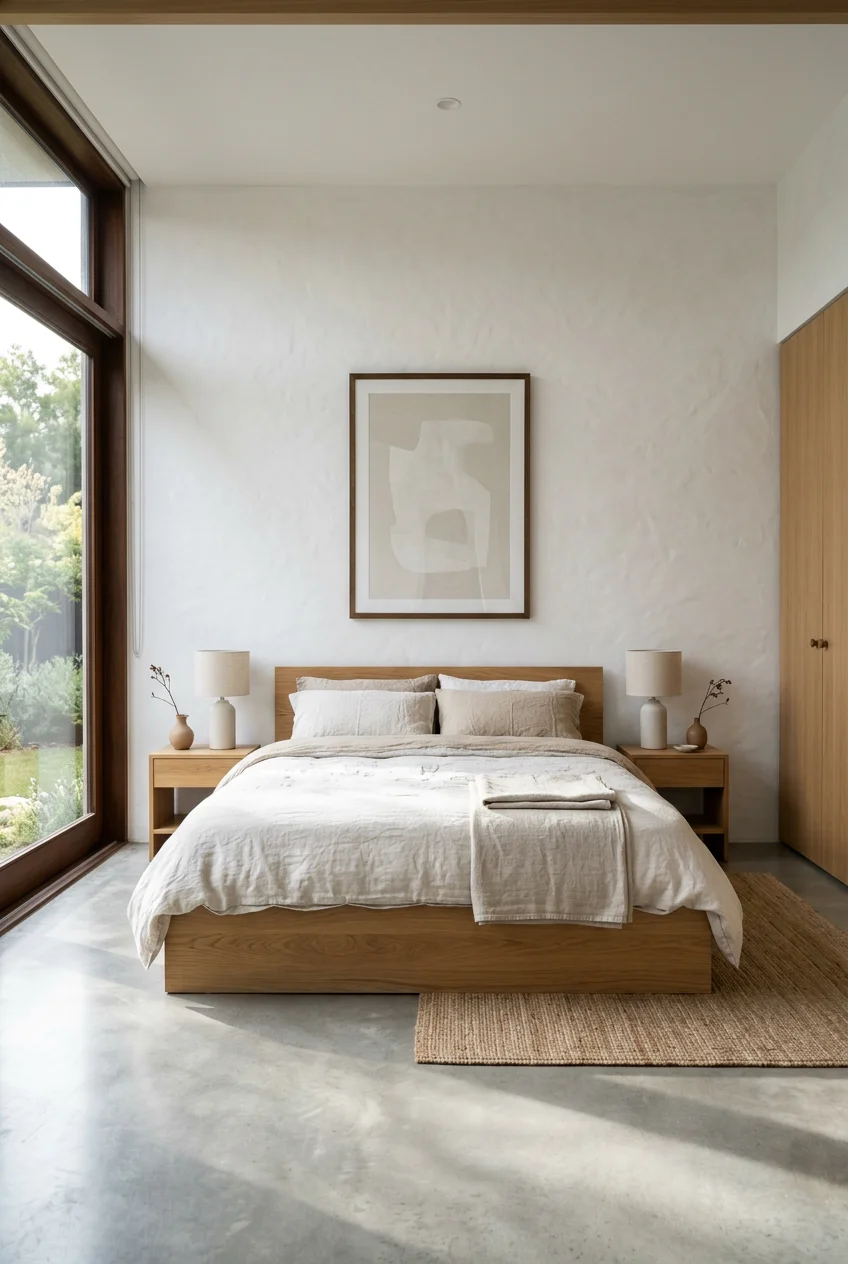
What’s Inside
- Embrace Warm Neutrals for a Calming Foundation
- Layer Lighting with Exact Specificity
- Create DIY Textured Art with Purpose
- Incorporate Multi-Functional Furniture
- Build Custom Floating Shelves for Hidden Storage
- Prioritize Natural Materials and Textures
- Integrate Invisible Smart Home Technology
- Curate Meaningful Objects Over Excessive Decor
- Embrace Biophilic Design Beyond Potted Plants
- Avoid the Minimalist Trap of Barrenness
- Opt for Curved Forms to Add Dynamism
- Declutter Ruthlessly, Starting with the Entryway
- Quiet Symmetrical Art for DIY Minimalist Decor
- Focus on Sustainable DIY Decor Choices
- Improve Atmosphere with Scent, Not Clutter
Last Tuesday, I stood in the middle of a Target aisle staring at a mountain of sequined throw pillows, realizing I’d completely lost my way. I wanted a calm, quiet space, but my shopping cart looked like a chaotic garage sale. If you’re struggling to create a peaceful home without spending a fortune, DIY minimalist decor is the answer. Honestly, my early attempts were total disasters. I thought minimalism meant living in an empty white box with one sad, uncomfortable chair. It felt cold, echoing, and unwelcoming. Over the years, I learned the hard way that less isn’t just about removing things. It’s about making the things that remain intentional. I’ve spent thousands of hours and probably ruined a dozen expensive paintbrushes figuring out what actually works. Let’s skip the frustrating trial and error. Here are fifteen specific, hands-on projects I personally swear by to make your home breathe again.
1. Embrace Warm Neutrals for a Calming Foundation

Move beyond stark, blinding whites and embrace warmer, softer neutral paint colors. Three years ago, I painted my entire master bedroom a bright, pure white thinking it’s exactly what minimalists do. Big mistake. It felt like a sterile dentist waiting room. The morning light bounced off the walls so harshly it gave me a headache. For 2026, the trend is shifting toward shades like Dutch Boy Paints’ “Melodious Ivory” (a gorgeous creamy beige) or Benjamin Moore’s “Silhouette AF-655” (a rich chocolatey gray). These colors offer a comforting backdrop without demanding attention. Expect to pay between $30 and $60 per gallon for quality paint. When you roll that creamy beige onto a wall, the whole room instantly exhales. It smells like fresh clay and feels grounding. You’re creating a sense of ease, making a space feel relaxed rather than clinically barren.
2. Layer Lighting with Exact Specificity

Avoid the mistake of leaving too much empty space without adequate lighting; it makes a minimalist room feel depressing when the sun goes down. I used to rely on a single overhead dome light, and it cast these awful, harsh shadows that made my living room look like a cheap motel. Instead, implement layered lighting using ambient, task, and accent fixtures. For ambient light, install a sculptural pendant lamp like the Saga Pendant System. It uses recycled materials and runs around $150 to $400. Pair it with a sleek, matte black floor lamp from brands like EGLO or Smile Lamp Works (you can find plenty of solid options under $100) for task lighting next to your chair. Finally, add warm 2700-3000K LED strip lights behind a floating shelf for accent lighting. The 2700K temperature is crucial. It gives off a soft, amber glow that feels like candlelight, not a fluorescent office tube.
3. Create DIY Textured Art with Purpose

You can create your own minimalist art using simple techniques to add physical depth without adding visual clutter. A trick I learned from a local gallery owner: use tissue paper and cheap acrylic paint to build thick, rough texture on a blank canvas. Start with a standard 24×36 inch canvas from the Walmart craft aisle. Paint a solid base color, like a deep matte black. Then, crumple up plain white tissue paper and adhere the strips using a basic glue mixture, covering about half of the surface. Once it’s completely dry and stiff, apply a watered-down white paint. The ratio I use is 1 cup of water to 4 tablespoons of paint. Drip it down the canvas for an organic effect. This entire project costs under $50. The finished piece looks like an expensive plaster sculpture and adds incredible interest to a blank wall.

Bessol Artificial Eucalyptus Stems in Glass Vase with Faux
If you want something that just works, Bessol Artificial Eucalyptus Stems in Glass Vase with Faux Water is a safe bet (491 reviews, 4.5 stars).
4. Incorporate Multi-Functional Furniture

A massive mistake I see is filling a minimalist space with single-use, bulky furniture. A few years ago, I bought this massive, overstuffed sectional sofa from a discount furniture store. It swallowed my living room whole and ruined the entire traffic flow. Instead, opt for pieces that serve multiple purposes and have a low visual weight. For instance, build a DIY coffee table with a built-in hidden shelf. You can use a thick slab of reclaimed wood and simple black metal hairpin legs. The total cost for the wood and legs usually runs around $75 to $150. It provides a solid surface for your morning coffee and discreet storage underneath for laptops or magazines. Look for low-profile sofas with clean lines and exposed legs. Seeing the floor underneath your furniture makes a room feel open and breathable.
5. Build Custom Floating Shelves for Hidden Storage

Maximize your vertical space and reduce floor clutter with heavy-duty DIY floating shelves. Last winter, I decided to tackle this project and ended up dropping a heavy MDF board right on my toe in the Costco parking lot. The pain taught me to always bring a friend for heavy lumber runs. For a sturdy, professional-looking set of shelves, use 3/4-inch MDF for the outer shell and 1/2-inch MDF for the internal supports. If you’re outfitting a standard 6-foot wide wall, you’ll need four 1/4-inch sheets of plywood, twelve 2x4x8-foot pine boards for the cleats, and 12 feet of 1×6-inch aspen planks for the front face. This structural approach creates a custom, built-in aesthetic that blends into your wall architecture. The materials will cost you about $100 to $200, but the result looks like a thousand-dollar carpentry job. You might also like: 20 Beautiful Capsule Wardrobe Ideas for Any Style
6. Prioritize Natural Materials and Textures

To prevent minimalist spaces from feeling cold, you must layer natural textures. I can’t stress this enough. Skip the cheap, shiny synthetic fabrics. They feel like plastic and hold onto static. Think soft, breathable linen throw pillows. I buy mine from H&M Home, and they’re usually just $15 to $30 each. The slightly wrinkled, organic look of linen adds instant character. Pair those with a thick, heavy wool or jute rug. I found a gorgeous 5×7 foot chunky jute rug at World Market for about $150 (they range from $100 to $300). The rough, scratchy texture of the jute under your bare feet feels grounding and earthy. According to emerging trends for 2026, layering these raw, unpolished natural materials creates a deep sense of warmth and emotional comfort that balances a minimal aesthetic. You might also like: 15 Creative Aesthetic Minimalist Apartment That Changed Everything

Funny Farmhouse Bathroom Decor
Honestly, Funny Farmhouse Bathroom Decor surprised me — sturdier than it looks in the photos, and over 172 buyers gave it 4.5 stars.
7. Integrate Invisible Smart Home Technology

Minimalist homes in 2026 are evolving to incorporate smart tech invisibly. Instead of having ugly black plastic gadgets and tangled cords scattered everywhere, focus on embedded systems. I learned this lesson after tripping over a thick black extension cord near the hot bar at Whole Foods last month. I spilled my soup everywhere and realized visible wires are the enemy of peace. For a DIY approach, swap your standard bulbs for smart light bulbs like Philips Hue, which start around $15 per bulb. You can control them via voice or a hidden app, eliminating the need for banks of ugly plastic wall switches. Build discreet charging stations into your nightstand drawers using a drill and a simple grommet hole. Hide your smart speakers behind books or inside woven baskets. The goal is to maintain clean visual aesthetics while keeping modern convenience. You might also like: 20 Creative Women Capsule Wardrobe Ideas for Any Style
8. Curate Meaningful Objects Over Excessive Decor

As interior designer Stephanie Hunt notes, maximalism is having another moment, with an emphasis on special pieces and personal items. For a minimalist approach, this translates to curating a few highly meaningful objects rather than displaying dozens of generic knick-knacks. I used to buy cheap, mass-produced ceramic birds and fake plants just to fill empty shelf space. It looked like a cluttered gift shop. Now, I display a single, heavy handcrafted ceramic vase I bought from a local artisan for $65. The glaze is cold and smooth, and the imperfections make it beautiful. I’ll occasionally stop by the Sprouts floral section and buy a single, striking architectural branch or a large monstera leaf to put inside it. Pair that with one framed black-and-white photo that evokes a strong memory. This intentional editing makes the items you display feel important and museum-like.
9. Embrace Biophilic Design Beyond Potted Plants

Biophilic design in 2026 is moving far beyond just sticking a few sad potted ferns in the corner. It’s about structural integration of nature. For a stunning DIY approach, build a small moss wall panel for a windowless space like a dark hallway or a tiny powder room. Preserved moss requires zero water or sunlight, which is perfect because I’ve accidentally killed every living houseplant I’ve ever owned. You can build a 12×12 inch panel yourself for about $40 to $80. Buy a simple wooden canvas frame, grab a hot glue gun, and arrange different shades of preserved reindeer moss and sheet moss. The moss has this rich, earthy, slightly damp smell that fades into a clean, natural scent. It adds vibrant greenery and effective sound absorption to echoey, minimalist spaces.
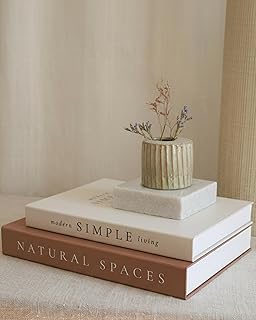
Beautiful Decorative Books
A dependable everyday pick — Beautiful Decorative Books – Set of 2 Boxes Enhance Your Coffee Table pulls in 288 ratings at 4.5 stars. Not flashy, just solid.
10. Avoid the Minimalist Trap of Barrenness

A common mistake is making a minimalist space feel bland by avoiding all decor entirely. I’ve been in homes where the living room is just a gray sofa and a bare white wall. It feels like an interrogation room. You need well-placed accessories that add character without overwhelming the senses. For example, create a simple, striking geometric print yourself. Run to the Kroger hardware aisle, grab a roll of sharp blue painter’s tape for $4, and tape off crisp, intersecting lines on a small blank canvas. Paint the exposed areas with leftover wall paint, peel the tape off while it’s still slightly wet, and you have custom modern art for under $20. A piece like this, or a simple sculptural wall hanging made of raw brass, breathes life into a room without adding an ounce of clutter.
11. Opt for Curved Forms to Add Dynamism

Sharp, aggressive angles are slowly giving way to soft, organic curves in 2026. While buying large curved furniture like a crescent sofa might be expensive, you can easily DIY this trend by incorporating smaller, softer elements. For instance, carve out a weekend to create a DIY arched wall niche. You’ll need some basic plasterboard, a tub of joint compound, and a lot of patience. The material cost is only around $50 to $100. The process of sanding the joint compound is dusty and messy (wear a good mask), but the result is a beautiful, soft architectural feature. If you aren’t ready for drywall surgery, simply choose a large round mirror with a thin, metallic frame. IKEA sells a gorgeous, heavy round mirror for about $30 to $80. Hanging a perfect circle on a rigid, square wall instantly adds a sense of flow.
12. Declutter Ruthlessly, Starting with the Entryway

Begin your minimalist journey by decluttering your entryway. This is a high-traffic area that accumulates piles of junk, mail, and dirty shoes. If your entryway is chaotic, your brain feels chaotic the second you walk through the front door. Implement a strict “one in, one out” rule for any new purchases. To handle the physical mess, install a simple, Scandinavian-style wall-mounted coat rack. I use IKEA’s TJUSIG rack, which costs exactly $19.99 and takes ten minutes to mount. Below it, install a low-profile, slim shoe cabinet like IKEA’s STÄLL for $99. It hugs tight to the wall and hides up to eight pairs of shoes behind clean white doors. The satisfying click of those cabinet doors closing away the visual clutter of muddy sneakers is the best feeling in the world. Keep only the absolute daily essentials here.

Sandstone Resin Thinker Style Abstract Sculpture Statue
Honestly, Sandstone Resin Thinker Style Abstract Sculpture Statue Collectible Fi surprised me — sturdier than it looks in the photos, and over 13 buyers gave it 4.5 stars.
13. Quiet Symmetrical Art for DIY Minimalist Decor

When it comes to wall art in a minimalist home, loud and chaotic gallery walls can feel overwhelming. Instead, consider styling two soft, identical-sized paintings or barely-there pencil sketches side-by-side. You can easily DIY this quiet, symmetrical look in an afternoon. Buy two identical 16×20 inch canvases. Apply a muted, single-color wash using a pale gray or warm beige acrylic paint. You can grab a tube at any craft store for under $10. Once the wash is dry, use a thick charcoal pencil to draw a single, simple, abstract sweeping line down the center of each canvas. Frame them in matching thin, natural raw wood frames, which usually run around $20 to $40 each. Hanging them exactly two inches apart creates a profound sense of quiet visual balance. It draws the eye without exhausting it.
14. Focus on Sustainable DIY Decor Choices

Sustainability isn’t just a buzzword; it’s a core trend for 2026 minimalist interiors. When you’re building or painting, choose eco-friendly materials that don’t off-gas toxic fumes into your clean space. I highly recommend using low-VOC paints like Clare Paint, which costs about $59 per gallon. It goes on smooth and doesn’t leave your house smelling like a chemical factory. For furniture projects, seek out formaldehyde-free woods or upcycle items you already own. For instance, repurpose old, sturdy wooden apple crates into modular, stackable storage units. Sand them down until the wood is buttery smooth, then rub them with Minwax’s “Special Walnut” stain. A small can costs around $10 to $20. The rich, dark stain highlights the natural wood grain, and the sharp, distinct smell of the wood finish makes the whole DIY process feel rewarding and rustic.
15. Improve Atmosphere with Scent, Not Clutter

A minimalist space can still deeply engage the senses without relying on visual noise. Instead of crowding your surfaces with decorative reed diffusers, potpourri bowls, or a dozen half-burned candles, invest in one high-quality, beautiful device. I use the Vitruvi Stone Diffuser, which costs around $120. It’s made of matte ceramic and looks like a tiny, elegant piece of pottery. A few years ago, I bought a cheap bottle of fake lavender oil at Trader Joe’s, and it made my living room smell like a public restroom (no exaggeration). I threw it out immediately. Now, I stick to a single, high-quality natural essential oil blend, usually pure cedarwood or eucalyptus, which costs $15 to $30. The diffuser emits a soft, quiet hum and a delicate stream of cool mist. It adds a subtle, grounding aroma to the room without contributing a single ounce of visual clutter.
Honestly, stripping away the excess and focusing on these intentional DIY minimalist decor projects completely changed how I feel inside my own home. It’s no longer a place that drains my energy; it’s a sanctuary that recharges me. Start with just one project this weekend—maybe the textured canvas art or swapping out your harsh lightbulbs. I’d love to hear how it turns out for you. If you found these ideas helpful, please save or pin this article so you can easily reference these exact paint colors and measurements the next time you’re standing confused in the hardware store aisle!

2 Pcs Natural Wood Arch Decor
Honestly, 2 Pcs Natural Wood Arch Decor surprised me — sturdier than it looks in the photos, and over 49 buyers gave it 4.5 stars.
Frequently Asked Questions
How do I start with DIY minimalist decor without spending a fortune?
Start with paint and decluttering. A fresh coat of warm neutral paint costs about $40 and completely changes a room’s vibe. Then, focus on editing what you already own before buying new materials.
Does minimalist decor mean I can’t have any personal items?
Not at all. Minimalism is about intentionality. Instead of fifty random knick-knacks, curate one or two highly meaningful objects, like a handcrafted vase or a framed photo, so they truly stand out.
How can I make a minimalist room feel warm and cozy?
Layer natural textures and use warm lighting. Incorporate linen pillows, chunky wool or jute rugs, and ensure your LED bulbs are a warm 2700K to 3000K temperature to avoid a harsh, clinical feel.
What is the best paint color for a minimalist living room?
Avoid stark, blinding whites. Opt for warm neutrals like creamy beiges or soft, chocolatey grays. Colors like Dutch Boy’s Melodious Ivory provide a comforting, sophisticated backdrop that feels relaxed and welcoming.
