What’s Inside
- 1. Replace Every Hanger with Velvet Ones
- 2. Enforce the Three-Item Nightstand Rule
- 3. Apply the Three-Item Surface Rule Everywhere
- 4. Corral Remotes and Chargers in Designated Baskets
- 5. Hide Every Visible Cord with Cable Trays and Clips
- 6. Start Project 333 Capsule Wardrobe This January
- 7. Buy All Socks in One Style and Color
- 8. Replace Worn Underwear Annually with a 15-Pair Max
- 9. Practice One-In, One-Out Every Single Month
- 10. Do a Five-Minute Sunday Reset Ritual
- 11. Set Physical Space Limits for Every Category
- 12. Process Mail Weekly from a Single Tray
- 13. Choose Only Multifunctional Furniture
- 14. Declutter 25 Easy Items First to Build Momentum
- 15. Schedule Seasonal Deep Edits Every Three Months
I spent $300 on organizing bins before I realized I was just organizing clutter. The best living minimalist home tips aren’t about buying more storage—they’re about owning less and being ruthless about what stays. After five years of simplifying, I’ve learned that minimalism works on any budget, from college apartments to suburban homes, and it starts with tiny, specific changes that compound over time.
1. Replace Every Hanger with Velvet Ones

I switched all my hangers to Joy Mangano velvet ones ($15–20 for a 50-pack on Amazon) two years ago, and honestly, it changed how I see my closet. The uniform look makes even a half-full closet feel curated instead of chaotic. Velvet grips prevent silk tanks and dresses from slipping onto the floor, which used to drive me nuts with plastic hangers.
Most people keep mismatched plastic hangers from dry cleaners that snag fabrics and create visual noise. I counted 23 different hanger styles in my closet before the switch—wire, plastic, wood, padded. Tossing them all felt wasteful for about five minutes, then liberating. Pro tip: buy exactly the number you need after decluttering clothes, not before. This forces you to be selective about what hangs. If you run out of hangers, you’ve hit your closet limit.
2. Enforce the Three-Item Nightstand Rule

My nightstand used to collect half-drunk water glasses, random receipts, and four books I wasn’t reading. Now I limit it to exactly three items: a lamp, one book I’m actually reading, and one drink. Everything else goes in the single drawer or a Yamazaki bedside caddy ($25–30) that hangs off the side.
This rule instantly calmed my bedroom because it stops surface creep—that phenomenon where items multiply overnight like gremlins. I personally find that three items in a triangle arrangement looks intentional, not bare. Common mistake: thinking you need your phone charger visible. I plug mine behind the nightstand and fish the cord up when needed. The visual difference is huge. If you share a bed, each person gets their own three-item limit. No exceptions, no “but I need my hand cream” debates.
3. Apply the Three-Item Surface Rule Everywhere

Every flat surface in my home—coffee table, bookshelf, kitchen counter—follows the three-item rule. I group things in odd numbers: one vase, one plant, one candle. Or one tray, one book, one small sculpture. Interior designers style product photos this way because odd groupings create visual balance without feeling cluttered.
I learned this after watching my dining table accumulate mail, keys, and random Amazon boxes. Now it holds a ceramic bowl, a small succulent, and a linen napkin under a water carafe. That’s it. Pro tip: the items should vary in height—short, medium, tall. This creates dimension. Most people overcrowd shelves thinking more looks abundant, but it just reads as chaotic. When I edit down to three items per shelf, suddenly my thrifted pottery actually gets noticed instead of disappearing into visual noise.

Homedics Tabletop Water Fountain
A dependable everyday pick — Homedics Tabletop Water Fountain pulls in 44 ratings at 4.5 stars. Not flashy, just solid.
4. Corral Remotes and Chargers in Designated Baskets

I bought two IKEA FÄRGRIK woven baskets ($5 each) and assigned one for living room remotes, one for charging cables. They sit on the coffee table and media console, visible but contained. This sounds stupidly simple, but it’s trending in 2026 for a reason—it creates “grab-and-return” habits that actually stick.
Before baskets, I’d find the TV remote in the kitchen and phone chargers snaking across every counter. My partner would leave cables in random outlets, creating a scavenger hunt every morning. Now everything has a home, and honestly, we both return items without nagging. The basket needs to be easy to access, not hidden in a drawer, or you’ll default to dropping things on the counter. Common mistake: buying decorative boxes with lids. The extra step of opening a lid kills the habit. Keep it open, keep it simple.
5. Hide Every Visible Cord with Cable Trays and Clips

Visible cords ruin tidy rooms—this is a top complaint from minimalist pros I follow. I installed cable trays under my TV console and used Command clips ($10 for a 20-pack) along baseboards to route cords. The whole project took 15 minutes and transformed my living room from “tech nest” to serene.
I used to ignore cords, thinking they were unavoidable. Then I saw a friend’s setup where literally zero cables showed, and I felt embarrassed by my tangled mess. The trick is bundling cords with velcro ties (not zip ties, which are permanent) and running them behind furniture legs or along wall edges. Under the TV, a simple adhesive cable tray holds the power strip and routes everything down one table leg. Pro tip: label each cord with masking tape before bundling so you know what to unplug later. This 15-minute fix has a disproportionate visual impact.
6. Start Project 333 Capsule Wardrobe This January

I adopted Project 333 starting January 1, 2026—you select 33 clothing items for three months, including shoes and accessories. Courtney Carver of Be More with Less created this system, and it’s genuinely the gateway to simple living. I thought I’d feel restricted, but instead I felt free from decision fatigue and the “I have nothing to wear” spiral.
The common mistake is hoarding “just in case” clothes—the fancy dress for hypothetical galas, the hiking boots you’ve worn once. I boxed those up and stored them. If I didn’t miss them in three months, I donated the box unopened. Honestly, I wore the same 20 items on repeat and nobody noticed or cared. My morning routine went from 15 minutes of outfit angst to two minutes of grabbing basics. Pro tip: choose a color palette (mine is black, white, olive, denim) so everything mixes. You’ll look more put-together with fewer pieces.

UTTCMK Bookshelf Decor Thinker Statue
UTTCMK Bookshelf Decor Thinker Statue – Abstract Art Reading Thinker S punches above its price — 767 buyers rated it 4.5 stars. I would buy it again.
7. Buy All Socks in One Style and Color

I bought Bombas ankle socks in black only ($18 for a 4-pack) and tossed every mismatched single sock. Now I grab any two socks from the drawer and they match. This minimalist hack eliminates the “missing sock” phenomenon and those sad piles of singles waiting for their partners to return from the dryer dimension.
Most people keep 30+ pairs of socks in different styles, colors, and levels of wear. Laundry day becomes a matching game. I used to have athletic socks, dress socks, cozy socks, no-show socks—all in various states of elastic failure. Nourishing Minimalism recommends this uniform approach for easy laundry wins, and I’m a total convert. Pro tip: when one sock gets a hole, toss both immediately. Don’t let singles accumulate. I keep exactly 14 pairs—two weeks’ worth—and wash weekly. If I need more, my sock drawer is literally full, so I have to let go of old ones first.
8. Replace Worn Underwear Annually with a 15-Pair Max

I set a calendar reminder every January to assess underwear and replace anything with stretched elastic or holes. I aim for 10–15 pairs maximum—two weeks’ worth plus a few extras. Minimalist pros warn against the “it still works” mindset that leads to discomfort and drawer overflow.
Honestly, I used to keep underwear until it was basically thread. I had 30+ pairs, most unworn, some from college (I’m 34). The mental load of sorting through ratty ones to find good pairs was ridiculous. Now I buy the same style in bulk—for me, it’s Pact organic cotton briefs—and donate old ones to textile recycling. Common mistake: keeping a mending basket for underwear. Unless you’re genuinely going to sew elastic, which I never did, just discard. This isn’t wasteful; it’s respecting yourself enough to have functional basics. I spend about $60 annually on replacements, and my drawer stays manageable.
9. Practice One-In, One-Out Every Single Month

When I bring home a new item—sweater, book, kitchen tool—I remove an old one that same week. This one-in, one-out rule prevents rebound clutter after initial declutters. In 2026, minimalist experts emphasize this as the maintenance habit that makes simplicity stick long-term.
I failed at this for months because I’d forget or make excuses (“but this new sweater is different from my old ones”). Then I started keeping a running list on my phone: “Bought: blue mug. Remove: chipped green mug.” Seeing it written forced accountability. Pro tip: the removed item doesn’t have to be the same category. New throw pillow? Donate an old serving bowl. The goal is net-zero accumulation. Most people declutter once, then slowly refill their homes. I personally find that monthly one-in, one-out keeps my space at the perfect level—enough stuff to live comfortably, not so much that I’m drowning.

luckystyle Dimmable Floor Standing Tall Lamp
luckystyle Dimmable Floor Standing Tall Lamp punches above its price — 29 buyers rated it 4.5 stars. I would buy it again.
10. Do a Five-Minute Sunday Reset Ritual

Every Sunday evening, I spend five to ten minutes clearing all surfaces—kitchen counters, desk, coffee table, bathroom vanity. I put away anything that migrated during the week. As my clutter decreased, this reset now takes under two minutes. It’s a trending habit for simplifying the week ahead, and honestly, it’s my favorite minimalist practice.
I started this after realizing Monday mornings felt chaotic because weekend mess lingered. Mail piled up, coffee mugs multiplied, random purchases sat in bags. The Sunday reset creates a clean slate. I light a candle, put on music, and do a quick lap through each room. Everything goes back to its designated spot. Common mistake: trying to deep clean during this time. It’s not about scrubbing; it’s about surfaces. If something doesn’t have a home, that’s a sign you don’t need it. I’ve donated dozens of items mid-reset because I couldn’t answer “where does this live?”
11. Set Physical Space Limits for Every Category

I assigned one shelf maximum per clothing category: 12 inches of shelf space for t-shirts, one drawer for pants, one hanging rod section for dresses. YouTube minimalist Simple Happy Zen teaches this rule to curb overbuying by visualizing “full” zones. When the t-shirt shelf is packed, I can’t buy another without removing one first.
This works for everything—books get two shelves, kitchen gadgets get one drawer, craft supplies get one bin. I used to think I needed more storage, but I actually needed fewer things. Pro tip: measure your storage and shop accordingly. My t-shirt shelf holds about 10 folded shirts comfortably. That’s my limit. Most people buy first, then scramble for space. I shop knowing my constraints. It sounds restrictive, but honestly, it’s freeing. Decision-making gets easier when you have boundaries. I never stand in a store wondering if I have room—I know exactly how much space I have left.
12. Process Mail Weekly from a Single Tray

I bought a Yamazaki metal mail tray ($20) that sits by my front door. All incoming mail goes there, nowhere else. Every Saturday, I process the tray—recycle junk, file important documents, pay bills. This prevents kitchen counter migration, a lesser-known pro tip for paper chaos control.
Before the tray, mail scattered across three rooms. I’d find bills weeks late, buried under catalogs I never requested. The single-tray system works because it’s a forcing function—when the tray fills, I have to deal with it. Common mistake: hiding mail in a drawer “to deal with later.” Out of sight becomes out of mind, and suddenly you’re drowning in paper. Keep the tray visible but not on your main living surface. I chose a spot by the door so I can drop mail immediately when I walk in, not carry it further into the house where it spreads like a virus.
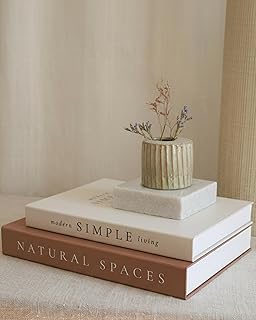
Beautiful Decorative Books
If you want something that just works, Beautiful Decorative Books – Set of 2 Boxes Enhance Your Coffee Table is a safe bet (283 reviews, 4.5 stars).
13. Choose Only Multifunctional Furniture

Every furniture piece in my home stores something or serves double duty. My Article Sven sofa ($1,000–1,500 range) has under-seat drawers for blankets. My coffee table lifts to reveal storage for board games. My bed frame has built-in drawers. This is a core principle in 2026 minimalist living home tips guides—avoid single-use items that waste space.
I used to own a decorative side table that just… existed. It held a plant and took up floor space. When I moved, I replaced it with a storage ottoman that holds shoes and serves as extra seating. Pro tip: before buying furniture, ask “what else can this do?” If the answer is nothing, skip it. This rule especially matters in small spaces, but honestly, even in larger homes, why waste square footage? Common mistake: buying cute furniture that doesn’t work hard. That trendy acrylic chair might look great on Instagram, but my storage bench looks great and holds 30 pairs of shoes. Functionality wins.
14. Declutter 25 Easy Items First to Build Momentum

When I feel stuck, I declutter 25 easy items using Nourishing Minimalism’s list: unmatched socks, expired spices, dried-up pens, old magazines, stretched hair ties. I keep a tally chart and cross off each item. This jumpstarts motivation without the overwhelm of tackling sentimental boxes or entire closets.
The beauty of this approach is that 25 items takes maybe 20 minutes, and you see immediate results. I’ve done this exercise four times in 2026 when I felt my space creeping back toward clutter. It resets my mindset. Pro tip: don’t overthink the items. Grab the obvious trash first—expired sunscreen, broken kitchen utensils, promotional t-shirts you’ve never worn. Most people stall on decluttering because they start with hard categories like photos or gifts. Start easy, build confidence, then tackle the emotional stuff. I personally find that momentum from small wins carries me through bigger purges.
15. Schedule Seasonal Deep Edits Every Three Months

Every three months—roughly with the seasons—I open every closet and ask if items spark joy or get used. I’m ruthless about last season’s “maybes” that accumulated dust. This is the common mistake: keeping spring clothes you didn’t wear all spring, thinking “maybe next year.” Spoiler: you won’t wear them next year either.
I calendar these edits for the first weekend of January, April, July, and October. It takes about two hours per session, and I usually donate 10–20 items each time. This prevents the need for massive, exhausting declutters. Pro tip: try on questionable clothes. I used to keep things I thought fit, but trying them on revealed tight waistbands or unflattering cuts I’d forgotten. If it doesn’t feel great, it goes. Honestly, seasonal edits keep my home at a steady state of minimalism instead of the yo-yo cycle of clutter and purge. It’s maintenance, like changing your car’s oil, and it works.
These living minimalist home tips work because they’re specific, actionable, and don’t require a trust fund. I’ve spent maybe $200 total on the products mentioned, and most tips are free—they’re about systems and boundaries, not buying your way to minimalism. Start with one tip this week, maybe the velvet hangers or the three-item nightstand rule, and build from there. Save this list and come back when you’re ready for the next step. You don’t need a perfect minimalist home overnight; you need progress, and these 15 tips will get you there on any budget.

Sandstone Resin Thinker Style Abstract Sculpture Statue
Sandstone Resin Thinker Style Abstract Sculpture Statue Collectible Fi has been one of the most consistently praised picks in this category. 13 reviewers averaged 4.5/5.
Frequently Asked Questions
What are the best living minimalist home tips for beginners?
Start with the three-item surface rule—limit every table and shelf to three objects. Then tackle easy wins like matching all your hangers to velvet ones and decluttering 25 obvious items like expired spices and unmatched socks. These create visible progress fast without overwhelming decisions.
How much does it cost to create a minimalist home?
Most minimalist living home tips cost nothing—they’re about removing items, not buying storage. Budget-friendly purchases like velvet hangers ($15–20 for 50), IKEA baskets ($5), and Command cord clips ($10) total under $50. The real investment is time and decision-making, not money.
What is the one-in, one-out rule for minimalist living?
When you bring home a new item, remove an old one within the same week. This prevents clutter rebound after decluttering. The removed item doesn’t need to match categories—new sweater means donate an old kitchen tool. It maintains net-zero accumulation long-term.
How do I maintain a minimalist home without constant decluttering?
Do a five-minute Sunday reset clearing all surfaces, enforce space limits for each category (like one shelf per clothing type), and schedule seasonal three-month deep edits. These habits prevent clutter from accumulating rather than requiring exhausting marathon purges later.