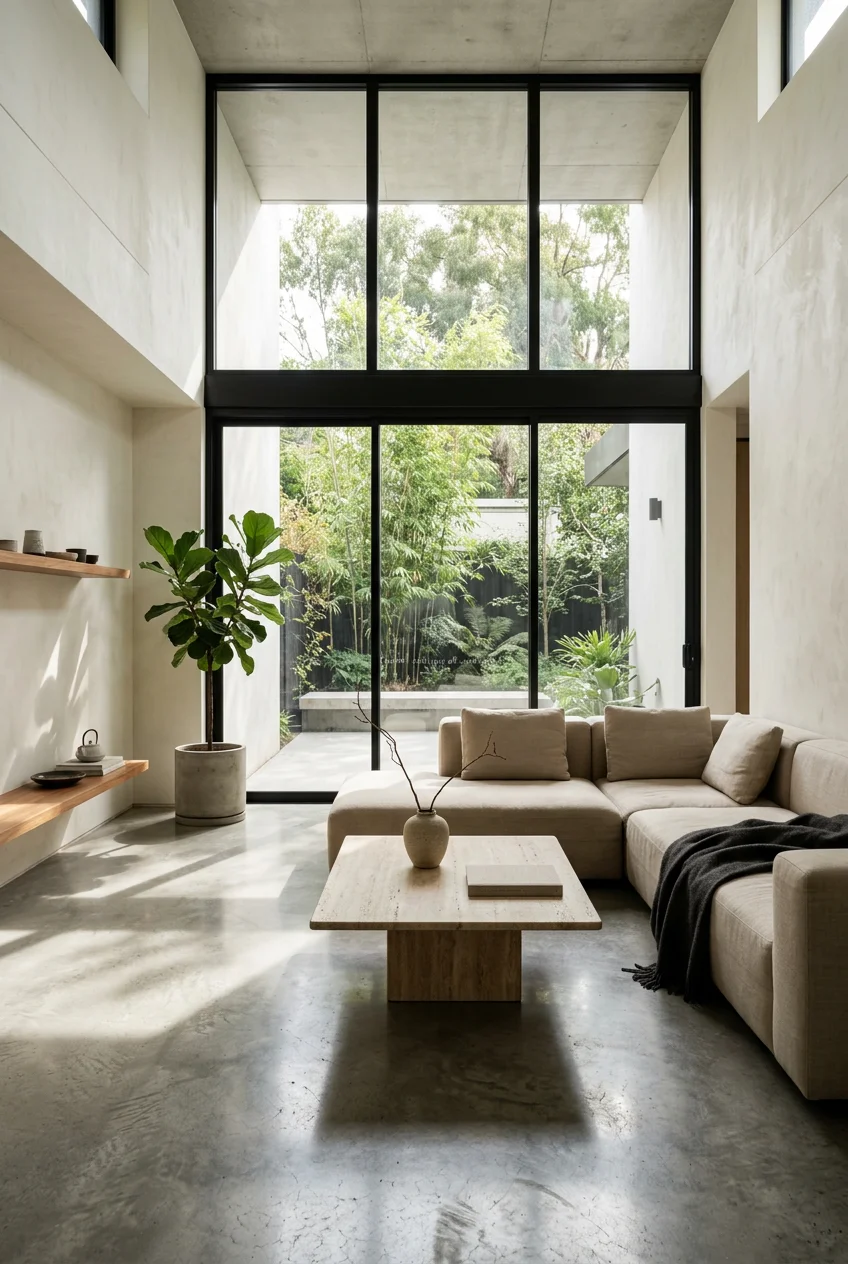
What’s Inside
- Embrace Warm Neutrals for a Contemporary Minimalist Living Room Base
- Invest in a Quality, Low-Profile Sofa
- Prioritize Multifunctional Furniture
- Master Hidden and Vertical Storage
- Curate Decor with the Rule of Three
- Layer Lighting for Warmth
- Ground the Space with an Oversized Rug
- Use Tactile Textures Over Busy Patterns
- Camouflage the Television Completely
- Choose Sculptural Accent Chairs
- Hang One Massive Piece of Art
- Bring in Structured, Low-Maintenance Plants
- Install Minimalist Window Treatments
- Keep the Coffee Table Clean and Functional
- Hide the Cords Completely
- Edit Constantly with the One In, One Out Rule
Last November, I sat on my gray IKEA Karlstad sofa surrounded by harsh daylight LED bulbs, wondering why my apartment felt like a dentist’s waiting room. I’d tried to build a contemporary minimalist living room, but I’d just created a cold, sterile box. I spent $45 on cheap geometric throw pillows at Target trying to fix it, which only added visual clutter. The truth is, a contemporary minimalist living room requires intention, not just white paint and empty surfaces. You can’t just throw out your end tables and call it design. I tried this wrong for months before figuring it out. Took me years to figure out. Here is exactly how I fixed my space, including the specific measurements, paint colors, and expensive mistakes I made along the way.
1. Embrace Warm Neutrals for a Contemporary Minimalist Living Room Base

In 2026, minimalist interiors are shifting away from stark whites towards warmer, softer neutral color palettes. I learned that the hard way. Two years ago, I painted my entire living room Benjamin Moore Super White ($75 per gallon). In the afternoon sun, it looked okay, but at night, the walls felt like an operating room. Hard, ultra-modern aesthetics are giving way to warmth. You need shades like warm beige, light taupe, mushroom gray, and muted cream. I repainted my space using Sherwin Williams Accessible Beige in an eggshell finish. The difference is massive. It creates a relaxed atmosphere without looking dirty. Skip the pure white paint. It feels like wet cardboard looks. If you’re picking a base color, test a 12-inch square on a cloudy day before committing to the whole room.
2. Invest in a Quality, Low-Profile Sofa

Your sofa dictates the visual weight of the room. You need a streamlined, low-profile sofa with clean lines to maintain an open feel. I initially bought a massive, overstuffed sectional from Ashley Furniture that completely swallowed my 12×14 foot room. I eventually sold it and bought the Article Abisko 91-inch Sofa for $1,299. For smaller spaces, the IKEA SÖDERHAMN ($699) is a solid budget option. Look for a seat height around 17 to 18 inches and narrow arms. This visually opens up the room because you can see more of the wall behind it. The Floyd Soft Serve Sectional (starting around $3,504) is another excellent option if you have the budget. The low profile means I don’t feel cramped when walking past it, though the firm cushions take about a month to break in.
3. Prioritize Multifunctional Furniture

You can’t have a minimalist space if you have ten different pieces of furniture doing ten different jobs. Select furniture pieces that serve more than one purpose to maximize space. I bought a West Elm drum coffee table with a lift-top lid for $499. It holds three thick wool blankets inside, keeping them off the sofa. Another great example is the Corroy sleeper sofa. At exactly 78.25 inches wide, it functions as both a structured sofa and a queen-size bed for guests. Buying single-use furniture in a small room is a mistake. I used to have a separate blanket ladder and a bulky media tower. Consolidating into one solid piece of storage furniture instantly cleared my floor space. It’s basic math. Fewer legs on the floor equals a cleaner room.

PoKat 23" Modern Ceramic Table Lamp Set of 2 for Living
A dependable everyday pick — PoKat 23″ Modern Ceramic Table Lamp Set of 2 for Living Room White Des pulls in 15 ratings at 4.5 stars. Not flashy, just solid.
4. Master Hidden and Vertical Storage

You need smart storage solutions to keep surfaces clear. The space above your doors and windows is completely wasted. I installed the IKEA Besta system ($350) last winter, taking the cabinets all the way to my 9-foot ceiling. I kept the doors matte white without hardware so they blend into the wall. Inside, I hide my ugly internet router, 15 feet of coaxial cable, and dog toys. Modular options from String Furniture are also incredibly versatile for fitting storage into awkward corners. I drove to Lowe’s last Tuesday to buy heavy-duty drywall anchors ($8.98 for a pack of 20) because standard screws won’t hold. They’ll rip right out of the wall under the weight of books. Hide the clutter behind solid doors. Open shelving just becomes a display case for dust.
5. Curate Decor with the Rule of Three

Limit decorative items per surface to one, two, or three carefully chosen pieces. I used to have 15 tiny knick-knacks from HomeGoods scattered across my media console. It looked messy and took 20 minutes to dust. I boxed them all up. Now, I use the rule of three. On my coffee table, I have one heavy Tom Ford design book ($95 on Amazon), a matte black candle snuffer ($12), and a single 8-inch ceramic vase. Ask yourself if an item is actually useful before setting it down. Instead of many small items, opt for one larger, impactful piece. A large sculptural vase brings texture without visual noise. The rough paper pages of a good book add warmth. Stop buying cheap filler decor. It ruins the aesthetic entirely.
6. Layer Lighting for Warmth

Single overhead lights ruin rooms. Move beyond the ceiling fan light and create a layered lighting scheme using ambient, task, and accent lighting. You need warm LED lights, specifically between 2700K and 3000K, instead of harsh white bulbs. I bought a four-pack of Philips Hue bulbs ($139 at Best Buy) and set them to a soft amber glow at 20 percent brightness every evening. I added a Flos Bellhop table lamp ($295) on my console and a sculptural brass floor lamp from CB2 ($349) in the corner. The warm light casting soft shadows across the floor completely changes the texture of the room. I lived with a single 4000K overhead bulb for three years and it gave me a headache every night. Layered lighting fixes that instantly. You might also like: 20 Charming Minimalist Counter Decor Kitchen Ideas That Are Totally Worth It

2 Pcs Natural Wood Arch Decor
If you want something that just works, 2 Pcs Natural Wood Arch Decor is a safe bet (49 reviews, 4.5 stars).
7. Ground the Space with an Oversized Rug

Rugs need to be large enough that the front legs of all your furniture sit on them. I bought a cheap 5×7 rug from Target once, and it looked like a bathmat floating in the middle of the room. It made the space feel disjointed. I replaced it with a 9×12 chunky wool rug from Rugs USA ($399). The scratchy, thick pile of the wool under my bare feet adds the exact tactile element a minimal room needs. Costco frequently sells massive 8×10 wool blend rugs for around $250 in their warehouse. A large rug pulls the entire seating arrangement into one cohesive zone. Skip the cheap polyester rugs. They feel like plastic grocery bags and they curl up at the corners after a month. You might also like: 17 Capsule Wardrobe 2025 Spring That Actually Work
8. Use Tactile Textures Over Busy Patterns

Minimalism doesn’t mean flat. If you take away color and pattern, you have to replace it with texture, or the room feels dead. I swapped my loud geometric print pillows for heavy, raw linen covers from H&M Home ($19.99 each). I also bought a heavy velvet throw blanket from Crate & Barrel ($120) that drapes over the arm of the sofa. The contrast between a nubby boucle chair, cool smooth leather, and rough linen keeps the eye interested without causing visual fatigue. I tried using matching smooth cotton for everything in 2021, and the room looked like a cheap hotel. Mix your materials. Put a cold metal lamp next to a warm wooden tray. The friction between textures is where the design actually happens.
9. Camouflage the Television Completely

A giant black rectangle ruins a light, airy living room. I hated the black void of my old 55-inch Vizio screen. I saved up and bought the Samsung Frame TV ($1,499 for the 55-inch model) and added the teak wood bezel ($149). Now, when it’s off, it displays a muted landscape painting that blends perfectly with my walls. If you don’t want to buy a new TV, mount your current one inside a slim cabinet or paint the wall behind it a dark charcoal to minimize the contrast. I bought a cheap wall mount at Walmart first, but it sagged under the weight. I had to go back and buy a heavy-duty Sanus mount for $129. Mount it flush to the wall. Exposed TV brackets are an eyesore. You might also like: 20 Cozy Simple Living Tips You Can Try Today

CEMABT Modern Nordic Boho Vase Set
CEMABT Modern Nordic Boho Vase Set – Elegant Beige Matte Ceramic Home punches above its price — 984 buyers rated it 4.5 stars. I would buy it again.
10. Choose Sculptural Accent Chairs

Instead of bulky recliners, use chairs that incorporate negative space. Wood frames with leather slings allow light to pass through them. I found a replica Wassily chair on Wayfair ($289) a few years ago, but the leather felt like stiff plastic and squeaked when I moved. I returned it and eventually bought a vintage Marcel Breuer chair with a chrome frame ($800). The cold steel tubes and thick, stiff saddle leather add an architectural element to the room. Because the chair isn’t a solid block of fabric, it doesn’t block the sightlines across the floor. When you’re picking an accent chair, look at the legs. Thin metal or tapered wood legs make the piece feel lighter in the room.
11. Hang One Massive Piece of Art

Skip the messy gallery wall. I spent three hours last spring aligning 12 cheap black frames from Michaels ($15 each) above my sofa. It just looked chaotic and made the ceiling feel lower. I took them all down, patched the holes, and replaced them with a single massive 40×60 canvas. I actually painted it myself using leftover drywall mud for a thick, plaster-like texture. If you don’t want to DIY, buy a large-scale minimalist print from Minted ($350 framed). One large piece of art anchors the room. Multiple small pieces distract the eye. Leave plenty of blank wall space around the art so it can breathe. You don’t need to fill every empty square foot of drywall.
12. Bring in Structured, Low-Maintenance Plants

Plants add life, but messy plants add stress. I killed a Maidenhair fern in two weeks because it dropped crispy brown leaves all over my console table every time the AC kicked on. I replaced it with a 4-foot tall Ficus Audrey from Sprouts ($39.99). It has large, structured matte green leaves that don’t shed. I put it in a 12-inch matte black fiberglass planter from CB2 ($89) and topped the soil with black river stones to hide the dirt. Snake plants and ZZ plants are also excellent because they grow vertically and maintain a clean silhouette. Keep your plant count low. Two large, healthy plants look intentional. Fifteen tiny succulents in mismatched pots look like a dorm room.

Gold Leaf Home Decor Set – Metal Leaves Statues
A dependable everyday pick — Gold Leaf Home Decor Set – Metal Leaves Statues pulls in 55 ratings at 4.5 stars. Not flashy, just solid.
13. Install Minimalist Window Treatments

Ditch the heavy, layered drapes with ornate metal rods. You need simple roller shades or ripple fold curtains. I installed the IKEA Vidga ceiling track system ($20 per track) with pure white linen curtains. They glide quietly and hang perfectly straight from ceiling to floor, making the room look taller. Don’t use cheap tension rods. I tried that in my old apartment, and the rod crashed down at 2 AM, taking a chunk of drywall with it. For my side window, I went to Home Depot and ordered custom Levolor light-filtering roller shades ($150 per window). They pull down smoothly and disappear into the cassette at the top when open. Keep the fabric close to the wall color to maintain a seamless look.
14. Keep the Coffee Table Clean and Functional

A coffee table is a tool for holding your drink, not a display case for fragile items. I clear mine completely every single night before bed. Right now, it holds one heavy travertine coaster ($12 from a local boutique) and nothing else. I used to have a wooden tray full of matches, three half-burned candles, and a stack of magazines. It just collected dog hair and dust. When I needed to set down my laptop, I had to move five things out of the way. If your coffee table is covered in decor, it loses its function. Pick a table with a durable surface. Glass shows every fingerprint, and soft pine dents easily. I prefer solid oak or powder-coated steel.
15. Hide the Cords Completely

Visible cords instantly kill the minimalist vibe. A tangle of black wires hanging from a wall-mounted TV looks terrible. I spent three hours last Sunday zip-tying cables behind my media console. I used a D-Line cable raceway ($18 at Amazon) to hide the TV power cord. I painted the plastic raceway the exact same Accessible Beige as the wall, so it practically vanishes. The satisfying click of the plastic cover snapping shut over the ugly black HDMI cords was worth the effort. I also bought a wooden cable management box from Target ($24) to hide the power strip on the floor. If you can see a wire from your sofa, your room isn’t finished yet. Tape them to the back of furniture legs if you have to.

Dog Sculpture Home Decor Cute Man and Dog Statue Decoration
Dog Sculpture Home Decor Cute Man and Dog Statue Decoration for Office punches above its price — 340 buyers rated it 4.5 stars. I would buy it again.
16. Edit Constantly with the One In, One Out Rule

Maintenance is the hardest part of minimalist living. You can’t just buy your way into a clean aesthetic. It requires constant pruning. I use the one-in, one-out rule strictly. If I buy a new throw blanket at Trader Joe’s (they had these amazing heavy wool ones for $29.99 last fall), an old blanket immediately goes into a donation bag for Goodwill. Clutter creeps in quietly. A stray coffee mug here, a stack of mail there. I do a 10-minute sweep every Sunday morning with a trash bag. If you don’t actively protect your empty space, it will fill up with junk. A contemporary minimalist living room isn’t a project you finish once. It’s a daily habit of deciding what actually deserves to take up physical space in your home.
Creating a minimal space takes time, but the mental clarity you get from a quiet room is worth the effort. Start with the lighting and the hidden storage, and the rest will fall into place. Pin this list so you have the measurements handy the next time you’re furniture shopping.
Frequently Asked Questions
How do I make a contemporary minimalist living room feel warm?
Swap stark white paint for warm neutrals like mushroom gray or taupe. Layer 2700K warm LED lighting instead of harsh overhead bulbs, and incorporate heavy tactile textures like wool rugs, raw linen, and natural wood to add depth.
What kind of sofa works best for minimalist design?
Choose a low-profile sofa with clean lines and a seat height around 17 to 18 inches. Narrow arms and a streamlined silhouette keep the visual weight low, allowing you to see more of the wall and making the room feel larger.
How do I handle decor in a minimalist living room?
Use the rule of three. Limit surface decor to one to three carefully chosen, large-scale items per table or shelf. Opt for functional, sculptural pieces rather than small knick-knacks that create visual clutter and gather dust.
What are the best window treatments for a minimal aesthetic?
Skip heavy, layered drapes and ornate metal rods. Install simple light-filtering roller shades or pure linen curtains on a ceiling-mounted track system. Matching the fabric color closely to your walls maintains a seamless, uncluttered look.
