What’s Inside
- Embrace Deep, Matte Wall Colors for Depth, Not Gloom
- Prioritize Tactile Textures Over Visual Patterns
- Layer Lighting with Intention: Ambient, Task, Accent
- Select Low-Profile, Sculptural Furniture
- Invest in Quality, Dark-Stained Wood Pieces
- Ensure Proper Rug Sizing to Anchor the Space
- Conceal Clutter with Integrated, Closed Storage
- Introduce Strategic Contrast with Luminance Contrast
- Incorporate Organic Elements Thoughtfully
- Adhere to the 60/30/10 Color Rule for Harmony
- Create Negative Space Flow by Avoiding Wall-to-Wall Furniture
- Opt for Matte Finishes on All Surfaces
- Consider Curved and Rounded Silhouettes for Softness
- Hide Technology and Consolidate Charging
- Don’t Fear Dark Paint in Small Rooms
- Keep Window Treatments Heavy but Simple
- Add Warmth with Brushed Brass Accents
- Limit Wall Art to One Large Statement Piece
- Ground the Space with Earthy Scents
- Layer Dark Linen Bedding for Texture
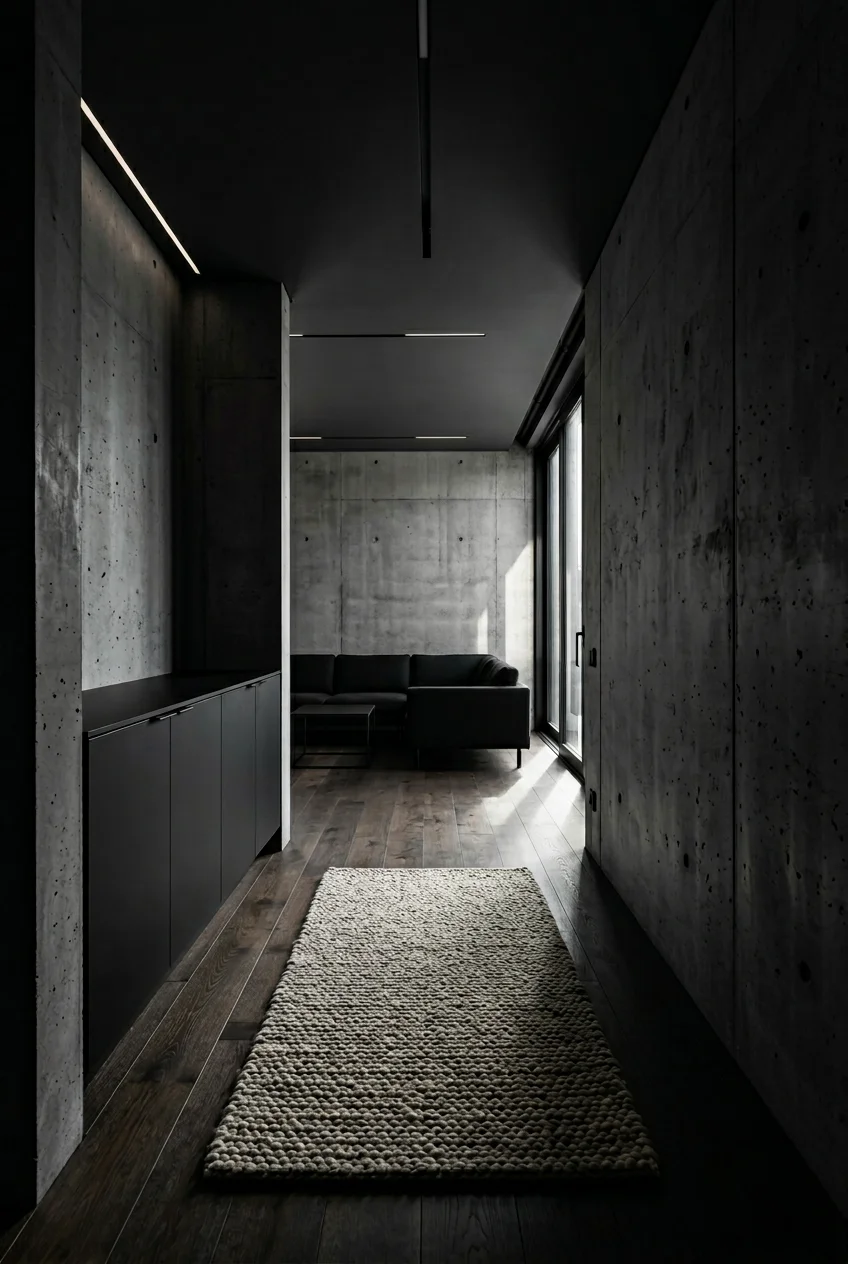
Last winter, I painted my 600-square-foot living room pure white. Pinterest swore it’d make the place look massive. It didn’t. It felt like a sterile dentist’s waiting room, especially with my cheap beige sofa sitting there. The afternoon glare gave me a headache, and every scuff mark on the wall stood out. I decided to pivot and build a dark, minimalist apartment. I spent three weeks researching how to make a moody space feel intentional rather than depressing. I bought six paint samples, ruined two rollers, and finally figured out the formula for making deep colors work in small spaces. If you’re tired of the all-white look and want a space that feels like a retreat, here’s how to do it right. I’m sharing the paint colors, lighting tricks, and layout rules I used to fix my own place.
1. Embrace Deep, Matte Wall Colors for Depth, Not Gloom

Ditch the bright whites for rich, dark matte paint. I used Benjamin Moore’s Kendall Charcoal HC-166 in my bedroom, and the walls immediately seemed to recede. These shades absorb light, blurring room edges and making the space feel expansive and intimate. I bought a gallon for $69.99 at my local hardware store; the matte finish is non-negotiable. Eggshell or satin finishes reflect light and highlight every drywall imperfection, which ruins the vibe. I tried eggshell on a test patch and it looked like a cheap plastic cave. Stick to matte. You could also try Ashland Slate or a deep, earthy green like Chimichurri for a subtle undertone. Two coats of matte Kendall Charcoal hid the weird texture on my 1980s apartment walls. I used a 3/8-inch nap roller for the smoothest application.
2. Prioritize Tactile Textures Over Visual Patterns

To keep a dark apartment from feeling flat, introduce heavy textures. I avoid printed fabrics entirely. Instead, I mix velvet, leather, wool, rough stone, and dark wood. My main seating is a heavy cotton-velvet sofa paired with a thick wool rug I grabbed at Costco last October for $199. The wool adds warmth without cluttering the room with busy patterns. When everything is a similar dark tone, the contrast comes from how materials catch the light. A smooth leather chair next to a rough stone side table creates visual friction. I learned this the hard way after buying a matching black polyester sofa and chair set. The room looked like a black hole until I swapped the chair for a textured boucle piece.
3. Layer Lighting with Intention: Ambient, Task, Accent

Harsh overhead lighting makes dark walls look like a prison cell. I don’t use my ceiling fixtures anymore. Instead, I layer ambient, task, and accent lighting to create depth. I use dimmer switches for intensity and place floor lamps to create pools of warm light. The Muuto Leaf Floor Lamp, usually around $495, is a great low-profile fixture that directs light without taking up visual space. I also keep a $35 brass task lamp from Target on my desk. By keeping light sources below eye level, you create a cozy atmosphere. Buy bulbs in the 2700K range. Anything over 3000K looks blue and sterile against dark paint. It took me years to realize color temp is everything.

Sage Green Boho Wall Art Set of 3
Honestly, Sage Green Boho Wall Art Set of 3 surprised me — sturdier than it looks in the photos, and over 907 buyers gave it 4.5 stars.
4. Select Low-Profile, Sculptural Furniture

Choose furniture with clean lines and simple shapes that sit low to the ground. This keeps sightlines clear and makes the ceiling feel higher. My coffee table is a bold marble slab sitting just 12 inches off the floor. It defines the space without overwhelming it. When you’re working with a dark palette, bulky, high-backed furniture makes the room feel cramped. I used to have a massive overstuffed armchair that blocked the window. I sold it and replaced it with a low-slung sling chair. The change in airflow and visual space was instant. Keep furniture legs thin, preferably black metal or dark wood, so the pieces look like they’re floating.
5. Invest in Quality, Dark-Stained Wood Pieces

Use furniture made from natural materials like dark-stained wood to warm up the cool charcoal walls. Muuto offers pieces in a “Stained Dark Brown” veneer, which adds refinement while letting the wood grain show through. I have a 48-inch dark walnut credenza for my TV. The brown tones keep the room from feeling too industrial. When I started, I bought a cheap $45 black laminate TV stand from Walmart. It looked flat and caught dust like a magnet. Natural wood grain, even when stained dark, reflects light differently and adds an organic texture that manufactured materials can’t touch. I wipe it down weekly with a damp microfiber cloth to keep the grain looking sharp.
6. Ensure Proper Rug Sizing to Anchor the Space

Too many people use rugs that are way too small. It makes furniture look like it’s floating on a tiny island. For a living room, choose a rug large enough for at least the front legs of all main furniture pieces to sit on it. An 8×10 or 9×12 rug works for most apartments, leaving 18 to 24 inches of floor exposed around the edge. I use a 9×12 charcoal wool rug that covers most of my 12×15 living room. I bought a basic felt rug pad for $22 at Walmart to go underneath, which adds half an inch of cushion. The large rug anchors the palette to the floor, making the room feel cohesive. You might also like: 15 Capsule Wardrobe Men That Actually Work

Framed Boho Wall Art Set of 4 for Wooded Minimalist
If you want something that just works, Framed Boho Wall Art Set of 4 for Wooded Minimalist Botanical Print Wa is a safe bet (956 reviews, 4.5 stars).
7. Conceal Clutter with Integrated, Closed Storage

Minimalism requires a clutter-free environment, especially in dark rooms where visual noise stands out. Opt for closed-front cabinetry in dark wood, matte lacquer, or smoked glass. Open shelving is a trap if you aren’t perfectly disciplined. I tried open shelves in my kitchen for six months, and the clutter of mismatched mugs drove me crazy. Now, I use built-in wardrobes and floating nightstands with solid drawers to keep lines clean. I installed a 70-inch wall of IKEA Besta cabinets with matte black doors for about $350. It hides my router, blankets, and paperwork. If you can’t see it, it doesn’t distract you. Keep surfaces clear except for one or two intentional objects.
8. Introduce Strategic Contrast with Luminance Contrast

Dark is dominant here, but a single light object is impactful. Design expert Todd Harmon suggests using “luminance contrast” for visual tension. A white marble vein on a black kitchen island or a beige linen sofa against a charcoal wall highlights both items. I use a cream-colored wool throw on my dark grey sofa. That pop of lightness keeps the room from feeling like a cave. You don’t need bright colors; you just need a shift in value. I bought a small $14 white ceramic bowl from Target for my black coffee table. It catches the light and gives the eye a place to rest without breaking the rules. You might also like: 15 Clever Minimalist Living Home Tips You Haven’t Thought Of
9. Incorporate Organic Elements Thoughtfully

Avoid scattering a dozen tiny succulents. Small plants read as clutter. Instead, choose one strong, shade-tolerant plant to introduce relief. I bought a massive, 3-foot-tall ZZ plant in a matte black planter. It sits in the corner and needs watering once a month. Snake plants are also great because their vertical lines match the minimalist aesthetic. I grabbed a healthy snake plant from Trader Joe’s last Tuesday for $12.99. The dark green leaves pop against charcoal walls. Stick to one large plant per room rather than a collection of small ones, which just creates dusting work and looks messy. You might also like: 19 Travel Capsule Wardrobe Summer That Actually Work

ASTRDECOR Abstract Framed Wall Art
Honestly, ASTRDECOR Abstract Framed Wall Art surprised me — sturdier than it looks in the photos, and over 251 buyers gave it 4.5 stars.
10. Adhere to the 60/30/10 Color Rule for Harmony

Even in a dark palette, avoid too many competing undertones. Stick to a neutral base for 60 percent of the room. This is your dominant dark hue, like charcoal walls and a matching rug. Use a secondary dark color for 30 percent, like dark brown wood furniture or navy curtains. Finally, use a subtle accent for the remaining 10 percent to add dimension. My 10 percent is brushed brass hardware and amber glass vases. When I moved in, I tried mixing black, navy, forest green, and burgundy. It felt chaotic. Limiting the palette to charcoal (60), walnut wood (30), and brass (10) made the place feel like a high-end hotel suite instantly.
11. Create Negative Space Flow by Avoiding Wall-to-Wall Furniture

A common mistake in small apartments is lining every wall with furniture. It makes the room feel compressed. You need to create “negative space flow” by pulling furniture away from the walls and leaving intentional gaps. I keep pathways 30 to 36 inches wide so I can walk through without turning sideways. I left one 10-foot wall in my living room completely blank. No art, no console. At first, my mom asked when I was going to buy something for it. But leaving it bare lets the eye pause. It creates openness that counteracts the dark paint. Don’t fill every corner just because the space is there.
12. Opt for Matte Finishes on All Surfaces

Matte textures add elegance to dark spaces. Glossy black or shiny grey surfaces show fingerprints and reflect light in a distracting way. I replaced the shiny chrome cabinet pulls in my kitchen with matte black hardware from Home Depot for $4.50 each. It took 20 minutes, and the change was drastic. Matte finishes prevent glare and make dark walls and cabinets appear richer. Even my dinnerware is matte black ceramic. I bought a set of four plates from Target for $24. They scratch easier than glossy plates, but the visual weight they add is worth it.

Pigort 3 Pieces Metal Flowers Wall Art- Rustic Farmhouse
Pigort 3 Pieces Metal Flowers Wall Art- Rustic Farmhouse Decor Minimal has been one of the most consistently praised picks in this category. 25 reviewers averaged 4.5/5.
13. Consider Curved and Rounded Silhouettes for Softness

To counteract the potential harshness of dark colors and sharp lines, introduce furniture with soft curves. A room full of square black tables and sharp sofas feels aggressive. I balanced my square charcoal sofa by hanging a 36-inch circular mirror on the wall. The round shape softens the architecture and makes the room inviting. I also use a cylindrical side table. When I was shopping at CB2 last month, I looked for a chair with rounded arms rather than track arms. Curved silhouettes break up the rigid grid of a standard apartment, making the dark colors feel comfortable.
14. Hide Technology and Consolidate Charging

For a calm environment, your tech must be discreet. A tangle of white Apple charging cords hanging off a dark nightstand looks terrible. I use $15.99 black cable management boxes to hide power strips. I also consolidated all my charging to one station inside a drawer in my entryway console. I drilled a 1-inch hole in the back of the drawer to run the power cable. Now, my laptop, phone, and earbuds charge out of sight. I used to leave my laptop on the coffee table, but the silver aluminum clashed with the moody vibe. Hiding the tech forces you to disconnect.
15. Don’t Fear Dark Paint in Small Rooms

Contrary to popular belief, dark colors can make small rooms feel bigger. White paint in a small, poorly lit room looks dingy and creates harsh shadows. Dark paint, like Benjamin Moore’s Ashland Slate, absorbs shadows and blurs the boundaries of the room. I painted my tiny 8×8 home office completely dark grey, including the ceiling. It feels like a calm, enveloping reading nook. I initially painted it light grey, and it just looked like a concrete cell. Dark paint tricks your eye into not knowing exactly where the wall ends and the ceiling begins. It’s the most effective trick I’ve used.

Wagensteiger Stainless Steel Curved Garlic Presser or
Wagensteiger Stainless Steel Curved Garlic Presser or Cheese Grater punches above its price — 13 buyers rated it 4.5 stars. I would buy it again.
16. Keep Window Treatments Heavy but Simple

Flimsy sheer curtains look out of place in a dark, minimalist space. You need window treatments with weight. I use heavy charcoal linen curtains that pool slightly on the floor. I bought a pair of 96-inch panels for $89. The thick linen adds another layer of texture. I hung the matte black curtain rod four inches below the ceiling line, extending a foot past the window frame on each side. This makes the window look massive. I tried cheap polyester blackout curtains first, but they had a plastic sheen that caught the light terribly. Stick to natural fibers like heavy linen or thick cotton canvas for a high-end look.
17. Add Warmth with Brushed Brass Accents

A dark room needs warmth to keep it from feeling like a cave. Brushed brass or aged bronze are the perfect metals. I avoid polished chrome or shiny gold, which look cheap against dark grey. I swapped out my basic apartment light switch covers for aged brass plates I found at Lowe’s for $6 each. It’s a tiny detail, but the warm metal catches the light beautifully. I also have a heavy brass tray on my coffee table for my keys. The metal provides luminance contrast without breaking the moody palette. Don’t overdo it, though. Two or three metal touchpoints per room are plenty.
18. Limit Wall Art to One Large Statement Piece

Gallery walls are the enemy of minimalism. A bunch of small, mismatched frames creates visual clutter, especially against a dark wall. I took down my gallery wall last year. Instead, I hung one massive 36×48 inch canvas with a simple abstract texture in black and cream. I framed it in a thin, matte black metal frame. A single large piece of art acts like a window, drawing the eye without overwhelming the space. If you can’t afford a huge original, buy a large digital print and put it in an oversized frame with a wide white mat. I found a great 24×36 frame at Sprouts for $35.
19. Ground the Space with Earthy Scents

The atmosphere of a dark minimalist apartment is sensory. Sweet, sugary candle scents clash with the moody aesthetic. I exclusively use candles with notes of cedar, sandalwood, amber, or vetiver. I picked up an 8 oz amber glass candle at Whole Foods last week for $14.99; the woodsy scent matches the vibe perfectly. I also use a matte black essential oil diffuser hidden behind a plant, running eucalyptus and frankincense. The scent grounds the space and makes it feel like a spa. I made the mistake of burning a vanilla cupcake candle once, and the cognitive dissonance between the dark, masculine room and the bakery smell was jarring. Trust me, scent matters.
20. Layer Dark Linen Bedding for Texture

Your bed is the largest piece of furniture in the bedroom, so textiles dictate the room’s vibe. Crisp white hotel sheets look too stark against dark walls. I switched to 100 percent French flax linen sheets in deep olive green. They cost $150, but the rumpled, matte texture is exactly what a minimalist room needs. It looks effortlessly comfortable. I layer a heavy, charcoal waffle-knit throw at the foot of the bed. I found the throw in the home section at Kroger for $24.99, and it’s held up beautifully. The dark, layered textiles make the bed look like a cozy shadow you just want to sink into.
Building a dark minimalist apartment isn’t just about painting walls black and tossing your stuff. It’s an exercise in managing light, texture, and negative space. I spent months getting the balance wrong before realizing a moody space requires strict discipline with materials and lighting. If you follow these proportions, you won’t end up with a gloomy cave; you’ll have a rich, quiet retreat from the loud outside world. Save this guide and pin your favorite tips for when you’re ready to pick up a paintbrush and cover that landlord-white paint.
Frequently Asked Questions
Does a dark minimalist apartment make a small room look smaller?
No, dark matte paints like charcoal or slate actually absorb shadows and blur the boundaries of a room. This visual trick makes small spaces feel expansive and enveloping rather than cramped, especially when paired with low-profile furniture.
What kind of lighting is best for dark minimalist interiors?
Avoid harsh overhead lighting. Instead, use layered ambient and task lighting with warm 2700K bulbs. Floor lamps and small desk lamps placed below eye level create cozy pools of light that enhance the moody atmosphere without causing glare.
How do I keep a dark room from feeling too gloomy?
Introduce luminance contrast and tactile textures. Add a single light element, like a cream wool throw or a white marble bowl. Mix materials like velvet, leather, and dark-stained wood to ensure the space feels rich and visually interesting.
What are the best paint finishes for dark walls?
Always choose a matte finish for dark walls. Eggshell, satin, or glossy finishes reflect light harshly and highlight every drywall imperfection. A flat matte finish absorbs light, making the color look richer and the walls appear perfectly smooth.
