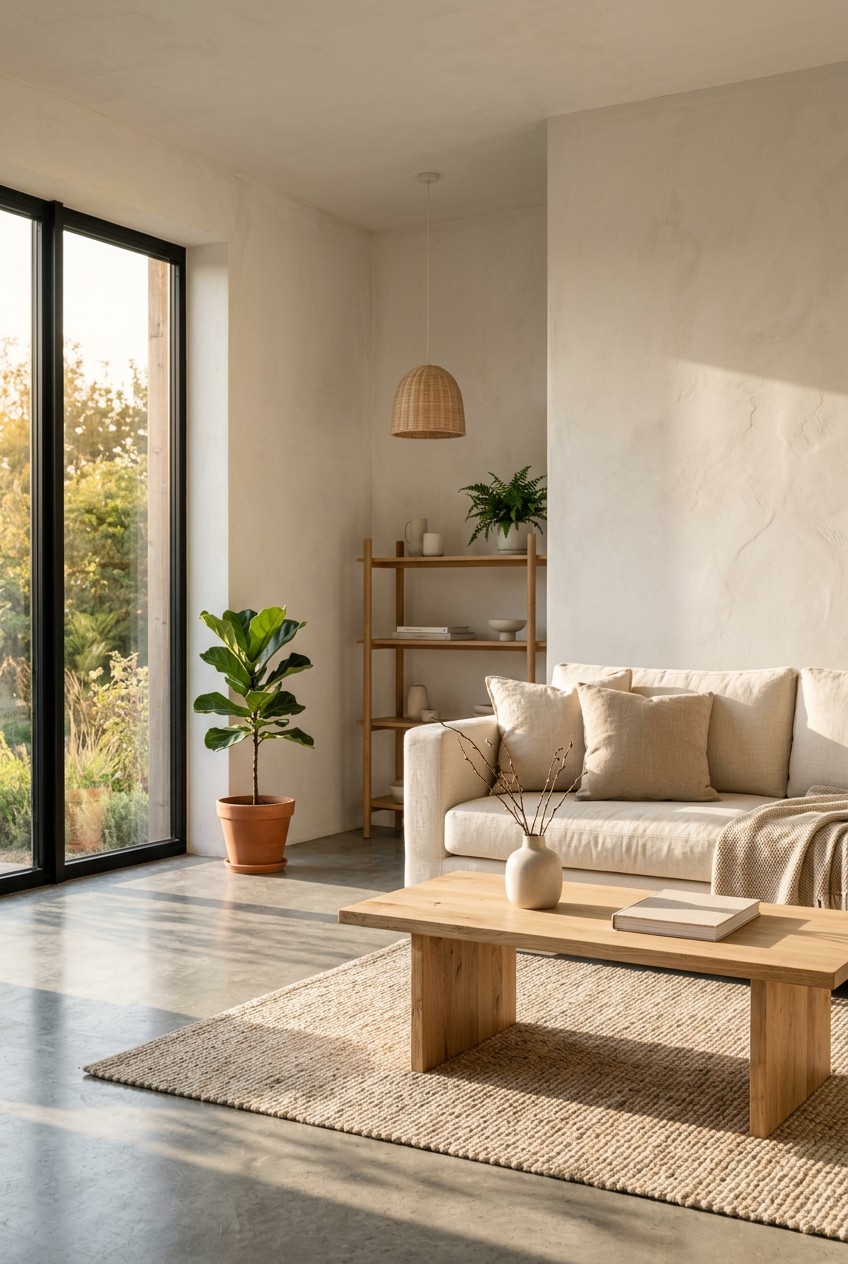
What’s Inside
- Embrace Warm Minimalism for Your Home Interior Design Minimalist Look
- Prioritize Multi-Functional Furniture Everywhere
- Master the One-to-Three Rule for Surfaces
- Layer Textures Instead of Adding Clutter
- Choose Nuanced Neutrals Over Flat White
- Optimize Your Natural and Smart Lighting
- Hide Your Smart Home Technology
- Bring in Biophilic Elements and Plants
- Invest in Quality Over Quantity for Your Home Interior Design Minimalist Space
- Use Negative Space as a Design Feature
- Pick Furniture with Clean, Elevated Lines
- Mix in Subtle Patterns and Organic Shapes
- Conceal Your Storage Completely
- Personalize with One or Two Meaningful Items
- Choose Sustainable and Eco-Friendly Materials
- Ditch the Fat-Free Decor Aesthetic
- The 4-Ounce Rule for Ambient Scents
- Never Skimp on Rug Sizing
- Edit Your Kitchen Countertops Ruthlessly
Last Tuesday at Target, I stared at a cart full of cheap plastic decor and realized my house looked like a sterile hospital waiting room. I’m obsessed with the minimalist vibe, but my first attempt was a cold, echoing disaster. I bought bright white everything, and it felt terrible. The air literally felt colder in my living room. I’ve spent the last three years fixing that massive mistake. Getting your space right means balancing warmth, texture, and actual human life. I’m sharing the exact tweaks, paint colors, and rules that finally fixed my home.
1. Embrace Warm Minimalism for Your Home Interior Design Minimalist Look

Let’s talk paint. For 2026, stark white is out. I tried painting my bedroom a brilliant, blinding white two years ago. It gave me a headache every morning. The glare was awful. Now, I swear by creamy off-whites and warm taupes. You want your walls to feel like a soft hug, not a dental clinic. I grabbed a gallon of Behr’s Whipped Cream interior matte paint for $45 at Home Depot. It completely fixed the harsh lighting issue. Sherwin-Williams’ Accessible Beige (SW 7036) is another fantastic option if you want a dusty, earthy tone. It costs about $75 a gallon. A pro tip: always buy an 8 oz sample jar first. Paint a 2-foot by 2-foot square on your wall and watch it for 24 hours. The shadows change everything. Warm tones absorb natural light beautifully instead of reflecting it aggressively. Trust me on this.
2. Prioritize Multi-Functional Furniture Everywhere

Every single item in your house needs a job. Preferably two. I used to buy tiny, useless accent tables just because they looked cute at Sprouts. They just collected dust and junk mail. Now, I only invest in pieces that pull double duty. I highly recommend a coffee table with a hidden 4-inch deep storage compartment for remotes. Or an ottoman that holds three thick winter blankets. IKEA is honestly fantastic for this. I bought a 3-pack of their SKUBB organizers for $7.99 to slide inside my storage bench. It keeps my dog’s toys separated from my yoga gear. If you’re living in a smaller space, a sofa bed is non-negotiable. Don’t buy the cheap futons that feel like sleeping on a bag of rocks. Spend the extra money on a solid frame. It makes your living room function as a guest room without adding a single extra square foot of clutter.
3. Master the One-to-Three Rule for Surfaces

Most people get this wrong. I used to cover my entryway table with a lamp, a tray, candles, mail, and keys. It looked like a garage sale. The secret to actual minimalism is the one-to-three rule. You’re only allowed a maximum of three carefully chosen items on any flat surface. Period. For my 48-inch console table, I have exactly three things. One 8-inch ceramic bowl for keys, one 6-inch potted plant, and one stack of two coffee table books. That is it. Anything else goes inside a drawer. This forces you to declutter intentionally. I bought a set of hidden modular shelves for $120 on Amazon to stash the overflow. If you leave empty space on a table, your brain registers the room as clean. Visual noise causes actual stress. Strip your dresser down to just a jewelry box and a 4 oz soy candle. You’ll sleep better.

UTTCMK Bookshelf Decor Thinker Statue
If you want something that just works, UTTCMK Bookshelf Decor Thinker Statue – Abstract Art Reading Thinker S is a safe bet (771 reviews, 4.5 stars).
4. Layer Textures Instead of Adding Clutter

Minimalism doesn’t mean boring. If your room feels like a waiting room, you’re missing texture. I learned this the hard way after buying a smooth leather sofa, a glass table, and metal chairs. The room echoed when I sneezed. To fix it, you need contrasting materials. Think solid oak hardwood floors mixed with a thick wool rug. I splurged on a Jenni Kayne Alpaca Basketweave Throw. It costs exactly $295 and measures 50 by 70 inches. Yes, it’s expensive. But throwing that heavily textured, soft fabric over a structured chair instantly warms up the corner. You don’t need ten pillows. You just need two 20×20 inch linen pillows with a heavy weave. Mix natural stone, like a 12-inch round travertine tray on your kitchen counter, with soft cotton hand towels. The contrast creates visual depth without adding a single unnecessary object to your space.
5. Choose Nuanced Neutrals Over Flat White

Flat white paint is a trap. I painted my hallway a generic ceiling white because it was on sale for $20 a gallon at Walmart. It looked like a cheap apartment rental. Minimalist palettes need balance, not bleach. You want nuanced off-whites with actual undertones. I recently discovered Farrow & Ball paints and I’m never going back. Their shade James White has the faintest green undertone. It costs about $140 a gallon, which is steep, but the pigment quality is insane. In the afternoon sun, it looks alive. Another great one is Great White, which has a tiny drop of pink in it. It stops the walls from feeling sterile. When you’re picking neutrals, hold the swatch next to a piece of pure white printer paper. You’ll instantly see the hidden yellow, green, or blue tones. Pick a warm undertone. It makes your minimalist furniture look expensive instead of stark.
6. Optimize Your Natural and Smart Lighting

Bad lighting will ruin a minimalist room faster than clutter. I used to rely on a single, harsh overhead light in my bedroom. It cast terrible shadows and made my nice furniture look cheap. You need layers of light. First, maximize daylight. I ditched my heavy drapes for sheer, 84-inch white linen curtains from Target. They cost $25 a panel and diffuse the sunlight beautifully. For artificial light, skip the bulky lamps. I’m obsessed with sleek fixtures from brands like Flos or Louis Poulsen. I bought a minimalist brass floor lamp for $150 and tucked it behind my reading chair. The real trick is smart bulbs. I use Philips Hue bulbs synced to my Google Home. I set them to a warm 2700K color temperature at exactly 7:00 PM every night. It shifts the room from a bright workspace to a cozy, amber-lit lounge area. You might also like: 15 Gorgeous Homemaking Simple Living Tips to Steal Right Now

seenlast Candle Warmer Lamp with Timer Dimmer Adjustable
Honestly, seenlast Candle Warmer Lamp with Timer Dimmer Adjustable Height for Ne surprised me — sturdier than it looks in the photos, and over 38 buyers gave it 4.5 stars.
7. Hide Your Smart Home Technology

For 2026, tech should be experienced, not seen. I hate the look of tangled black cords and glowing plastic boxes. Last year, my TV stand looked like a Best Buy clearance bin. I finally got fed up and hid everything. I bought a 10-foot cable raceway kit for $18 on Amazon and painted it the exact color of my wall. The cords vanished. If you have the budget, short-throw projectors are incredible. You can hide them inside a custom cabinet. Or look into pop-up TVs on automated lifts that slide out of sight when you aren’t watching them. I consolidated all my smart plugs and speakers into Apple HomeKit. Now I just use voice control. I don’t have a single plastic remote sitting on my coffee table. Hiding the glowing screens and blinking lights instantly lowers the visual temperature of the room. It feels peaceful. You might also like: 20 Lovely Minimalist Simple Living Home Tips for Every Budget
8. Bring in Biophilic Elements and Plants

Biophilic minimalism is just a fancy way of saying bring the outside inside. I used to buy those fake, shiny plastic plants from Kroger. They collected dust and looked incredibly tacky. Throw them away. You need living, breathing plants. They purify the air and add an organic shape to rigid minimalist rooms. I keep it simple. One large floor plant and one small table plant per room. I bought a 3-foot tall Snake plant for $45 at a local nursery. It sits in a plain, matte white ceramic pot. On my desk, I have a small Peace Lily in a 6-inch terracotta pot. They aren’t fussy at all. I water them exactly once a week with 2 cups of tap water. If you pair living greenery with natural materials like bamboo cabinets or a reclaimed wood bench, the room suddenly feels alive. It softens the hard edges beautifully. You might also like: 15 Charming Minimalist Design Inspiration Kitchen You Can Try Today
9. Invest in Quality Over Quantity for Your Home Interior Design Minimalist Space

Stop buying cheap furniture that falls apart in two years. I bought a trendy, $300 velvet sofa online three years ago. The cushions flattened into pancakes within six months. It was a massive waste of money. True minimalist living means buying fewer things, but buying the absolute best you can afford. Quality is always more valuable than quantity. I saved up for eight months and bought a stunning 84-inch minimalist sofa from Acanva. It cost around $1,200. The craftsmanship is incredible. The high-density foam hasn’t sagged a single inch. When you only have five pieces of furniture in a room, you can’t hide cheap construction. Every seam and joint is on display. Save your money. Wait until you can buy the solid oak dining table instead of the particleboard knock-off. You’ll respect your space so much more.

Dog Sculpture Home Decor Cute Man and Dog Statue Decoration
Honestly, Dog Sculpture Home Decor Cute Man and Dog Statue Decoration for Office surprised me — sturdier than it looks in the photos, and over 326 buyers gave it 4.5 stars.
10. Use Negative Space as a Design Feature

Empty space isn’t a mistake you need to fix. I used to feel panic when I saw a bare corner in my living room. I’d rush out to Costco and buy a bulky accent chair just to fill the void. It made the room feel heavy and cramped. Negative space is actually a crucial design element. You have to let the room breathe. Try pulling your sofa exactly 12 inches away from the wall. It creates a shadow line that makes the room look bigger. Leave the wall above your TV completely blank. Let your eye rest. When you intentionally leave voids, it draws massive attention to the few pieces you do have. My single, 30-inch round mirror above the fireplace looks like an art gallery piece because there is nothing else competing for attention on that wall. Embrace the emptiness.
11. Pick Furniture with Clean, Elevated Lines

Heavy, blocky furniture ruins a minimalist vibe. I once bought a massive, skirted armchair that sat flush on the floor. It looked like a giant fabric boulder blocking my window. You want furniture that looks light. The secret is buying pieces that are raised off the floor on thin legs. It allows light to pass underneath, making the entire room feel larger. I swapped that heavy armchair for a mid-century modern accent chair from LexMod. It cost $185 and has thin, tapered wooden legs. The seat sits exactly 18 inches off the ground. The clean silhouette completely changed the visual flow of the room. When you can see the floor stretching all the way to the baseboards, your brain registers more square footage. Keep the lines straight and simple. Skip the tufting, the ruffles, and the heavy metal hardware.
12. Mix in Subtle Patterns and Organic Shapes

Minimalism doesn’t mean everything has to be a sharp, 90-degree angle. Too many straight lines make a house look like a corporate office. I learned this when my dining room ended up looking like a boardroom. I fixed it by introducing organic, curved shapes. I bought a beautiful, rounded ceramic vase for $35 at Target and placed it right in the center of the rectangular table. It broke up the harsh lines immediately. You can also use subtle patterns. I’m not talking about loud floral prints. I mean a textured, abstract leaf motif woven into a cream-colored rug. I also broke a minimalist rule and created a small gallery wall in my hallway. I used three identical 11×14 inch thin black frames. The structured grid keeps it minimalist, but the personal black-and-white photos add warmth. It adds personality without causing visual clutter.

PoKat 23" Modern Ceramic Table Lamp Set of 2 for Living
PoKat 23″ Modern Ceramic Table Lamp Set of 2 for Living Room White Des has been one of the most consistently praised picks in this category. 15 reviewers averaged 4.5/5.
13. Conceal Your Storage Completely

Visual clutter is the enemy of a calm mind. If I can see my blender, my toaster, and my coffee bags on the kitchen counter, I feel stressed before I even make breakfast. You have to hide your everyday items. I spent a weekend installing flush-faced wood casework in my hallway. It cost about $400 in materials from Home Depot. It looks like a plain wood accent wall, but it pushes open to reveal floor-to-ceiling shelves. I hide my vacuum, my winter coats, and my bulk paper towels in there. If custom built-ins aren’t in the budget, buy a bed frame with deep, rolling drawers underneath. I keep all my out-of-season clothes in two 36-inch wide under-bed bins. When your storage is completely invisible, your surfaces stay clear. You get the aesthetic of a monk’s cell, but you still get to own a waffle maker.
14. Personalize with One or Two Meaningful Items

Don’t strip the soul out of your house. A major mistake I see people make is throwing away everything personal to achieve a magazine look. Your house should still look like you live there. I just limit the personal items to one or two high-impact pieces per room. In my bedroom, I have a single, handmade ceramic bowl sitting on my dresser. I bought it from a street vendor in Mexico for $20. It holds my rings and reminds me of a great trip. On my living room bookshelf, I have a vintage, monochrome film camera my grandfather gave me. I don’t display twenty family photos in mismatched frames. I pick one incredible 8×10 photo, put it in a crisp white mat, and hang it alone. Curate your life. Choose the items that genuinely matter and let them shine without competition.
15. Choose Sustainable and Eco-Friendly Materials

Sustainability is non-negotiable for 2026. Cheap, fast-furniture MDF boards off-gas terrible chemicals into your home. I used to buy cheap polyester sheets because they were $15 at Walmart. They made me sweat all night and pilled after three washes. I finally upgraded to sustainable materials. I bought a set of 100% organic linen sheets from Quince for $130. They are ethically made, breathe beautifully, and get softer every time I wash them. H&M Home also has a fantastic Sustainable Choice line. I bought two organic cotton waffle-knit towels for $19.99 each. When you buy natural stone, reclaimed wood, or bamboo, you’re bringing real, earth-made textures into your home. They age gracefully. A solid walnut side table might get a scratch, but it looks like character. A cheap laminate table just looks ruined. Buy materials that respect the planet and your health.
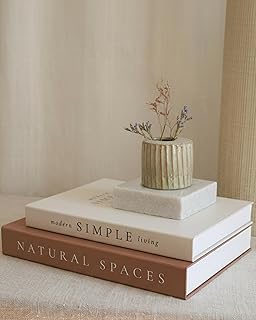
Beautiful Decorative Books
If you want something that just works, Beautiful Decorative Books – Set of 2 Boxes Enhance Your Coffee Table is a safe bet (282 reviews, 4.5 stars).
16. Ditch the Fat-Free Decor Aesthetic

I call cheap, flimsy decor “fat-free decor.” It looks like the real thing from far away, but up close, it tastes like wet cardboard. I’m talking about hollow resin statues, printed canvas art that mimics oil paint, and fake marble contact paper. I tried wrapping my ugly bathroom counter in $10 marble vinyl from Amazon. It peeled up at the edges within a week and trapped water underneath. Skip the fake stuff. If you can’t afford a real marble tray, buy a beautiful, solid piece of slate or raw wood. Authenticity matters in a minimalist space because there is nowhere to hide. Every object is under a microscope. I’d rather have one genuine, heavy brass candlestick holder that cost $40 than five hollow plastic ones that cost $5 each. Real materials ground the room. Learned that the hard way.
17. The 4-Ounce Rule for Ambient Scents

Minimalism applies to smells, too. Walking into a house that blasts you with heavy, artificial vanilla plug-ins is overwhelming. It’s sensory clutter. I used to burn three different candles at once, and it gave me a massive headache. Now, I stick to the 4-ounce rule. I only use one small, 4 oz high-quality soy candle per room. I buy the Honeycrisp Apple 4 oz tin from Trader Joe’s for $3.99. It’s cheap, but it burns clean because it’s soy wax. I light it in the kitchen for exactly two hours after I finish cooking dinner. It clears the air without suffocating the house. You can also use an essential oil diffuser. I use exactly 5 drops of eucalyptus oil in 1/2 cup of distilled water. It gives the room a crisp, spa-like scent that fades naturally. Keep it subtle.
18. Never Skimp on Rug Sizing

This is the most common mistake I see in minimalist living rooms. People buy a tiny 5×7 rug and float it in the middle of the room like a sad little island. It chops the floor up and makes the space look incredibly small. I made this mistake in my first apartment. I bought a cheap 4×6 rug at Costco because it was only $40. My sofa legs didn’t even touch it. It looked ridiculous. You need a rug large enough that the front legs of all your seating rest on it. For a standard living room, you need an 8×10 rug minimum. I bought a flat-weave 8×10 wool rug for $250 online. It anchors the furniture and creates a cohesive zone. A large, neutral rug actually makes the room feel expansive and calm. Don’t let a tiny rug ruin your clean lines.
19. Edit Your Kitchen Countertops Ruthlessly

The kitchen is the hardest place to keep minimalist. Mail, keys, appliances, and dirty dishes multiply when you aren’t looking. Last year, I realized I had a toaster, a blender, a stand mixer, and a knife block all sitting out. I only used the toaster once a week. I ruthlessly edited my counters. Now, the only things allowed to live on my quartz countertop are my espresso machine and a 10-inch wooden bowl holding fresh fruit. Everything else is hidden in the pantry. I moved my heavy KitchenAid mixer to a lower cabinet. Yes, I have to bend down to get it, but the visual peace of a totally clear 6-foot stretch of counter is worth it. Wipe the counters down every single night with a microfiber cloth and warm water. Waking up to a spotless, empty kitchen is the best feeling in the world. No exaggeration.
If you’re feeling overwhelmed, just start with one room. Grab a trash bag and clear off your flat surfaces using the one-to-three rule. It takes five minutes and completely changes how your house feels. I’ve spent years figuring out what actually works and what just looks good on Instagram. Save this post to your Pinterest board so you can reference these exact measurements and paint colors later. You’ve got this. Let me know in the comments which room you’re tackling first.
Frequently Asked Questions
What is the best paint color for a minimalist home?
Skip the stark hospital whites. I highly recommend warm, nuanced neutrals like Behr’s Whipped Cream or Sherwin-Williams’ Accessible Beige. They absorb natural light beautifully and stop your home interior design minimalist space from feeling cold.
How do I make a minimalist room feel cozy?
It’s all about layering textures instead of adding more stuff. Mix solid hardwood floors with a thick wool rug, textured linen pillows, and a heavy basketweave throw blanket. This adds visual depth without causing clutter.
Can I have plants in a minimalist house?
Absolutely. Biophilic elements are a huge part of modern home interior design minimalist trends. Stick to one large floor plant, like a Snake plant, and one small desk plant, like a Peace Lily, per room to keep it clean.
How do I hide clutter in a minimalist living room?
Prioritize multi-functional furniture. I use storage ottomans, coffee tables with hidden compartments, and flush-faced wood casework. If you keep all your daily items out of sight, your flat surfaces stay perfectly clear and visually calm.
